Prescription Costs: Why Prices Vary and How to Save on Medications
When you pick up a prescription, the price isn’t just about the pill inside—it’s shaped by prescription costs, the total amount you pay out-of-pocket for medications, including copays, deductibles, and fees. Also known as drug pricing, it’s influenced by patents, insurance rules, and whether the drug is brand-name or generic. You might pay $4 for a generic blood pressure pill one month, then $300 for the same drug under a different name the next. That’s not a mistake—it’s how the system works.
Behind every price tag are generic drugs, lower-cost versions of brand-name medications that must meet strict FDA standards for safety and effectiveness. Also known as generic medication, they’re often 80% cheaper—but not always available. Some brand drugs stay expensive for years after patents expire because of legal tricks, manufacturing limits, or companies blocking competitors. Meanwhile, insurance coverage, the portion of drug costs paid by your health plan, which can vary wildly between plans and pharmacies determines how much you actually see at the register. A drug might be listed at $120, but if your plan has a $10 copay, you pay $10. But if it’s not on your formulary? You pay full price.
And then there’s the pharmacy itself. Same drug, same dose, same insurance—yet one pharmacy charges $15, another charges $75. That’s because drug pricing is set by middlemen, not doctors or manufacturers. These aren’t random numbers. They’re negotiated behind closed doors between insurers, pharmacy benefit managers, and drug companies. What you pay is often the result of deals you never see.
That’s why the posts here focus on what really drives these costs. You’ll find clear breakdowns of how prescription costs are affected by patent laws, why some drugs have no generic alternatives even after decades, and how antitrust loopholes let companies keep prices high. You’ll learn how bioequivalence standards make generics safe but don’t always make them cheap. You’ll see how pay-for-delay deals and product hopping delay competition—and how you can fight back with simple strategies like switching pharmacies, asking for cash prices, or using patient assistance programs.
This isn’t about blaming big pharma—it’s about understanding the system so you can navigate it smarter. Whether you’re on a chronic medication, managing a new diagnosis, or just trying to stretch your budget, knowing how prescription costs work gives you real power. The articles below don’t just explain why prices are high—they show you exactly what to do next to lower them, without hype, without fluff, and without waiting for someone else to fix it for you.
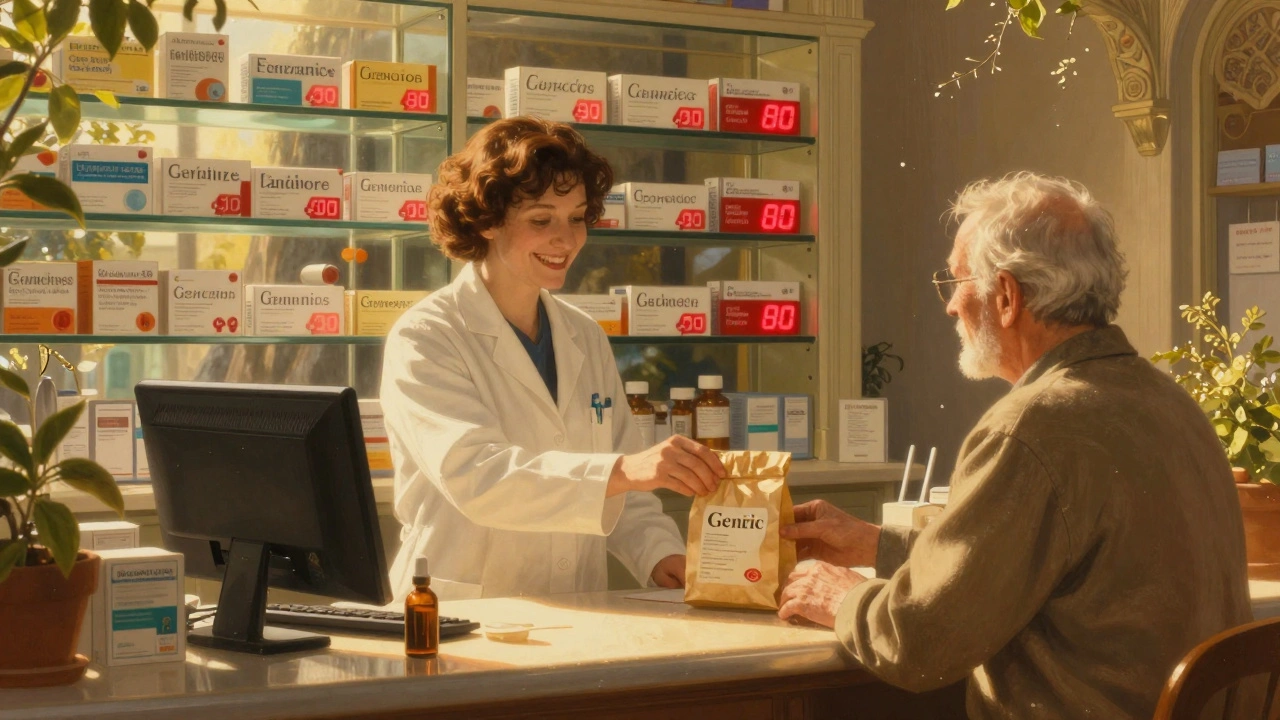
Generic Drug Savings: Real Numbers and Healthcare Statistics
Generic drugs save Americans billions each year - 90% of prescriptions are generic, but they cost only 12% of what brand-name drugs do. See real numbers, savings stats, and how to use generics to cut your prescription costs.