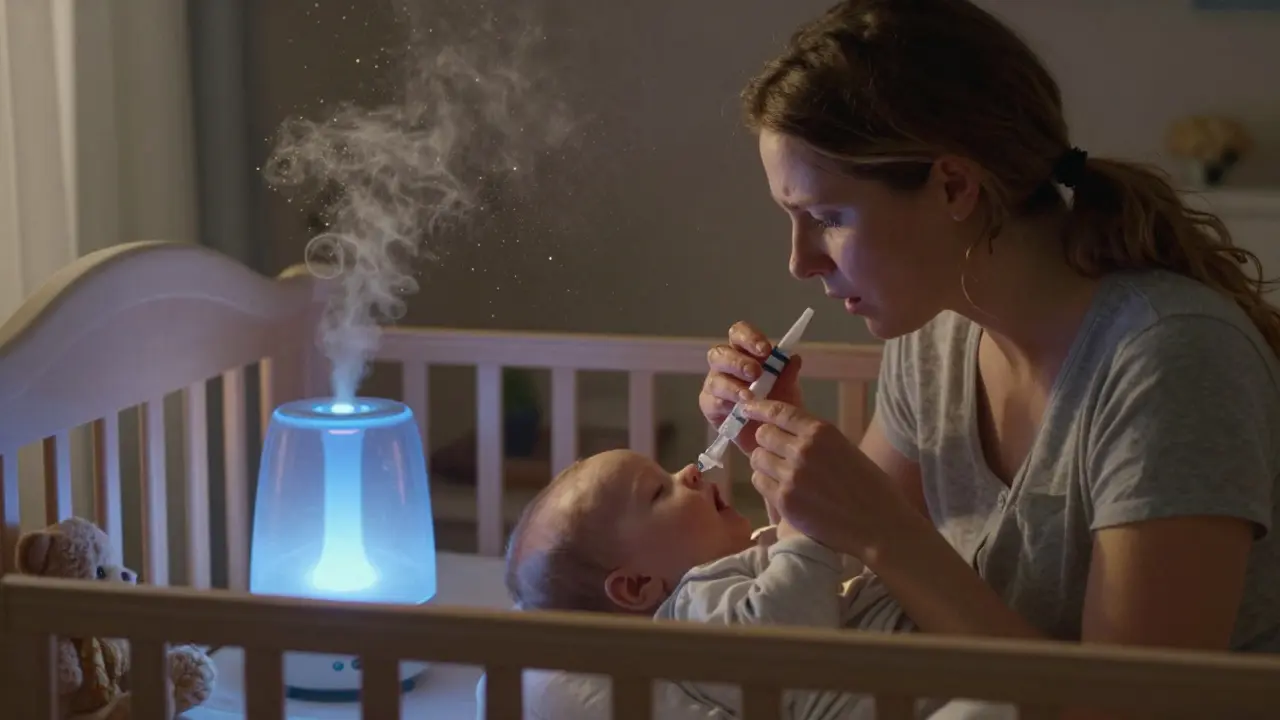
Every parent has been there: your child is coughing, sniffly, and can’t sleep. You reach for the bottle of children’s cough syrup in the cabinet-only to realize you’re not sure if it’s safe. The truth is, cough and cold medicine for kids under 6 isn’t just questionable-it’s dangerous. Despite what ads might suggest, these over-the-counter (OTC) products offer little to no benefit for young children and carry real, serious risks.
Why OTC Cough and Cold Medicines Don’t Work for Little Kids
Cough and cold medicines for kids are packed with ingredients like dextromethorphan (a cough suppressant), pseudoephedrine (a decongestant), chlorpheniramine (an antihistamine), and guaifenesin (an expectorant). These drugs were designed for adults, not toddlers. Children under six don’t metabolize them the same way. Their livers are still developing, and their bodies can’t break down these chemicals safely. The U.S. Food and Drug Administration (FDA) reviewed over 120 deaths linked to these products between 1969 and 2006. Many of those cases involved children under two who got too much of a single ingredient-or worse, got multiple products at once. One parent gives a cough syrup, another gives a fever reducer, and both contain acetaminophen. That’s how liver damage happens. Even worse, research shows these medicines simply don’t work. A 2022 report from the American Academy of Pediatrics found no solid evidence that OTC cough and cold meds reduce symptoms in children under six. Not better sleep. Not less coughing. Not faster recovery. Just risk.The Real Dangers: Overdose, Side Effects, and Accidental Poisoning
It’s easy to think, “I followed the label.” But here’s the problem: labels aren’t always clear, and parents aren’t always trained pharmacists. A 2015 study found that nearly 7 out of 10 dosing errors in kids under six happened because parents used kitchen spoons instead of the measuring cup that came with the medicine. A teaspoon isn’t a milliliter. A tablespoon isn’t 5 mL. That tiny difference can turn a safe dose into a toxic one. Side effects aren’t rare-they’re common. Kids given these meds have ended up in the ER with:- Fast or irregular heartbeat
- Extreme drowsiness or, strangely, hyperactivity
- High blood pressure
- Seizures
- Hallucinations
- Respiratory depression (slowed or stopped breathing)
What the Experts Say: No Exceptions for Under 6
Major medical groups are united:- The American Academy of Pediatrics (AAP) says: “Cough and cold medications are not recommended for children under 4 years old.”
- The Centers for Disease Control and Prevention (CDC) reports that children aged 2-3 had the highest rates of ER visits due to these medicines.
- The Mayo Clinic advises: “Don’t use them in children under 12.”
- The FDA warns: “These products could cause serious and potentially life-threatening side effects in children under 2.”
What You Can Do Instead: Safe, Proven Alternatives
You don’t need medicine to help your child feel better. Here’s what actually works:For babies under 6 months:
- Use saline nasal drops (available at any pharmacy) to loosen mucus.
- Suction gently with a bulb syringe before feedings and bedtime.
- Run a cool-mist humidifier in the room. (Never use warm mist-it can make congestion worse.)
- Keep them hydrated with breast milk or formula.
For kids 6 months to 2 years:
- Use acetaminophen (Tylenol) for fever or pain. Dose: 10-15 mg per kg of body weight every 4-6 hours. Max 5 doses in 24 hours.
- Never give ibuprofen (Advil, Motrin) to babies under 6 months.
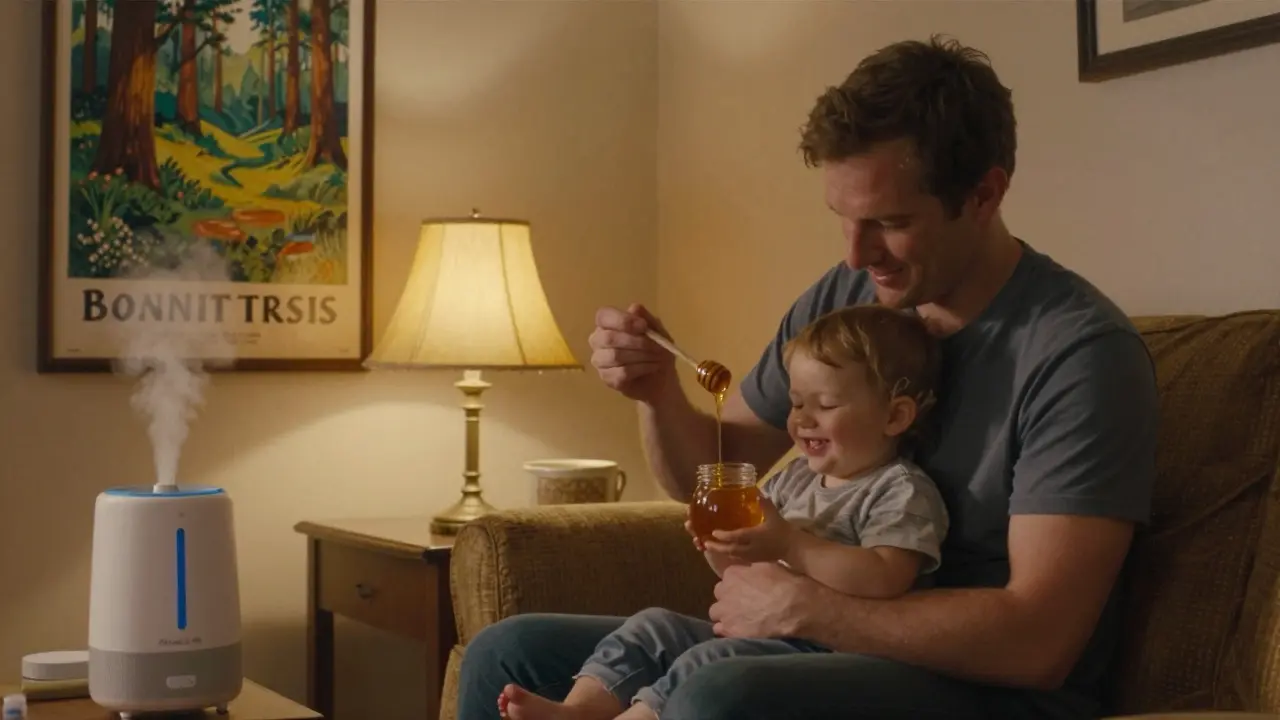
- Keep the air moist. A humidifier helps more than any syrup.
For kids 1 year and older:
- Honey is the #1 recommended cough remedy. Give ½ to 1 teaspoon before bed. Studies show it works better than dextromethorphan at reducing nighttime coughing. (Never give honey to babies under 1 year-it can cause botulism.)
- Offer warm fluids like broth or water. It soothes the throat and thins mucus.
- Elevate the head of their crib slightly. This helps breathing while sleeping.
For kids 4 to 6 years:
- Ask your pediatrician before giving any OTC medicine.
- If approved, use only one product with one active ingredient. Never combine.
- Always use the measuring device that came with the medicine. Never guess.
What to Avoid at All Costs
Here are the top mistakes parents make-and how to avoid them:- Never give adult medicine to a child. Even half a tablet can be deadly.
- Never mix medicines. Check every label for acetaminophen, dextromethorphan, or antihistamines. If two products have the same ingredient, don’t use both.
- Don’t use nasal sprays like oxymetazoline. They’re not approved for kids under 6 and can cause rebound congestion.
- Don’t rely on “natural” or “herbal” cough syrups. Many contain unregulated ingredients that can be harmful.
- Don’t assume “if it’s on the shelf, it’s safe.” Just because a product is sold in a pharmacy doesn’t mean it’s appropriate for young kids.
When to Call the Doctor
Most colds are harmless and go away in 7-10 days. But call your pediatrician if your child has:- Difficulty breathing or fast breathing
- A fever over 38.5°C (101.3°F) that lasts more than 3 days
- Cough lasting more than 2 weeks
- Lethargy, refusal to drink, or fewer wet diapers
- Blue lips or face
- Signs of dehydration (dry mouth, no tears when crying)
The Bottom Line
Your child’s cough isn’t a problem that needs a pill. It’s their body’s way of clearing out a virus. The best thing you can do is support their natural healing process-with hydration, rest, saline drops, and honey (if they’re over 1). The idea that medicine = faster recovery is a myth sold by marketing. Real care means patience, observation, and knowing when to skip the bottle.Frequently Asked Questions
Can I give my 3-year-old children’s cough syrup if I use half the dose?
No. Even half a dose can be dangerous. Children’s cough syrups are not scaled-down versions of adult medicine-they’re formulated with ingredients that can be toxic to young bodies. The risk doesn’t go down with smaller doses. The FDA and AAP strongly advise against using any OTC cough and cold medicine in children under 6, regardless of dosage.
Is honey really safe for toddlers?
Yes, but only for children over 1 year old. Honey has been shown in multiple studies to reduce nighttime coughing better than some OTC medicines. It works by coating the throat and reducing irritation. Never give honey to babies under 12 months-it can cause infant botulism, a rare but serious condition.
What if my child has a fever? Should I give them Tylenol or Advil?
Acetaminophen (Tylenol) is safe for children over 2 months old. Use 10-15 mg per kg of body weight every 4-6 hours, no more than 5 doses in 24 hours. Ibuprofen (Advil, Motrin) is safe for children over 6 months. Always use the dosing tool that comes with the medicine. Never give aspirin to children-it can cause Reye’s syndrome, a rare but deadly condition.
Why do pharmacies still sell these medicines if they’re unsafe?
They’re still sold because they’re legal for older children and adults. The FDA only banned their use in children under 2 in 2007 and recommended against use under 4. Manufacturers still sell them for kids 4 and up, but with strict labeling. The problem is that many parents don’t read labels carefully-or assume “children’s” means safe for all kids under 12. That’s not true.
Are there any new cold medicines for kids that are safer?
No. As of 2023, the FDA’s Pediatric Advisory Committee reaffirmed that the risks of OTC cough and cold medicines still outweigh any benefits for children under 6. No new formulations have been approved. Research is focused on better education for parents and non-drug treatments like honey and humidifiers, not new drugs.

ellen adamina
January 15, 2026 AT 11:28I gave my 2-year-old cough syrup last winter because I didn’t know better. She slept for 18 hours straight and woke up screaming. We rushed to the ER. Turns out it was the antihistamine. I felt like the worst parent ever. But now I know. No more bottles. Just honey and steam.
Nishant Garg
January 15, 2026 AT 15:30In India, we’ve never relied on chemical syrups for kids. Grandmas used warm turmeric milk, mustard oil massages, and steam from boiled eucalyptus leaves. No pharmacy needed. Modern medicine has its place, but tradition? It’s not magic-it’s accumulated wisdom. Why do we ignore what worked for centuries just because a label says ‘children’s’?
Diane Hendriks
January 17, 2026 AT 01:40The FDA is a joke. Corporate lobbying killed common sense. These drugs are banned for under-4s but still sold like candy. Meanwhile, the CDC’s own data shows ER visits spike during cold season-not because of viruses, but because parents are being manipulated by marketing. This isn’t healthcare. It’s profit-driven negligence disguised as parental care.
Tom Doan
January 17, 2026 AT 04:55Let me get this straight. We’ve got a $10 billion industry selling placebo syrups to toddlers, while the only proven remedy-honey-is cheaper than a bottle of water and has zero side effects? And yet, we still treat this like a medical emergency? I’m not surprised. Capitalism doesn’t care if your kid sleeps. It cares if your wallet does.
Sohan Jindal
January 19, 2026 AT 00:59They’re lying to us. Big Pharma owns the FDA. The government wants you to think your kid needs medicine. But if you just let nature take its course, you save money and your child’s liver. Wake up people. They’re poisoning our kids to sell more pills. Read the labels. Look at the ingredients. It’s all poison.
Frank Geurts
January 20, 2026 AT 02:47It is, indeed, a matter of profound public health significance that the pharmacological industry continues to market products with known contraindications for pediatric populations, particularly those under the age of six. The absence of robust clinical efficacy, coupled with the documented incidence of severe adverse events-including respiratory depression and hepatotoxicity-renders the continued availability of these formulations not merely inadvisable, but ethically indefensible. Parental education, not pharmaceutical convenience, must be prioritized.
Annie Choi
January 21, 2026 AT 14:01As a pediatric nurse, I see this every week. Parents come in with their kid’s face flushed, heart racing, after giving them ‘just a little’ Dimetapp. It’s not ‘just a cough.’ It’s a toxic cocktail they don’t even know they’re giving. Honey? Humidifier? Saline drops? Free. Safe. Effective. Stop buying the lie. Your kid doesn’t need a drug. They need you.
Arjun Seth
January 22, 2026 AT 12:10Why do people still do this? It’s not hard. You don’t need a degree to read a label. You don’t need a PhD to know honey works better than chemicals. If you’re giving your kid medicine you bought off a shelf without checking the active ingredients, you’re not a parent-you’re a liability. Stop being lazy. Your kid’s life isn’t a gamble.
Mike Berrange
January 23, 2026 AT 18:19My daughter had a fever for three days. I gave her Tylenol. Then I gave her a cold medicine because I thought ‘it would help more.’ Turns out both had acetaminophen. She ended up in the hospital with elevated liver enzymes. I didn’t know. I trusted the bottle. Now I double-check every label. Don’t be like me.
Amy Vickberg
January 25, 2026 AT 08:11Thank you for writing this. I’m so glad someone finally said it out loud. I used to feel guilty for not medicating my kids-but now I know I was doing the right thing. Honey, steam, cuddles. That’s all they need. We’ve been sold a lie for decades. Time to unlearn it.
Ayush Pareek
January 25, 2026 AT 22:26My son was 4 when he got his first cold. I skipped the syrup. Used saline drops, humidifier, and a spoon of honey before bed. He slept through the night. No ER. No side effects. Just quiet, healthy recovery. It’s not about being perfect. It’s about being informed. You’ve got this.