
Every year, Americans fill over 6 billion prescriptions. About 92.5% of those are for generic drugs. That’s not just a statistic-it’s a savings of $313 billion annually. But behind that number is a messy, state-by-state patchwork of rules that can confuse pharmacists, surprise patients, and even put some people at risk. If you’ve ever picked up a prescription and been handed a different pill than expected, you’ve felt the impact of these laws. And if you’ve ever wondered why the rules change when you cross a state line, you’re not alone.
How Generic Substitution Works-And Why It Matters
Generic drugs aren’t knockoffs. They’re exact chemical copies of brand-name drugs, approved by the FDA after proving they work the same way in the body. The FDA’s Orange Book lists which generics are therapeutically equivalent to their brand-name counterparts. For most drugs, that means you can switch without any problem. But not all drugs are created equal. Some medications have a narrow therapeutic index-meaning the difference between a safe dose and a harmful one is tiny. Think warfarin (a blood thinner), levothyroxine (for thyroid conditions), or certain seizure drugs. Even small changes in how the body absorbs these drugs can lead to serious side effects. That’s why some states treat them differently. The federal government says generics are safe. But state laws don’t always agree. And that’s where things get complicated.Four Ways States Control What Pharmacists Can Substitute
Every state has its own rules, but they all fall into four categories. 1. Mandatory vs. Permissive SubstitutionTwenty-two states require pharmacists to substitute a generic whenever possible-unless the doctor says "dispense as written" or the patient refuses. That’s mandatory substitution. The other 28 states and Washington, D.C., let pharmacists choose. In those places, the pharmacist can substitute, but doesn’t have to. This alone can change how often generics are used. In states with mandatory rules, generic fill rates are about 94%. In permissive states, it’s closer to 88%. 2. Patient Consent: Presumed vs. Explicit
Thirty-two states operate on presumed consent. That means the pharmacist can switch the drug, and the patient is assumed to be okay with it-unless they say no. Eighteen states require explicit consent. That means the pharmacist must ask, "Do you want the generic?" and get a clear yes before switching. In New York, you’re asked every time. In New Jersey, the switch happens automatically. Patients living near state borders often get confused. 3. Notification Requirements Forty-one states require pharmacists to tell patients after they’ve been switched to a generic. That could be a printed notice, a verbal explanation, or a note on the receipt. But in nine states, there’s no legal requirement to notify at all. That means patients might never know they got a different pill-until something goes wrong. 4. Liability Protection Thirty-seven states protect pharmacists from lawsuits if they follow the rules. If a pharmacist substitutes correctly and the patient has a bad reaction, they can’t be held legally responsible. But in the 13 states without this protection, pharmacists face more risk. That can make them hesitant to substitute-even when it’s allowed.
Biosimilars: The New Frontier
Biosimilars are like generics, but for complex biologic drugs-medications made from living cells, like those used for cancer, rheumatoid arthritis, or diabetes. These are harder to copy exactly. The FDA has a special "interchangeable" designation for biosimilars that can be swapped without a doctor’s approval. As of 2023, 49 states and D.C. have laws covering biosimilar substitution. But the rules vary wildly. Florida requires pharmacies to create a formulary to ensure substitutions won’t harm patients. Iowa says to stick with the FDA’s Orange Book. Hawaii is the strictest: even for biosimilars, both the doctor and patient must give consent for antiepileptic drugs. That’s because one wrong substitution can trigger a seizure.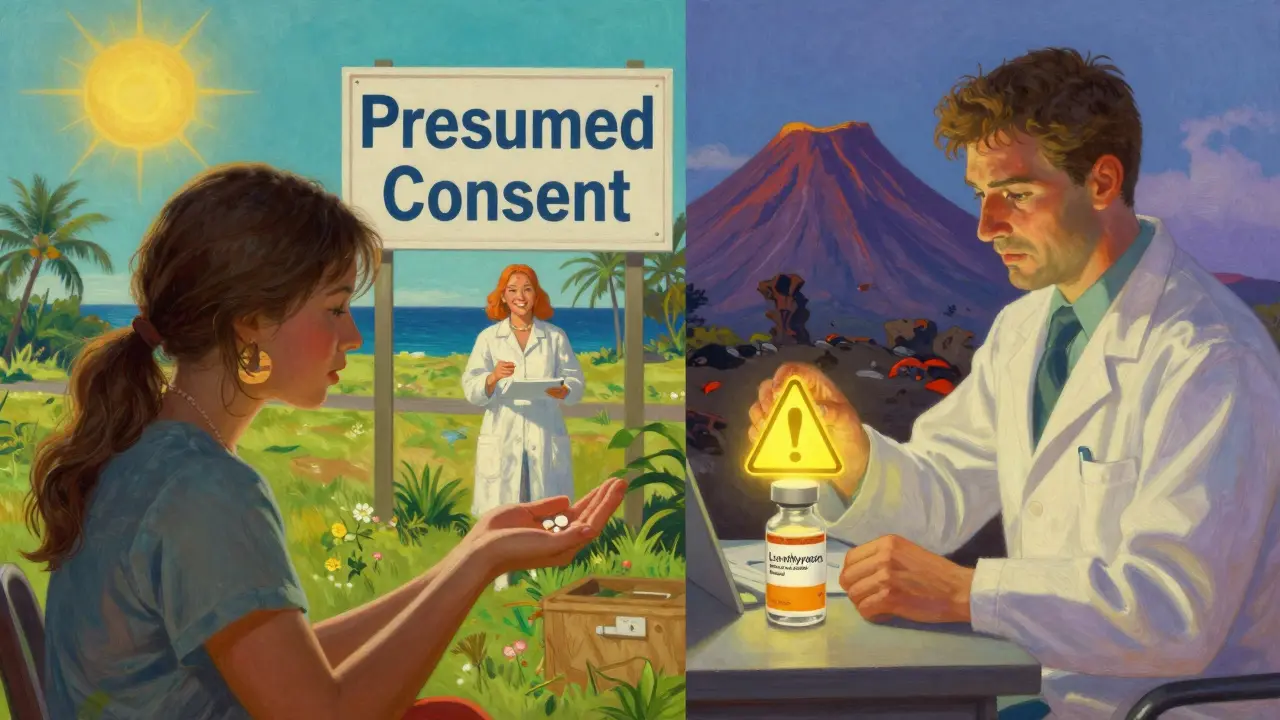
Where the System Breaks Down
The biggest problem isn’t the science-it’s the inconsistency. A 2022 study found pharmacists spend nearly 13 minutes per prescription checking state laws, FDA ratings, and patient preferences. That’s time taken away from counseling patients. Chain pharmacies process about 18% of prescriptions that cross state lines. A prescription written in Ohio, filled in Pennsylvania, and refilled in Indiana? That’s a legal minefield. And patients notice. Between 2020 and 2022, the FDA’s MedWatch system recorded 217 reports of problems after generic substitution. Most involved levothyroxine or warfarin. One woman in Minnesota switched from her brand-name warfarin to a generic and ended up in the hospital with a dangerous bleed. Her doctor had warned her not to switch. But the pharmacist, following state law, didn’t know the warning existed. Patients with rare diseases are especially vulnerable. The Life Raft Group found that 41% of cancer patients worry about substitution of narrow therapeutic index drugs. Twenty-eight percent have a doctor’s note that says "dispense as written"-but not all pharmacists know how to handle it.What’s Being Done to Fix It
Pharmacists are pushing for change. A 2022 survey by the American Pharmacists Association showed 78% of them are confused by the patchwork of rules. They want one national standard. The Uniform Law Commission drafted a model law in 2023 to bring consistency to biosimilar substitution. Twelve states have already updated their laws to match the FDA’s new "interchangeable" designation. Pharmacy software companies have stepped in too. Eighty-three percent of pharmacy systems now auto-check state laws and flag conflicts. That’s cut substitution errors by 64%. States are also learning from each other. Oklahoma banned substitution unless the doctor or patient approves. Louisiana, on the other hand, has the most patient-friendly rules-lowest barrier to substitution. That’s why Louisiana scores a 0 on the National Conference of State Legislatures’ substitution favorability scale, while Hawaii scores a 4.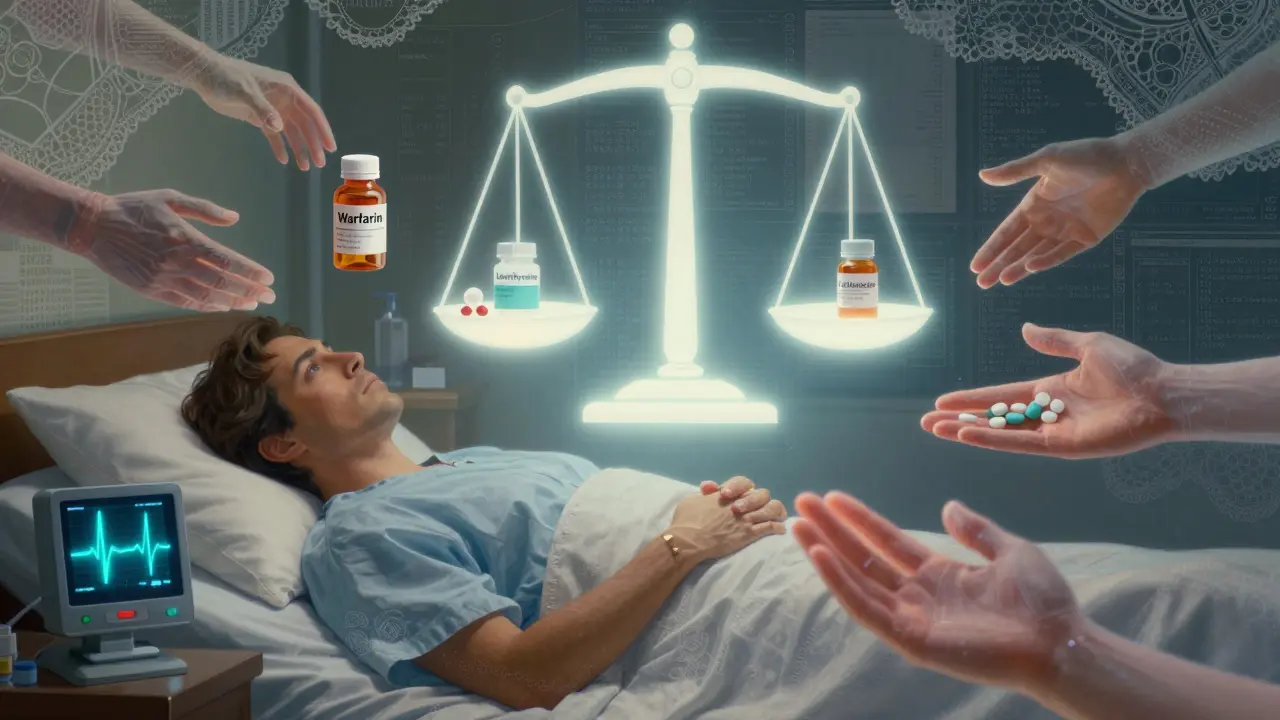
What You Should Do
If you take a medication with a narrow therapeutic index-warfarin, levothyroxine, phenytoin, digoxin, or certain seizure drugs-don’t assume the generic is automatically okay.- Ask your doctor to write "dispense as written" on the prescription if you’ve had problems before.
- When you pick up your prescription, check the label. Is the name different? If so, ask why.
- Know your state’s rules. In some places, you have to say no to get the brand. In others, you have to say yes to get the brand.
- If you feel different after switching-fatigue, dizziness, mood changes, unusual bleeding-call your doctor. Don’t wait.
Why This Matters Beyond the Pharmacy Counter
These laws aren’t just about pills. They’re about trust. When patients don’t understand why their medication changed, they lose confidence in the system. Some stop taking their meds altogether. A 2022 survey found mandatory substitution laws reduced prescription abandonment by 15% in Texas-because patients trusted the process. But in places with unclear rules, abandonment rates stayed high. And the cost savings are real. Mandatory substitution saves Medicaid programs $1.2 billion a year. That’s money for hospitals, clinics, and other patients. But savings shouldn’t come at the cost of safety. The goal isn’t to eliminate brand-name drugs. It’s to make sure generics are used where they’re safe-and protected where they’re not. The system isn’t broken. It’s just messy. And fixing it won’t happen overnight. But if you know your rights, ask questions, and speak up when something feels off-you’re part of the solution.Can a pharmacist substitute my generic drug without telling me?
In 41 states, pharmacists are required to notify you after switching to a generic. In the other nine, they’re not legally required to say anything. But even in those states, many pharmacists still inform patients as a best practice. Always check your prescription label and ask if you’re unsure.
Why do some states require patient consent and others don’t?
It’s a balance between cost control and patient autonomy. States with presumed consent prioritize savings and efficiency. States with explicit consent prioritize informed choice. The difference often comes down to political priorities and patient advocacy in each state. There’s no national standard, so each state makes its own call.
Are generic drugs really as safe as brand-name drugs?
For most drugs, yes. The FDA requires generics to have the same active ingredient, strength, dosage form, and route of administration as the brand. They must also prove they’re absorbed into the body at the same rate and amount. But for narrow therapeutic index drugs-like warfarin or levothyroxine-even small differences in absorption can matter. That’s why some states restrict substitution for these.
What should I do if I think my generic drug isn’t working?
Don’t ignore it. Keep a log of symptoms-when they started, how bad they are, and if they match a time you switched medications. Contact your doctor immediately. You have the right to ask for your original brand. Also report any side effects to the FDA’s MedWatch program. Your report helps improve safety for everyone.
Can I get the brand-name drug instead of the generic?
Yes, but it may cost more. You can ask your doctor to write "dispense as written" or "do not substitute" on the prescription. In some cases, your insurance may require you to pay the difference in price. If you’ve had a bad reaction to a generic before, this is your best protection.
Do these laws apply to mail-order pharmacies?
Yes. Mail-order pharmacies must follow the laws of the state where the patient lives-not where the pharmacy is located. So if you live in California but your pharmacy is in Ohio, California’s rules apply. That’s why mail-order systems use software to auto-check state laws before filling prescriptions.

Windie Wilson
January 12, 2026 AT 08:32So let me get this straight - in some states, they swap my thyroid med without asking, and in others, I have to beg for the generic? 😒 Meanwhile, my insurance is overjoyed because I’m now paying $3 for a pill that might make me feel like a zombie. Thanks, America. 🙃
Alex Fortwengler
January 13, 2026 AT 06:28Y’all are being played. Big Pharma doesn’t want you to know this but generics are made in the same factories as brand names - just different labels. The FDA? A puppet. The real difference? The fillers. They add cheap junk to generics to make them ‘work’ - and that’s why some people get weird side effects. Wake up. This isn’t about safety - it’s about control.
Monica Puglia
January 13, 2026 AT 12:38As someone who’s been on levothyroxine for 12 years, I’ve switched generics 5 times and never noticed a difference - until I did. One batch made me feel like I was underwater. I called my pharmacist. They apologized, checked the lot, and swapped me back. 🤝 It’s not about fear - it’s about awareness. Always check the label. And if you’re unsure? Ask. You’ve got this 💪❤️
Faith Wright
January 14, 2026 AT 12:57Oh please. You think the system’s broken? Nah. It’s perfectly designed to keep you confused, anxious, and compliant. They don’t want you to know your rights - they want you to just take the pill and shut up. And guess what? You’re still doing it. 😏
Rebekah Cobbson
January 14, 2026 AT 20:37My mom’s on warfarin. She’s terrified of switching generics. We called her doctor, got the ‘dispense as written’ note, and now we keep a printed copy in her wallet. It’s a small thing - but it gives her peace. If you’re on a narrow therapeutic index drug, don’t wait for a crisis. Be proactive. You’re worth the extra step.
Audu ikhlas
January 15, 2026 AT 10:13USA so weak. In Nigeria we just give the drug and people take it. No paperwork no consent no drama. Why you all so soft? You think your body is too special? This is why your healthcare costs so much. Stop complaining and swallow the pill like a man!
laura manning
January 15, 2026 AT 19:52According to the FDA’s Bioequivalence Guidelines (21 CFR 320.22), the 90% confidence interval for Cmax and AUC must fall within 80.00–125.00% for therapeutic equivalence. However, in practice, variability in excipients and dissolution profiles-particularly in extended-release formulations-can produce clinically significant deviations in patients with comorbidities. Therefore, while statistically equivalent, pharmacokinetic equivalence does not guarantee clinical equivalence in all populations. This is why state-level discretion remains necessary.
Bryan Wolfe
January 16, 2026 AT 10:30Big thanks to everyone who’s shared their stories - this is why real conversations matter. I work in a pharmacy, and honestly? Most of us want to do right by patients. We just need better tools and clearer rules. The software that flags state laws? Lifesaver. But we’re still human. If you’re unsure, ask us. We’re not mind readers - but we’re here to help. 💙
Jay Powers
January 18, 2026 AT 08:39My cousin switched from brand to generic levothyroxine and felt fine for months. Then she got super tired, gained 15 lbs, and her depression came back. She didn’t connect it until she saw a new doctor who asked about her med history. Now she’s back on brand and feels like herself again. Point is - your body remembers. Don’t ignore the signs. And if you’ve had a bad experience before? Say so. Always.
Lawrence Jung
January 19, 2026 AT 14:33The real issue isn’t substitution - it’s the illusion of choice. We live in a system that commodifies health. You think you’re making a decision when you say yes or no to a generic? No. You’re choosing between two versions of the same exploitation. The solution isn’t more laws - it’s dismantling the entire profit-driven model. But that’s too radical for most. So we keep swapping pills and calling it progress.