Ear Infection in Children: Causes, Symptoms, and What Actually Works
When a child tugs at their ear, cries more than usual, or won’t lie down to sleep, it’s often an ear infection in children, a common inflammation of the middle ear, often caused by bacteria or viruses that spread from the nose or throat. Also known as otitis media, it’s not just a nuisance—it’s one of the top reasons parents take kids to the pediatrician. About 80% of children will have at least one ear infection before turning three. Most aren’t serious, but they can be painful, disrupt sleep, and sometimes affect hearing while they last.
What causes these infections? It’s usually a cold or flu that spreads to the Eustachian tube—the small passage connecting the middle ear to the back of the throat. In kids, this tube is shorter and more horizontal than in adults, making it easier for germs to get trapped and fluids to build up. That pressure and fluid create the pain, fever, and fussiness you see. antibiotics for ear infections, medications prescribed to treat bacterial causes of middle ear inflammation are often thought of as the go-to fix. But not every ear infection needs them. Many clear up on their own within a few days, especially in older kids. The real challenge? Knowing when to wait and when to act.
pediatric ear infection, an ear infection specifically affecting children, often requiring different management than adult cases doesn’t always mean antibiotics. Watchful waiting, pain relief with ibuprofen or acetaminophen, and warm compresses can be just as effective in many cases. But if your child is under two, has a high fever, or symptoms last more than 48 hours, it’s time to talk to a doctor. Recurring infections can lead to hearing delays, which is why some kids get ear tubes—tiny cylinders placed in the eardrum to help drain fluid and prevent buildup.
There’s also a growing awareness around overuse. Not every earache is an infection. Sometimes it’s just teething, or fluid from a recent cold that hasn’t cleared yet. And while child ear pain, a common symptom of middle ear inflammation, often mistaken for other causes like teething or earwax is scary to see, it doesn’t always mean something dangerous is happening. The key is recognizing red flags: drainage from the ear, high fever that won’t break, or a child who seems unusually lethargic or unresponsive.
What you’ll find in the posts below isn’t a list of myths or generic advice. It’s real, practical info from parents and doctors who’ve been there. You’ll see how to tell if it’s an ear infection or something else, when antibiotics actually help (and when they don’t), how to manage pain safely, and what to do if infections keep coming back. No fluff. No scare tactics. Just what works—based on what’s been shown in practice and research.
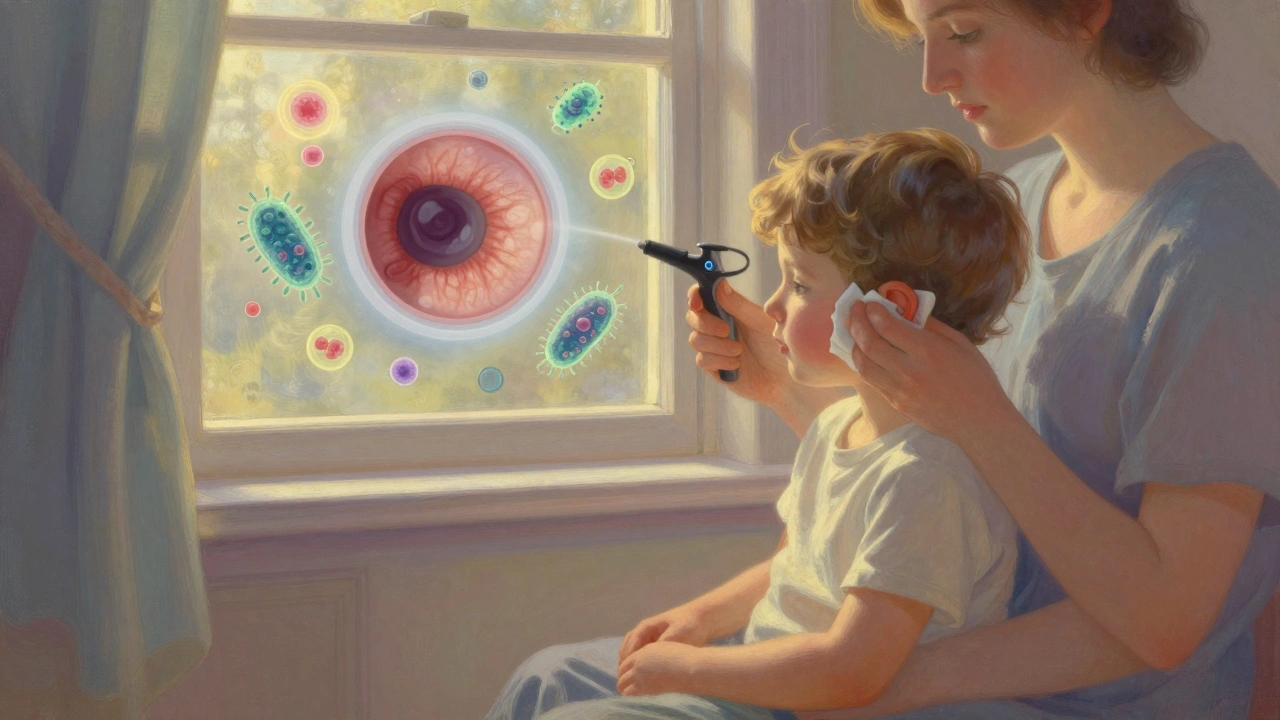
Otitis Media: Understanding Middle Ear Infections and When Antibiotics Really Help
Otitis media is a common middle ear infection, especially in young children. Learn when antibiotics are truly needed, how to manage pain, and what parents can do to prevent recurrent infections.