Most people don’t realize that generic drugs make up 90% of all prescriptions filled in the U.S. - yet they cost just 12% of what brand-name drugs do. That’s not a typo. For every $100 spent on prescriptions, only $12 goes to generics, even though you’re taking them in nine out of ten cases. Why? Because deep down, many still believe generics are weaker, less reliable, or somehow "second-rate." And that belief isn’t based on science. It’s based on psychology.
Why We Still Doubt Generic Drugs
It’s not about the pills. It’s about the packaging. The color. The shape. The name on the bottle. A 2025 survey found that 78% of doctors say patients worry their generic medication won’t work as well as the brand. Even though the FDA requires generics to have the same active ingredient, same dosage, same absorption rate, and same safety profile - patients still feel uneasy. Why? Because the brain associates cost with quality. A cheaper pill feels like a compromise. It feels like you’re settling.
This isn’t new. Back in the 1990s, people thought generic antibiotics were risky. Now we know better. But with newer, more complex drugs - like injectable biosimilars for cancer or autoimmune diseases - that old fear is coming back. Patients see a $10,000 brand-name drug and think, "If this costs ten grand, how can a $7,000 version be the same?" They’re not wrong to wonder. They’re just missing the full picture.
The Real Difference Between Generics and Brands
Let’s clear this up: there is no clinical difference. The FDA doesn’t approve a generic drug unless it’s bioequivalent - meaning it delivers the same amount of medicine into your bloodstream at the same speed as the brand. That’s not a guess. It’s measured in clinical trials. The inactive ingredients? Yes, those can vary. The filler. The coating. The dye. But those don’t affect how the drug works. They just change how it looks or tastes.
Now, here’s where things get interesting. The market has changed. Generics aren’t just plain white pills anymore. In 2025, the FDA approved six new biosimilars for denosumab - drugs used to treat osteoporosis and bone cancer. These aren’t simple copies. They’re complex biological products made in living cells. Think of them like a handmade watch versus a factory-made version of the same design. Same function. Same precision. Different manufacturing process.
And yet, these biosimilars still cost 15-30% less than the original. That’s not a small saving. That’s life-changing for someone on long-term treatment. But the perception gap? It’s wider than ever.
Why Cost Isn’t Enough Anymore
For years, the argument for generics was simple: they save money. And that’s still true. But as drug prices stabilize and supply chains improve, that message is losing power. People aren’t just looking for cheap. They’re looking for trustworthy.
Take CivicaScript. This nonprofit drugmaker works directly with hospitals to produce essential generic injectables at transparent, fixed prices. No bidding wars. No middlemen. No surprise price hikes. Their model isn’t about undercutting competitors. It’s about removing fear. When a hospital pharmacist knows exactly where the drug came from, how it was made, and that it won’t disappear next month - they prescribe it with confidence. And when patients see that confidence? They start trusting too.
That’s the shift. The future of changing perceptions isn’t about yelling louder that generics are safe. It’s about making them feel safe.
Technology Is Building Trust, One Block at a Time
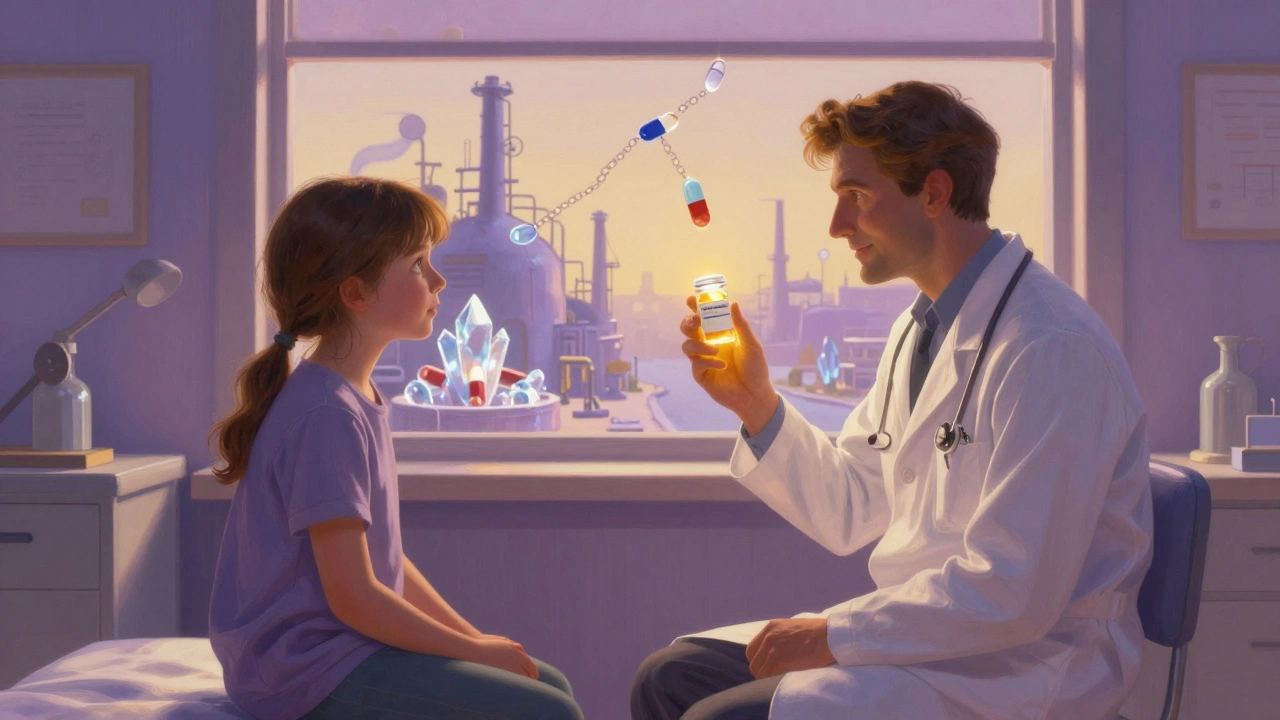
Blockchain isn’t just for crypto. In 2025, several U.S. pharmacies started using blockchain to track the journey of generic drugs from manufacturer to patient. Every batch. Every shipment. Every inspection. All recorded on a public, tamper-proof ledger. Patients can scan a QR code on their prescription bottle and see the entire history: where the active ingredient was synthesized, which lab tested it, when it passed FDA inspection.
That’s not marketing. That’s transparency. And it’s working. Early pilot programs showed a 27% increase in patient willingness to refill generic prescriptions after seeing the traceability data. When people can see proof - not just claims - their minds change.
AI is helping too. Machine learning models now predict which generic drugs are most likely to have supply issues before they happen. Hospitals use these forecasts to stock up in advance. No more last-minute switches. No more patient confusion. Predictability builds trust. And trust builds adoption.
Doctors Are the Missing Link
Patients don’t make decisions in a vacuum. They look to their doctors. And here’s the uncomfortable truth: some doctors still hesitate to recommend generics - not because they doubt them, but because they don’t know how to explain them.
A 2025 pilot by the American Medical Association trained 1,200 physicians to use a simple script when prescribing generics: "This is the exact same medicine as the brand, just without the marketing. You’ll get the same results, save hundreds a year, and help keep costs down for everyone." After six months, patient concerns dropped by 35%.
That’s not magic. That’s communication. When a doctor says, "This is not a substitute - it’s the same," it changes everything. The word "substitute" makes it sound like a downgrade. "Same" makes it sound like a smart choice.
The Rise of Specialty Generics and What It Means
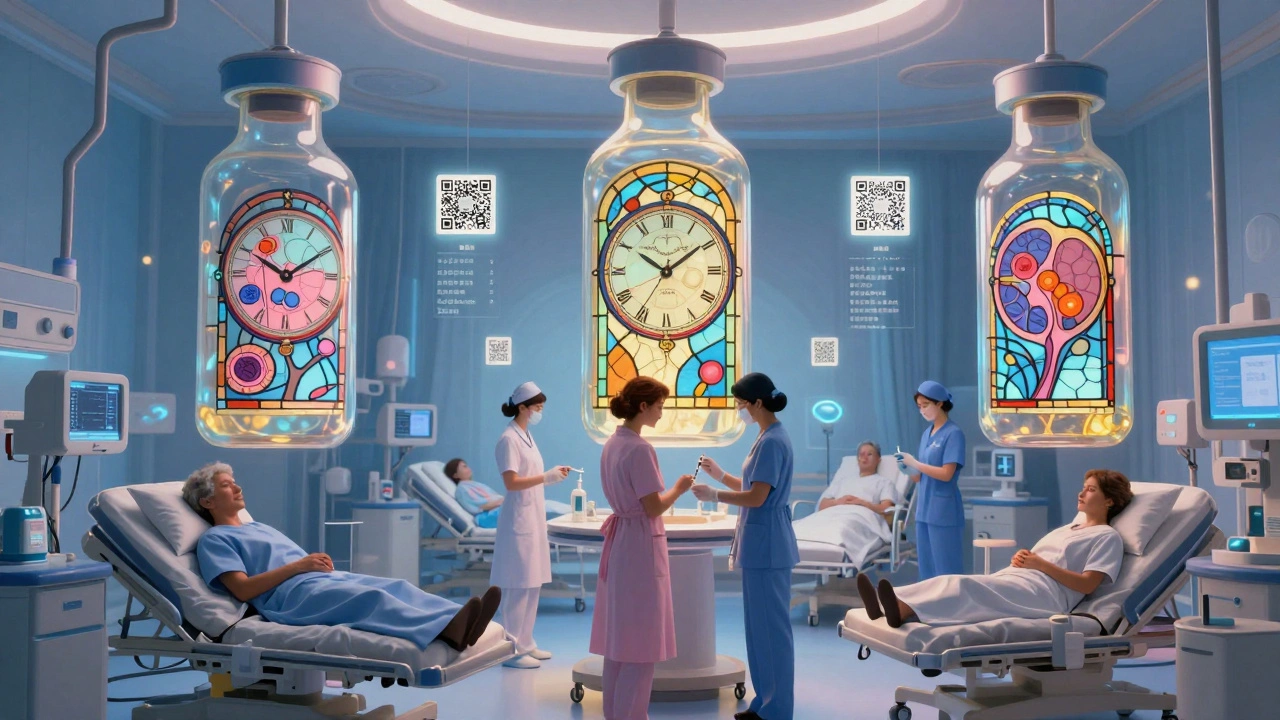
The biggest growth area for generics isn’t in aspirin or blood pressure pills. It’s in specialty drugs - the ones used for cancer, rheumatoid arthritis, multiple sclerosis. These used to be almost exclusively brand-name. Now, they’re becoming generic. Fast.
Why? Because patents are expiring. Over 100 branded drugs will lose patent protection between 2025 and 2027. That includes some of the most expensive treatments on the market. And with them, a chance to reshape how we think about value in medicine.
But here’s the catch: specialty generics aren’t cheap to make. They need sterile labs, advanced equipment, and highly trained staff. That’s why hospital pharmacies are leading the charge. They’re not just filling prescriptions. They’re managing supply chains, ensuring quality, and educating staff. And patients are noticing. In oncology units, where every dollar saved means another round of treatment, generic injectables are now the default - not the exception.
What’s Next? It’s Not Just About Price
The generic drug market is projected to hit $728 billion by 2034. That’s massive growth. But the real challenge isn’t production. It’s perception. We’ve moved past the era where cost alone could win people over. Now, we need reliability. Transparency. Consistency.
That’s why the future of generic drugs isn’t about more ads or cheaper prices. It’s about:
- Patients seeing the full story behind their medication
- Doctors confidently saying, "This is the same," not "This is cheaper"
- Hospitals and pharmacies building systems that make generics feel dependable
- Manufacturers proving quality through technology, not just paperwork
The science has already won. The pills work. The data is solid. The savings are real. Now, the psychology needs to catch up. And it will - not because we tell people to believe, but because we give them proof they can see, touch, and trust.
What You Can Do Today
If you’re taking a generic drug - and you’re unsure - ask your pharmacist or doctor this: "Can you show me the data that proves this is the same as the brand?" You’ll likely get a clear answer. If you’re a provider, start using the word "same" instead of "generic" when you talk to patients. If you’re a policymaker, support transparency tools like blockchain tracking and domestic manufacturing.
Because the future of healthcare isn’t about choosing between brand and generic. It’s about choosing between fear and facts. And facts? They’re winning.
Are generic drugs really as effective as brand-name drugs?
Yes. The FDA requires generic drugs to have the exact same active ingredient, strength, dosage form, and bioequivalence as the brand-name version. That means they work the same way in your body, at the same speed, with the same results. The only differences are in inactive ingredients - like fillers or dyes - which don’t affect how the medicine works.
Why do some people feel generics don’t work as well?
It’s mostly psychological. People associate higher price with higher quality. A white pill with no logo feels less "real" than a branded one, even if it’s identical. Some also notice slight differences in size, shape, or color - which can trigger doubt. But studies show no difference in effectiveness. When patients understand this, concerns drop significantly.
What’s the difference between a generic drug and a biosimilar?
Generics are exact copies of small-molecule drugs - like pills for blood pressure or diabetes. Biosimilars are highly similar versions of complex biological drugs - like injections for cancer or autoimmune diseases. They’re not identical because they’re made from living cells, but they’re proven to work the same way. Biosimilars typically save 15-30%, while traditional generics save 80-85%.
Why are generic drug prices stabilizing now?
After years of falling prices, many generic drugs have reached a point where further cuts would make production unsustainable. Manufacturers now need to cover costs for quality control, compliance, and skilled labor. Experts predict prices will stabilize as the market matures - shifting focus from cost alone to reliability and supply chain strength.
Can I trust generic drugs made overseas?
Yes - if they’re approved by the FDA. The FDA inspects all manufacturing facilities, whether they’re in the U.S., India, or elsewhere. The location doesn’t determine quality. The inspection process does. Many top generic manufacturers operate globally, but all must meet the same strict standards. Transparency tools like blockchain are now helping patients verify the origin and safety of their medication.
Will insurance cover biosimilars the same as brand-name drugs?
Most do - and many are starting to prefer them. Insurance companies and Medicare Part D plans are actively steering patients toward biosimilars because they offer major savings without compromising care. Some plans even require biosimilar use before approving the brand-name version. Coverage policies are evolving quickly as more biosimilars enter the market in 2025 and beyond.

Shubham Mathur
December 9, 2025 AT 00:04Look I get why people are skeptical but come on - generics are literally the same damn thing. I’ve been on them for years for my blood pressure and I’m still alive and kicking. The only difference is my wallet isn’t crying every month. Stop letting marketing fool you. The FDA doesn’t play games.
Morgan Tait
December 9, 2025 AT 10:32Ever wonder why the FDA approves generics from India but won’t let you import insulin from Canada? Coincidence? I think not. The real story is Big Pharma owns the regulators. They let cheap generics in... just not the *right* kind. You think blockchain tracking is transparency? Nah. It’s just a shiny distraction so you don’t ask who really controls the supply chain. They want you to feel safe... while they still own the levers.
Darcie Streeter-Oxland
December 9, 2025 AT 11:08While I appreciate the earnestness of this exposition, I must express my profound reservations regarding the implicit conflation of regulatory compliance with consumer perception. The assertion that ‘the science has already won’ is, in my estimation, empirically unsound in the sociological domain. Human beings do not operate on bioequivalence curves; they operate on affective heuristics. The notion that transparency alone can rectify deeply entrenched psychological biases is, frankly, naïve.
Christian Landry
December 11, 2025 AT 09:30my dr just started prescribing me the generic version of my antidepressant and honestly? i felt weird at first. like i was cheating or something. then i scanned the qr code and saw the whole chain-made in ohio, tested in indiana, shipped to my local pharmacy. no magic. just facts. now i feel like a genius for saving $200/month. 🤓💊
Katie Harrison
December 12, 2025 AT 14:20As someone who’s been on biosimilars for rheumatoid arthritis for three years, I can say this: the only thing that changed was the price tag. My joints still hurt the same-wait, no, they hurt *less*, because I can actually afford the injections now. The fear is manufactured. The relief? Real. And I’m tired of people treating generics like they’re a compromise. They’re not. They’re justice.
Guylaine Lapointe
December 13, 2025 AT 13:14This whole article reads like a pharmaceutical industry press release. Generics save money? So do cutting corners on quality control. And let’s not pretend every manufacturer meets FDA standards. There are documented cases of contamination, mislabeling, and falsified test results-especially in countries with lax oversight. Transparency tools? Cute. But they don’t fix systemic corruption. The real solution? Nationalize drug production. Stop outsourcing life-saving medicine to the lowest bidder.
Haley P Law
December 14, 2025 AT 11:24MY DOCTOR SWITCHED ME TO A GENERIC AND I FELT LIKE I WAS BEING POISONED. I THOUGHT I WAS GOING TO DIE. I CALLED THE PHARMACY THREE TIMES. TURNED OUT IT WAS JUST A DIFFERENT SHAPE. I’M FINE NOW BUT I’M NOT TRUSTING ANYTHING EVER AGAIN. 😭
Andrea DeWinter
December 15, 2025 AT 15:33When I worked in rural clinics, patients would refuse generics because they didn’t recognize the pill. So we started printing the brand name on the pill itself with food-grade ink. No one believed it at first. Then they saw the FDA label. Then they saw the same batch number on the brand bottle. One woman cried because she finally felt like she wasn’t being scammed. It’s not about the science. It’s about dignity.
Steve Sullivan
December 16, 2025 AT 00:34think about it-why do we trust a $10,000 pill more than a $7,000 one? is it the science? or is it that we’ve been trained to equate cost with worth? like buying a $2000 watch when a $20 one tells the same time. we’re not irrational. we’re just products of capitalism. and the real tragedy? the people who need these drugs the most are the ones being made to feel guilty for wanting affordable care. we need to stop making medicine a status symbol.
Sabrina Thurn
December 16, 2025 AT 13:22From a pharmacoeconomic standpoint, the paradigm shift is less about perception and more about value chain integrity. The traditional generic model, predicated on commoditization, is no longer viable for complex biologics. The emergence of biosimilar manufacturing ecosystems-integrated with real-time quality assurance protocols, GMP-compliant cold-chain logistics, and blockchain-anchored traceability-represents a structural evolution in therapeutic access. Patient trust is not merely a behavioral outcome; it is an engineered system property.
Courtney Black
December 16, 2025 AT 15:56They say facts win. But facts don’t pay rent. Facts don’t put food on the table. Facts don’t stop you from being afraid when your child’s medicine looks different. People don’t need more data. They need to feel safe. And right now? They feel like they’re being sold a lie.