Prescription Drug Risks: What You Need to Know About Side Effects and Safety
When you take a prescription drug, a medication approved by health authorities for treating specific conditions, often requiring a doctor’s authorization. Also known as regulated medication, it can be life-saving—but it also carries hidden dangers that many patients don’t see coming. Not every risk shows up on the label. Some only appear after weeks of use, others kick in when you mix it with another pill, a supplement, or even grapefruit juice.
Take anticoagulant side effects, serious bleeding risks tied to blood thinners like warfarin or DOACs. Also known as hemorrhage risk, it’s not rare—nearly 1 in 10 people on these drugs will have a major bleed within a year if not monitored properly. That’s why genetic testing for CYP2C9 and VKORC1 variants, gene changes that affect how your body processes warfarin. Also known as pharmacogenetic markers, they help doctors pick the right dose before you even start the pill. It’s not science fiction—it’s standard care in many hospitals. Then there’s immunosuppressant drugs, medications that stop your immune system from attacking a transplanted organ. Also known as anti-rejection drugs, they’re essential for transplant patients—but they also raise your risk of infections, kidney damage, and even certain cancers. Many people don’t realize how many other drugs can interact with them. Tacrolimus and mycophenolate aren’t just strong—they’re finicky.
And it’s not just about the drug itself. Sometimes, the risk comes from not knowing where to find the real info. Medication Guides give you the FDA’s top warnings in plain language. Package Inserts have every detail, down to the rarest side effect. Most patients skip both and rely on Google or a pharmacist’s quick answer. That’s not enough when your life could depend on spotting early signs of internal bleeding, liver stress, or dangerous drops in blood sugar.
Below, you’ll find real, practical breakdowns of the most dangerous prescription drug risks—what they look like, who’s most at risk, and how to avoid the worst outcomes. Whether you’re on warfarin, a transplant med, insulin, or something else entirely, you’ll find answers that actually matter.
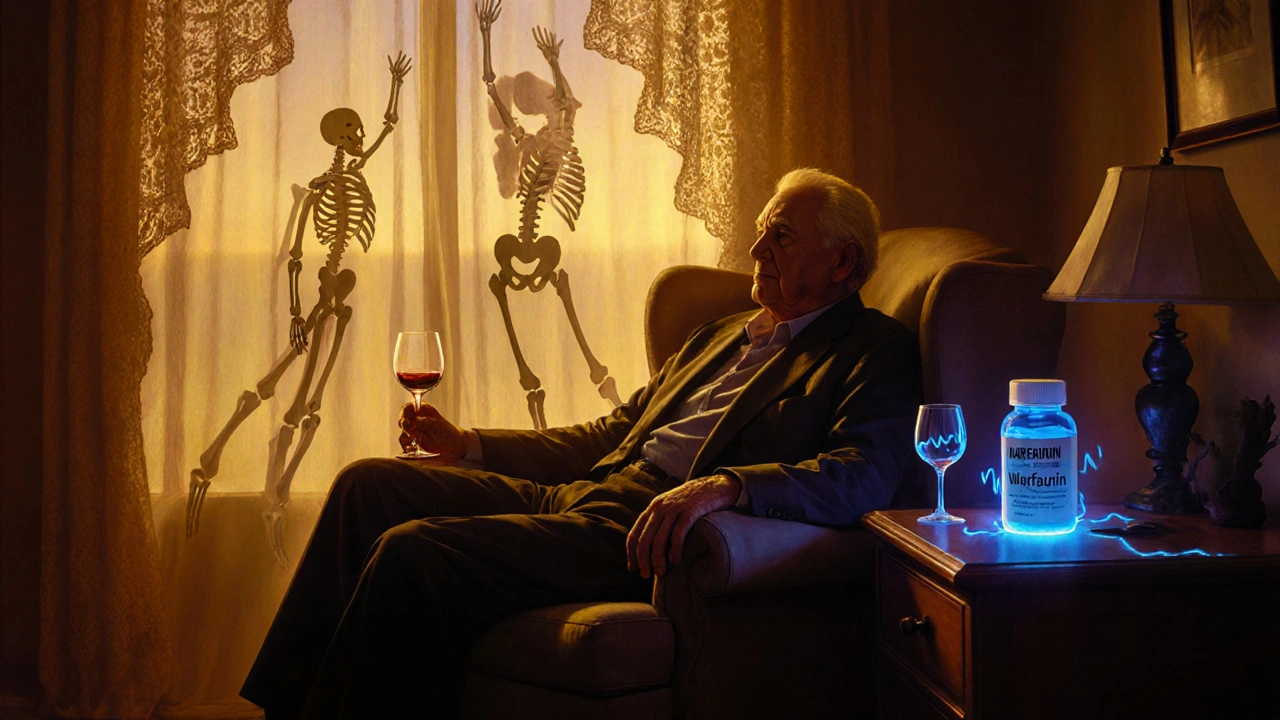
Alcohol and Prescription Drugs: Dangerous Interaction Effects
Alcohol and prescription drugs can have deadly interactions, increasing risks of overdose, liver failure, and falls. Learn which medications are most dangerous with alcohol and how to protect yourself.