Drug Patents Explained: How They Control Generic Access and Drug Prices
When you hear drug patents, legal protections that give pharmaceutical companies exclusive rights to sell a new medication for a set time. Also known as market exclusivity, they’re the reason brand-name drugs cost so much—and why generics don’t show up right away. These patents are filed before a drug even hits the market and typically last 20 years from the date of filing. But here’s the catch: by the time the FDA approves the drug, years have already passed in clinical trials. That leaves companies with maybe 7–12 years of real monopoly time to recoup billions in R&D costs. That’s why they fight hard to extend them.
That’s where the Hatch-Waxman Act, a 1984 U.S. law that balanced innovation with access by creating a fast track for generic drug approval. Also known as Drug Price Competition and Patent Term Restoration Act, it let generic makers file applications (ANDAs) before the patent expires, as long as they prove their version works the same. But big pharma found loopholes. They file new patents on minor changes—like a new pill coating or a slightly different dose—called product hopping. Or they pay generic companies to delay entry with pay-for-delay deals. These tactics keep prices high and patients waiting. In fact, one study found that pay-for-delay deals cost U.S. consumers over $3.5 billion a year in extra drug costs.
Patent expiration, the moment when a drug’s legal monopoly ends and other companies can legally make copies. Also known as generic entry date, it is the turning point for drug affordability. Once it hits, multiple generic makers enter the market, and prices often drop by 80–95%. But not all patents expire cleanly. Some are challenged in court, some get extended for pediatric studies, and others are buried under layers of legal filings. That’s why predicting when a generic will launch isn’t just about the patent date—it’s about legal battles, FDA reviews, and corporate strategy.
And it’s not just about money. pharmaceutical competition, the market dynamic that kicks in after patents expire, forcing lower prices and better access. Also known as generic market entry, it saves lives. In the U.S., 90% of prescriptions are now generic. But without real competition—because of patent tricks—those savings never happen. Patients with chronic conditions like high blood pressure or diabetes are hit hardest. One pill that costs $300 as a brand name might drop to $4 as a generic. That’s not a rounding error—it’s the difference between taking your meds or skipping them.
What you’ll find in these posts isn’t just theory. It’s real data on how generics match brand drugs in absorption, how long the FDA takes to approve them, and how antitrust laws are trying to stop the games. You’ll see how companies delay generic entry, how bioequivalence standards keep you safe, and why some patents are more about legal maneuvering than innovation. This isn’t about complex science—it’s about your health, your wallet, and who really controls your medicine.
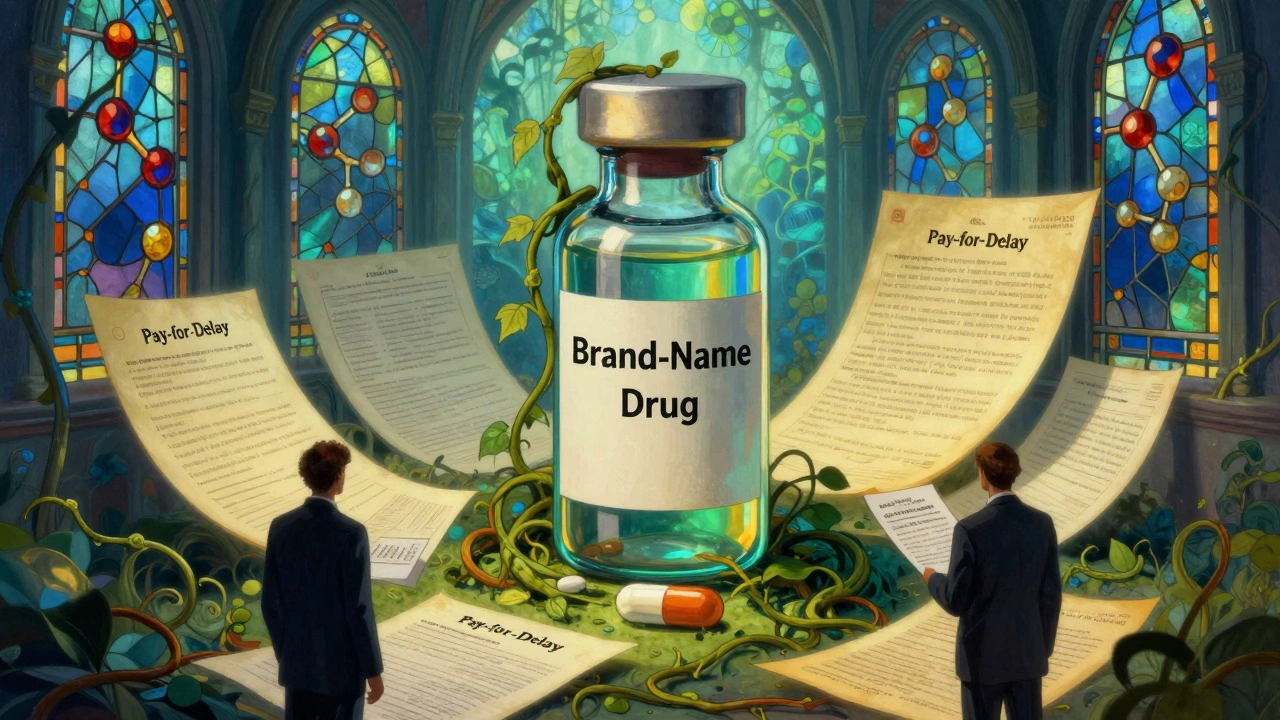
Why Some Brand-Name Drugs Have No Generic Alternatives
Not all brand-name drugs have generic versions, even after patents expire. Complex formulations, legal tactics, and manufacturing hurdles keep prices high. Here’s why some drugs stay expensive-and what you can do about it.