
Vancomycin Risk Assessment Tool
Assess Patient Risk
This tool helps clinicians evaluate risks of vancomycin-induced nephrotoxicity and ototoxicity based on patient-specific factors and treatment parameters.
Nephrotoxicity Risk
Key factors: Trough levels, concurrent nephrotoxic drugs, duration of therapy
Ototoxicity Risk
Key factors: Genetic susceptibility, dose, concurrent ototoxic drugs, age
Clinical Recommendations
Vancomycin is one of the most important antibiotics we have for treating life-threatening infections like MRSA. But it’s not without serious risks. Two major side effects - nephrotoxicity and ototoxicity - force clinicians to walk a tightrope between saving lives and causing lasting harm. In 2026, we know more than ever about how these risks work, who’s most vulnerable, and how to manage them. Yet, many hospitals still rely on outdated practices that put patients at unnecessary risk.
Nephrotoxicity: The More Common, But Often Reversible, Threat
Nephrotoxicity - kidney damage - is the most frequent problem with vancomycin. Studies show it happens in 5% to 30% of patients, depending on how you define it and who’s receiving the drug. In intensive care units, where patients are already sick and on multiple drugs, rates can hit 50%. The biggest red flag? High trough levels. For years, doctors aimed for troughs of 15-20 mcg/mL to make sure the drug worked. But research since 2020 has flipped that thinking. Targeting 10-15 mcg/mL gives the same infection control with far less kidney damage. A 2022 meta-analysis of over 14,500 patients found that combining vancomycin with piperacillin-tazobactam (V+PT) increases the risk of acute kidney injury by more than double compared to vancomycin with meropenem (V+M). Why? Both drugs stress the kidneys, but together, they overwhelm the system.
The damage isn’t random. It happens when vancomycin builds up in the kidney’s tubules, triggering oxidative stress and cell death. Most cases show up between day 3 and day 14 of treatment. That’s why checking serum creatinine every 48-72 hours is critical. If levels rise by 0.3 mg/dL or more from baseline, it’s time to reassess. The good news? In most cases, kidney function improves after stopping vancomycin. A 2019 study found the average hospital stay extended by only 3.2 days due to vancomycin-induced kidney injury. With early detection, many patients recover fully.
Ototoxicity: The Silent, Irreversible Danger
While nephrotoxicity is common, ototoxicity - hearing damage - is far more feared. It affects only 1-3% of patients, but when it strikes, it’s often permanent. Unlike kidney damage, there’s no lab test to catch it early. No creatinine spike. No urine output drop. Just sudden tinnitus, muffled hearing, or total hearing loss - usually in both ears and at high frequencies. The worst part? It can happen even with normal kidney function and trough levels below 20 mcg/mL.
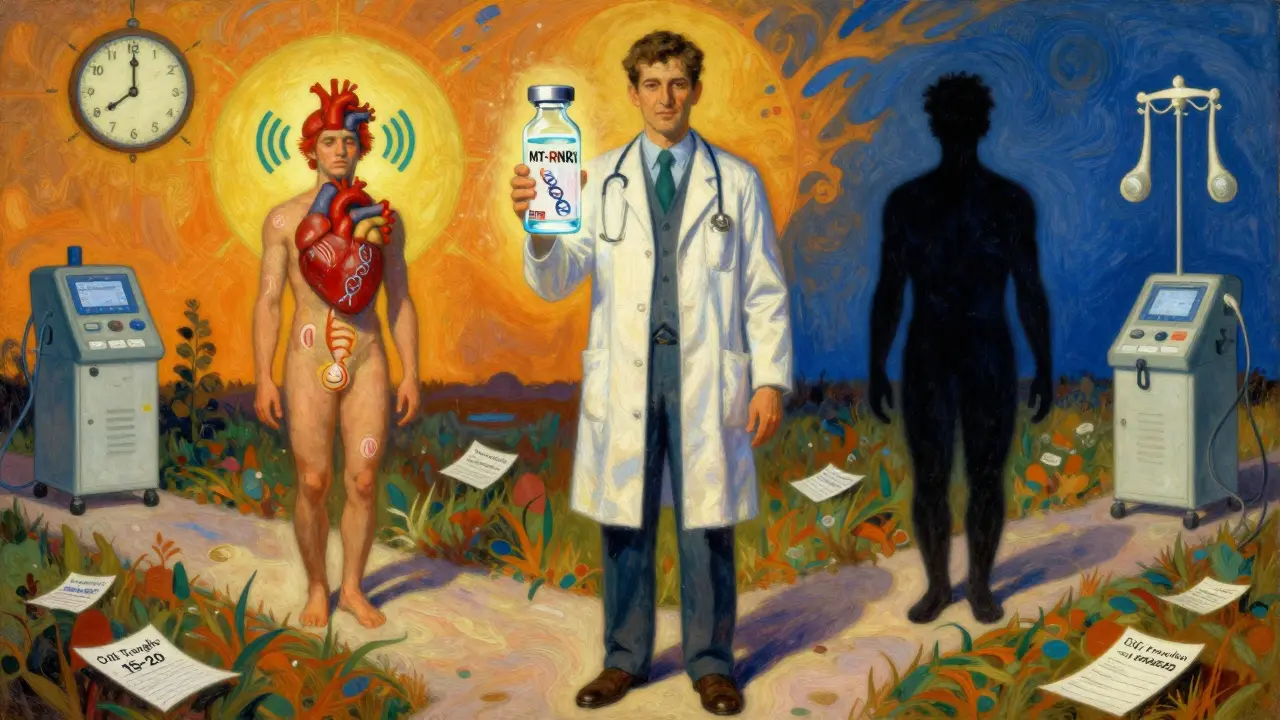
A 1981 case report in the Annals of Internal Medicine was the first to prove vancomycin could cause hearing loss without renal failure. Since then, multiple case reports have confirmed it. One 2023 study in Cureus described a patient who lost hearing after just three doses. Peak concentrations above 80 mcg/mL are dangerous, but damage has been seen at 40 mcg/mL. And here’s the twist: patients who develop ototoxicity don’t always have higher troughs than those who don’t. That suggests individual susceptibility plays a huge role. Genetics might explain why. A 2022 study in Nature Communications linked a variant in the MT-RNR1 gene to a 3.2-fold increase in risk.
Unlike kidney injury, hearing loss doesn’t reverse. A patient who loses 80% of their hearing may need hearing aids for life - costing $25,000 to $50,000 per year. Yet, only 37% of U.S. hospitals have formal protocols to monitor for ototoxicity. Most rely on asking patients if they notice ringing in their ears. That’s not enough. Audiograms should be done before starting therapy and weekly during prolonged courses, especially if the dose exceeds 4 grams per day or the patient is over 65. But resource limits mean many clinics skip them.

Why Combination Therapy Is the Hidden Risk Multiplier
Vancomycin alone is risky. Vancomycin with another nephrotoxic drug? That’s a recipe for disaster. Piperacillin-tazobactam is the most common culprit. It’s used for sepsis, pneumonia, and intra-abdominal infections - exactly the conditions where vancomycin is needed. But together, they create a perfect storm. The 2022 Chung et al. study found V+PT increased AKI risk by 131% compared to V+M. Hospitals that use electronic alerts to flag this combination have cut its use by 22%. That’s a win. Yet, many still default to V+PT because it’s broad-spectrum and familiar.
The real problem? We treat vancomycin like it’s harmless because modern versions are purer than the impure 1950s formulations. But combination therapy has brought back the old dangers. A 2022 JAMA Internal Medicine commentary warned we’ve become complacent. The data is clear: if you’re giving vancomycin with piperacillin-tazobactam, you’re not just treating infection - you’re actively increasing the chance of kidney injury.
Monitoring: What Works and What Doesn’t
Monitoring vancomycin used to mean checking one number: the trough. But that’s outdated. A 2021 survey of 1,247 pharmacists showed 68% of hospitals now use area-under-the-curve (AUC) monitoring instead. Why? Because AUC reflects total drug exposure over time, not just a single snapshot. Studies show AUC-guided dosing cuts nephrotoxicity from 14.7% to 8.2%. The VAN-GUARD trial in 2023 confirmed this - real-time AUC monitoring reduced kidney injury from 18.7% to 9.4% without losing efficacy.
For ototoxicity, there’s no equivalent. Audiograms are the gold standard, but they’re expensive, time-consuming, and often unavailable. Some hospitals have started mandatory baseline hearing tests for high-risk patients - those on high doses, elderly, or on other ototoxic drugs like loop diuretics or cisplatin. But compliance is only 42%. One ICU nurse practitioner told a forum: “I had a patient lose 80% of her hearing. She still blames us. We didn’t even test her.” That’s avoidable.
Electronic tools are helping. Platforms like DoseMeRx and PrecisePK use algorithms to predict kidney injury risk based on age, weight, creatinine, and concomitant drugs. One 2023 study found these tools predict nephrotoxicity with 86% accuracy. They’re not perfect, but they’re better than guessing.
When to Choose Alternatives
Vancomycin is still the go-to for MRSA. But it’s not the only option. Daptomycin, linezolid, ceftaroline, and telavancin are alternatives - each with their own side effects. Daptomycin can cause muscle damage. Linezolid can lower blood counts. Ceftaroline is expensive. But when a patient is already at high risk - say, a 78-year-old with diabetes, on furosemide, and a creatinine of 1.8 - vancomycin might not be worth the gamble.
The 2023 Society of Critical Care Medicine guidelines now classify patients into low, medium, and high risk for nephrotoxicity using eight criteria: age, baseline kidney function, weight, diabetes, sepsis, heart failure, concurrent nephrotoxins, and vancomycin dose. If a patient scores 4 or higher, they’re high risk. At that point, switching to daptomycin or another agent isn’t just prudent - it’s standard.
What Clinicians Need to Do Today
- Target vancomycin troughs of 10-15 mcg/mL, not 15-20.
- Avoid combining vancomycin with piperacillin-tazobactam unless absolutely necessary.
- Use AUC-guided dosing when available - it’s proven to reduce kidney damage.
- Check creatinine every 48-72 hours. If it rises, reassess.
- For patients on high doses (>4g/day) or with risk factors for hearing loss, request a baseline audiogram.
- Don’t wait for symptoms. Ototoxicity can strike fast and silently.
- When in doubt, consider alternatives. Vancomycin saves lives - but it can also take them.
The bottom line? Vancomycin is powerful, but it’s not safe by default. We’ve moved past the days of blindly pushing doses to hit arbitrary targets. Today’s practice is about precision, not potency. The goal isn’t just to kill the infection - it’s to protect the patient’s long-term health. That means listening to the data, not just the old habits.
Can vancomycin cause hearing loss even if kidney function is normal?
Yes. While vancomycin-induced ototoxicity was once thought to only occur in patients with kidney failure, modern case reports show it can happen even in people with normal renal function. A 2023 case in Cureus documented hearing loss after just three doses in a patient with no kidney issues. This suggests individual genetic susceptibility - such as variants in the MT-RNR1 gene - plays a major role. Monitoring trough levels alone isn’t enough to prevent this.
Is vancomycin nephrotoxicity reversible?
In most cases, yes. Kidney injury from vancomycin is typically acute and reversible if caught early. Studies show that stopping the drug and providing supportive care allows kidney function to return to baseline in the majority of patients. However, if the injury progresses to severe acute kidney injury requiring dialysis, recovery may be incomplete. The key is early detection through regular creatinine monitoring.
Why is vancomycin still used if it has so many risks?
Because for serious Gram-positive infections like MRSA, few alternatives are as effective. A 2023 IDSA survey found that 89% of clinicians still consider vancomycin essential. Daptomycin, linezolid, and ceftaroline have limitations - cost, side effects, or lack of proven efficacy in certain infections. When used correctly - with proper dosing and monitoring - the benefits of vancomycin outweigh the risks for most patients.
How often should vancomycin trough levels be checked?
For most patients, trough levels should be checked after the third or fourth dose, then every 48-72 hours during therapy. If the patient is critically ill, on other nephrotoxic drugs, or has unstable kidney function, more frequent monitoring is needed. The goal is to maintain troughs between 10-15 mcg/mL. AUC-guided monitoring, which measures total drug exposure over 24 hours, is now preferred over single troughs when available.
Are there any new tools to help reduce vancomycin toxicity?
Yes. Several tools are now in use. Platforms like DoseMeRx and PrecisePK use pharmacokinetic modeling to predict nephrotoxicity risk with up to 86% accuracy. Real-time AUC monitoring, validated in the 2023 VAN-GUARD trial, has reduced kidney injury rates by nearly half. Electronic alerts in hospital systems now flag dangerous combinations like vancomycin + piperacillin-tazobactam. While audiometry tools for ototoxicity are still emerging, research into point-of-care hearing tests and genetic screening may soon offer better protection.

Erin Pinheiro
February 25, 2026 AT 20:22Gwen Vincent
February 26, 2026 AT 03:25Nandini Wagh
February 27, 2026 AT 07:56Holley T
February 28, 2026 AT 17:37Valerie Letourneau
March 1, 2026 AT 22:06Khaya Street
March 2, 2026 AT 17:12Christina VanOsdol
March 3, 2026 AT 22:59Anil bhardwaj
March 4, 2026 AT 10:08