
Most prescriptions today are filled with generic drugs. They’re cheaper, just as effective for most people, and approved by the FDA. But sometimes, your doctor writes a prescription that says brand-name only - no substitutions allowed. If you’ve ever seen that on your pill bottle or heard your pharmacist say, “Your doctor said no generic,” you might wonder: Is this really necessary? Or is it just old habits, marketing, or confusion?
Why Doctors Sometimes Say No to Generics
It’s not about brand loyalty. It’s not about doctors being paid by drug companies (though that happens too, and it’s a problem). It’s about specific medical situations where even tiny differences in how a drug works can matter. The biggest reason? Narrow therapeutic index (NTI) drugs. These are medications where the difference between a dose that works and a dose that’s dangerous is very small. Think of it like walking a tightrope - a slight wobble can mean a fall. Examples include:- Levothyroxine (Synthroid) for thyroid disease
- Warfarin (Coumadin) for blood thinning
- Levetiracetam (Keppra) for seizures
When Generics Are Just as Good - And Save You Thousands
For the vast majority of medications, generics are identical in effect. A 2020 analysis of 47 studies with over 112,000 patients found no difference in outcomes between brand and generic versions of common drugs like:- Lisinopril (for high blood pressure)
- Metformin (for diabetes)
- Atorvastatin (for cholesterol)
What “Dispense as Written” Really Means
Pharmacists in 49 states and D.C. are legally allowed to swap a brand drug for a generic unless the doctor says otherwise. That’s why your doctor must write one of these phrases on the prescription:- “Dispense as written”
- “Do not substitute”
- “Brand medically necessary”

When Generics Cause Problems - Real Stories
Not everyone has a smooth switch. A 2019 study followed 1,200 epilepsy patients who were switched from brand Keppra to generic levetiracetam. Twelve percent had breakthrough seizures. Only 4% did when they stayed on the brand. On Reddit’s r/Pharmacy, 68% of 214 patients who switched from Synthroid to generic reported side effects - fatigue, depression, weight gain. One wrote: “I switched twice. Both times, I felt like I was drowning. Went back to Synthroid. Breathing again.” Another common issue? Inactive ingredients. Generics use different fillers, dyes, or coatings. For some people, that triggers stomach upset, rashes, or headaches. Ciprofloxacin (an antibiotic) is a frequent offender - different generic brands have different binders, and some patients react badly to one but not another. That’s why doctors sometimes say: “Try the generic, but if you feel worse, come back. We’ll go back to brand.”Insurance and the Hidden Cost of Brand-Only Prescriptions
Even if your doctor writes “brand medically necessary,” your insurance doesn’t always pay up. They’ll often require prior authorization - a form your doctor has to fill out, and it can take 72 hours to get approved. Approval rates vary:- 89% for antiepileptics (like Keppra)
- 45% for proton pump inhibitors (like omeprazole)
What Doctors Don’t Always Know
Here’s the uncomfortable truth: many doctors don’t know which generics are available. A 2021 study found primary care doctors correctly identified available generics for common drugs only 63% of the time. Why? Drug reps visit doctors to promote brand names. They hand out samples. They talk about “superior quality.” They don’t mention the $450 generic alternative sitting on the shelf. And patients? They ask for the brand they’ve seen on TV. “My friend takes Synthroid - I want that one.” Doctors, wanting to please, sometimes say yes - even when it’s not needed.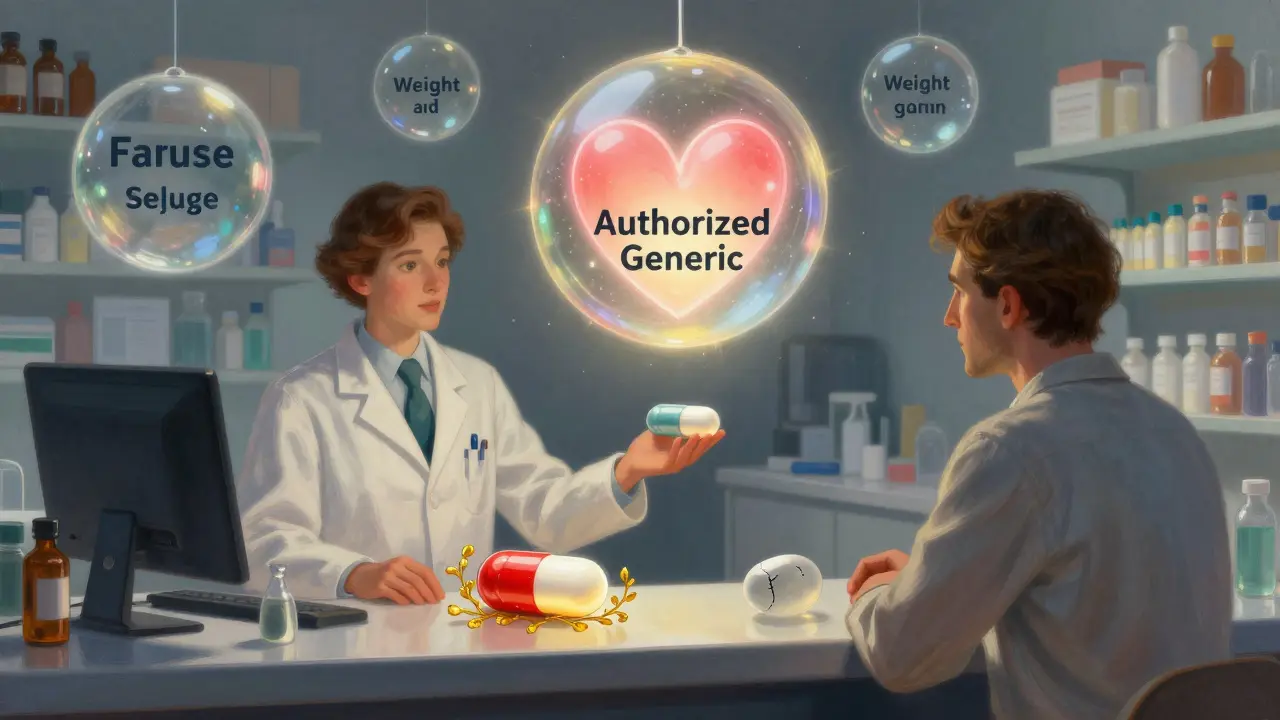
What You Can Do
You don’t have to accept a brand-only prescription without asking questions.- Ask: “Is this drug on the narrow therapeutic index list? Do we really need the brand?”
- Check: Look up your drug in the FDA’s Orange Book. It lists which generics are rated equivalent.
- Request: “Can I try the generic first? If I have issues, we’ll switch back.”
- Verify: When you get your prescription, ask the pharmacist: “Is this the brand or generic? Did the doctor say no substitution?”
- Track: If you switch from brand to generic, note how you feel. Fatigue? Mood changes? Sleep issues? Tell your doctor.
The Bigger Picture
Generics make up 90% of all prescriptions in the U.S. But they account for only 23% of total drug spending. That means brand-name drugs - even when not needed - are driving up costs for everyone. Experts estimate that up to 97% of brand-only prescriptions have no clinical justification. That’s not just wasteful - it’s harmful. People skip doses because they can’t afford the brand. Others suffer side effects they blame on the drug, not the switch. The FDA is trying to fix this. In 2023, they started requiring generic manufacturers to make pills look more like the brand - so patients don’t get confused when the shape or color changes. There’s also a new option: authorized generics. These are made by the brand company but sold as generics. No variability between batches. Same pill, lower price. Ask your doctor if one is available for your drug.Bottom Line
Brand-name prescriptions aren’t always wrong. For a handful of critical drugs, they’re essential. But for most, they’re just expensive. If your doctor prescribes a brand-only drug, ask why. Don’t assume it’s better. Don’t assume it’s necessary. And if you’re paying hundreds more a month for the same medicine - you have the right to push back. Your health matters. So does your wallet. Don’t let confusion cost you both.Can a pharmacist substitute a generic if the doctor didn’t say “no substitution”?
Yes. In 49 U.S. states and Washington D.C., pharmacists are legally allowed to swap a brand-name drug for a generic unless the prescription says “dispense as written,” “do not substitute,” or “brand medically necessary.” Only Texas has different rules for certain drug classes. Always check your prescription label and ask your pharmacist if you’re unsure.
Are generic drugs less effective than brand-name drugs?
For most medications, no. The FDA requires generics to have the same active ingredient, strength, dosage form, and route of administration as the brand. They must also be bioequivalent - meaning they work the same way in your body. Studies of over 100,000 patients show no difference in outcomes for drugs like blood pressure pills, statins, or diabetes meds. The only exceptions are narrow therapeutic index drugs like levothyroxine, warfarin, or seizure medications, where small differences can matter.
Why do some people have side effects after switching to a generic?
The active ingredient is the same, but generics can use different inactive ingredients - like fillers, dyes, or coatings. For some people, these can cause stomach upset, rashes, or headaches. This is more common with antibiotics like ciprofloxacin or thyroid meds. If you notice new symptoms after switching, tell your doctor. You may need to go back to the brand or try a different generic manufacturer.
How can I find out if my drug has a generic version?
Check the FDA’s Orange Book online - it lists all approved generics and their equivalence ratings. You can also ask your pharmacist or use apps like GoodRx, which show brand and generic prices side by side. If your drug is still under patent, there may not be a generic yet - but most brand-name drugs have generics available within 10-12 years of launch.
Will my insurance cover a brand-name drug if I ask for it?
Not always. Even if your doctor writes “brand medically necessary,” your insurance may require prior authorization - a form your doctor must complete. Approval rates vary: 89% for epilepsy drugs, but only 45% for acid reflux meds. If denied, you’ll pay full price or switch to generic. Always ask your insurance company about their policy before assuming coverage.
What are authorized generics, and should I ask for them?
Authorized generics are made by the same company that produces the brand-name drug, but sold under a generic label at a lower price. They eliminate variability between generic manufacturers because they’re the exact same pill. If you’ve had issues switching between different generic brands, ask your doctor or pharmacist if an authorized generic is available. It’s a good middle ground between brand consistency and cost savings.

Sarah Williams
December 20, 2025 AT 09:44My dad’s on warfarin-switched to generic, started bruising like a toddler after a tumble. Went back to Coumadin. No regrets. Doctors aren’t just being stubborn; sometimes they’ve seen the fallout.
Jon Paramore
December 21, 2025 AT 12:01NTI drugs are the exception, not the rule. Bioequivalence thresholds for generics are set at 80-125% AUC and Cmax-fine for most meds, but for levothyroxine, even a 5% shift in absorption can push TSH out of therapeutic range. That’s why the ATA recommends brand consistency. It’s pharmacokinetics, not marketing.
Christina Weber
December 22, 2025 AT 04:44Let’s be clear: if your doctor prescribes a brand-name drug without documenting a clinical rationale, that’s malpractice. The FDA’s Orange Book exists for a reason. Patients deserve transparency-not vague paternalism masked as ‘care.’
Cameron Hoover
December 23, 2025 AT 10:25I used to think generics were just as good… until I switched my Keppra and had three seizures in two weeks. My neurologist said, ‘You’re lucky you didn’t die.’ Now I pay the extra $150/month. My life isn’t a cost-cutting experiment.
Cara C
December 25, 2025 AT 05:38For anyone scared to ask their doctor: try saying, ‘I want to try the generic, but I’ll come back if I feel off.’ Most docs will agree-it’s not about trust, it’s about safety. And if they push back? Ask for the study behind it.
Sandy Crux
December 26, 2025 AT 23:06Oh, please. The FDA’s ‘bioequivalence’ standards are a joke. You know what happens when you outsource pill manufacturing to a factory in Gujarat? You get fillers that react with your gut flora-something no RCT ever measures. And don’t get me started on the ‘authorized generics’-those are just brand-name drugs with a different label. A corporate shell game.
Meanwhile, the real scandal? Insurance companies forcing switches, then denying coverage when patients crash. It’s not about safety-it’s about profit margins disguised as ‘efficiency.’
And yet, here we are, debating whether a 3% variation in dissolution rate matters… while the entire system is rigged. I’d rather pay $400 for Synthroid than fund a Ponzi scheme disguised as healthcare.
Also, the Orange Book? It doesn’t track inactive ingredients. Which is why I only trust the brand. Because science is not the issue-corporate greed is.
And yes, I’ve read the 2020 meta-analysis. It’s funded by generic manufacturers. Surprise, surprise.
But hey-go ahead and trust the system. I’ll be over here, paying out of pocket, because my thyroid doesn’t care about your budget.
Jay lawch
December 27, 2025 AT 20:39They don’t want you to know this-but the FDA allows generics to vary by up to 25% in active ingredient absorption. That’s not bioequivalence-that’s Russian roulette. And who benefits? Big Pharma, of course. They own the generic companies too. You think Pfizer doesn’t have a shell corporation making levothyroxine? Wake up. This is all a controlled demolition of your health. The government is complicit. The doctors? Paid off. The pharmacists? Just following orders. You think you’re saving money? You’re losing your life. And they call it ‘affordable care.’
Meanwhile, in India, we make real medicine-not this placebo nonsense. Why do you think they ban these generics there? Because they know what’s really in them. You’re being used as a lab rat. And you’re paying for it.
Stop trusting the system. Start trusting yourself. And if your doctor says ‘it’s fine’-ask them if they take the generic version themselves. I bet they don’t.
John Hay
December 28, 2025 AT 18:17I’ve been on metformin for 10 years. Switched to generic in 2018. Zero side effects. Saved $1,200 a year. My A1C is the same. If your doctor tells you it’s different, ask for proof. Most of the time, they’re just repeating what they heard.
Theo Newbold
December 28, 2025 AT 23:41Let’s cut the fluff. The entire generic drug system is a lie. The FDA doesn’t test for long-term effects. They don’t track adverse events across manufacturers. And the ‘equivalent’ label? It’s based on single-dose studies in healthy volunteers-not real patients on chronic meds. The fact that you’re even debating this proves how broken this system is. You’re not saving money-you’re gambling with your health. And the people who benefit? The ones who own the patents and the labs. Wake up.