Live Vaccines: How They Work, Who Needs Them, and What You Should Know
When you get a live vaccine, a weakened version of a virus or bacteria is used to trigger your immune system without causing serious illness. Also known as attenuated vaccines, they’re one of the most effective ways to build long-lasting protection against diseases like measles, mumps, rubella, and yellow fever. Unlike shots that use dead germs or just parts of them, live vaccines mimic a real infection—just safer. That’s why they often give you stronger, longer-lasting immunity with fewer doses.
But not everyone can get them. If your immune system is weak—because of cancer treatment, organ transplants, or certain medications like high-dose steroids—you’re at risk if exposed to even a weakened virus. That’s why immunosuppressant drugs, medications that lower your body’s ability to fight infections, make live vaccines dangerous. People on these drugs need inactivated versions instead. And if you’re pregnant, live vaccines like MMR or varicella are usually avoided too. It’s not about fear—it’s about matching the tool to the person.
These vaccines don’t just protect you. They help stop outbreaks. When enough people are vaccinated with live vaccines, the germs can’t spread easily. That’s herd immunity in action. But if you skip them because you’re worried about side effects, you’re not just risking your own health—you’re putting others at risk too, especially babies too young to be vaccinated or people who can’t get them for medical reasons.
Side effects? Mild ones, usually. A low fever, soreness at the shot site, or a rash. But serious reactions? Extremely rare. The risk of getting measles from the vaccine is near zero. The risk of getting it from an unvaccinated person? Very real. In 2023, over 1,000 measles cases were reported in the U.S. alone—most in unvaccinated communities.
Some live vaccines, like the oral polio vaccine, are no longer used in the U.S. because the risk of the weakened virus mutating was too high. That’s why we switched to the injected version. Science keeps improving these tools. Today’s live vaccines are designed to be as safe as possible while still working hard to train your body’s defenses.
What you’ll find below are real, practical articles that dig into how vaccines interact with your body, what happens when your immune system is compromised, and how other medications—like steroids or antibiotics—can affect your protection. You’ll see how post-marketing studies track vaccine safety after they’re out in the wild, how genetics can change how you respond to them, and why some people need to avoid them entirely. This isn’t theory. It’s what doctors and regulators use every day to keep people safe.
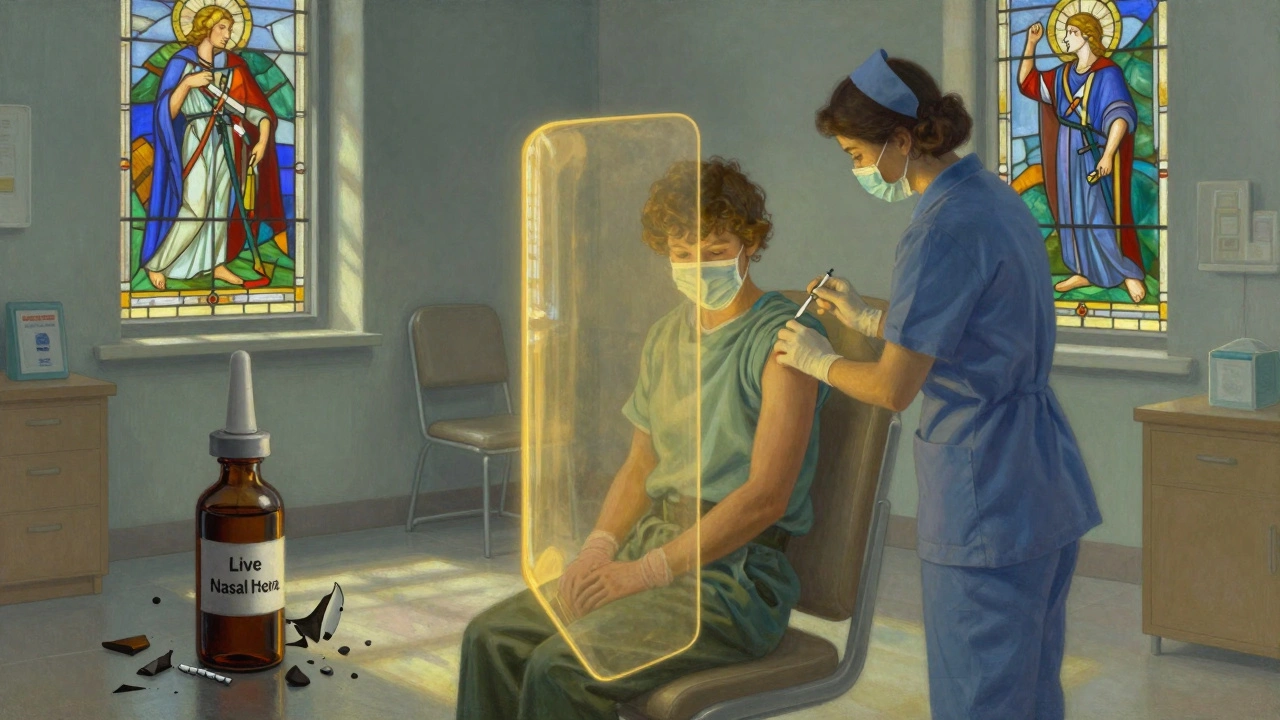
Vaccinations While on Immunosuppressants: Live vs Inactivated Guidance
Learn how to safely get vaccinated while on immunosuppressants. Understand the critical differences between live and inactivated vaccines, the right timing for shots, and which vaccines to avoid or prioritize for maximum protection.