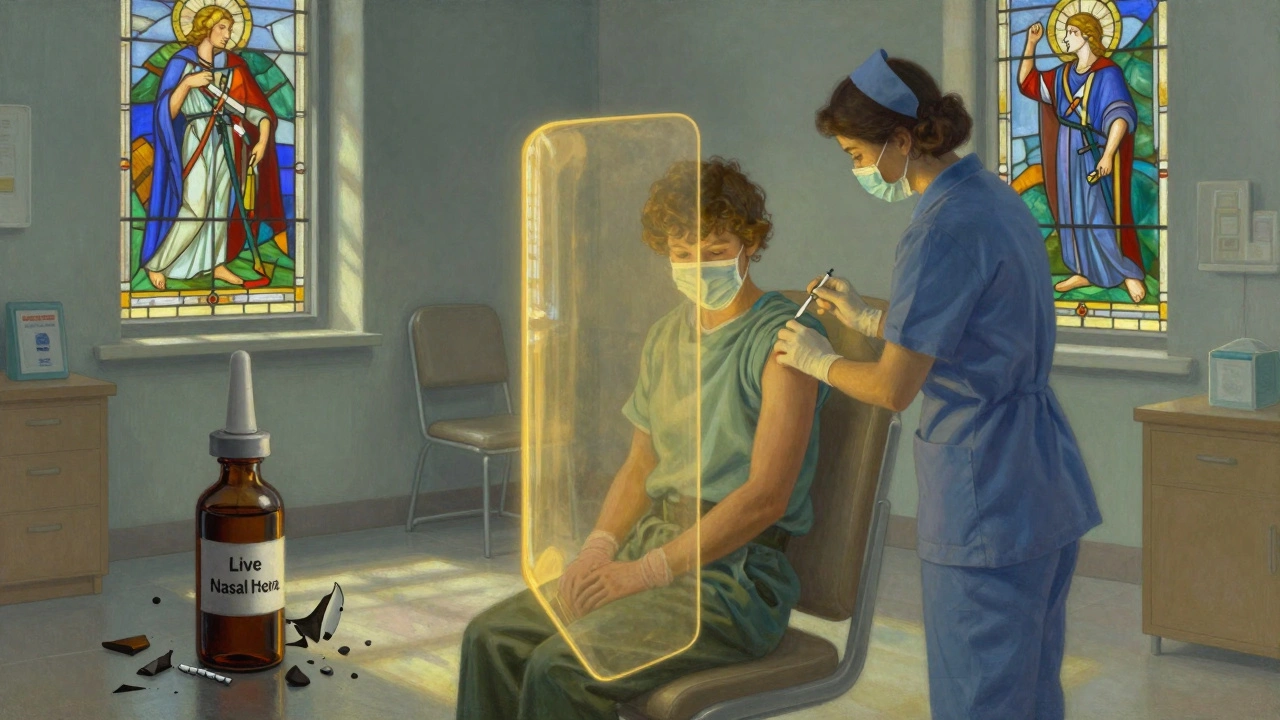
Getting vaccinated while on immunosuppressants isn’t like getting a shot for most people. It’s not just about showing up at the clinic and walking out protected. If you’re taking steroids, rituximab, methotrexate, or any drug that weakens your immune system, the rules change completely. One wrong vaccine - even something as common as the nasal flu spray - can put you at serious risk. And skipping the right shots? That leaves you dangerously exposed to diseases you should be able to prevent.
Live vs Inactivated: The Core Difference
Not all vaccines are created equal, especially when your immune system is turned down. The biggest split is between live attenuated and inactivated vaccines.Live vaccines use a weakened version of the actual virus - enough to trigger an immune response, but not enough to cause disease in healthy people. Think MMR (measles, mumps, rubella), varicella (chickenpox), and the old nasal flu vaccine (LAIV). These are powerful. They often give lifelong protection with just one or two doses.
But for someone on immunosuppressants? That weakened virus can still replicate too much. It can turn into a real infection. That’s why live vaccines are almost always off-limits. The BC Centre for Disease Control and the IDSA 2025 guidelines both say: if you’re moderately or severely immunocompromised, don’t get them. Not even if you’re on low-dose steroids. The risk isn’t worth it.
Inactivated vaccines are different. They use dead virus particles, pieces of the virus, or mRNA instructions to teach your body how to fight. No live virus. No chance of causing disease. That’s why they’re the go-to for people on immunosuppressants. These include the injectable flu shot, the pneumococcal shots (PCV20, PPSV23), hepatitis B, and all current COVID-19 vaccines (Pfizer, Moderna, Novavax).
Timing Is Everything
Even safe vaccines don’t work well if given at the wrong time. Your immune system needs breathing room to respond. If you get a shot while your drugs are at peak strength, your body might not make enough antibodies - leaving you unprotected.For most people on cyclical treatments like chemotherapy or rituximab, the best window is right before the next dose. The IDSA 2025 guidelines say: get your vaccines about 4 weeks before your next infusion. That’s when your immune cells are least suppressed and most able to react.
If you’re on rituximab or ocrelizumab - drugs that wipe out B-cells - timing gets even more specific. You need to wait at least 6 months after your last dose before getting any vaccine. Why? Because B-cells take that long to come back. Getting a shot too soon? You’ll likely get no protection at all. The CDC and IDSA both agree: wait 3 to 6 months after treatment ends, then vaccinate.
For those on daily steroids - like prednisone at 20 mg or more for two weeks or longer - the goal is to vaccinate when your dose drops below 20 mg per day. If you can’t reduce it, vaccinate anyway. Better some protection than none.
And if you haven’t started immunosuppressants yet? Get your vaccines at least 14 days before you begin. That’s your best shot at building strong immunity before the drugs shut it down.
COVID-19 Vaccines: More Doses, More Protection
For immunocompromised people, the standard one- or two-dose COVID-19 schedule doesn’t cut it. The CDC and IDSA now recommend a full primary series plus additional doses - even if you’ve been boosted before.As of 2025, the recommendation is: two doses of the updated 2025-2026 mRNA or protein-based COVID-19 vaccine for anyone with moderate to severe immunocompromise. That’s in addition to your original series. Some patients need a third or fourth dose, depending on their condition and how their body responds.
Studies show antibody levels in immunocompromised patients after standard doses range from 15% to 85% of what healthy people make. That’s a huge gap. More doses help close it. One patient with rheumatoid arthritis reported getting detectable antibodies only after skipping methotrexate for a week around each shot. That’s not a universal rule - but it shows how timing and personalization matter.
Don’t assume your last booster was enough. The virus changes. Your immune system changes. Your meds change. Stay on top of updates.
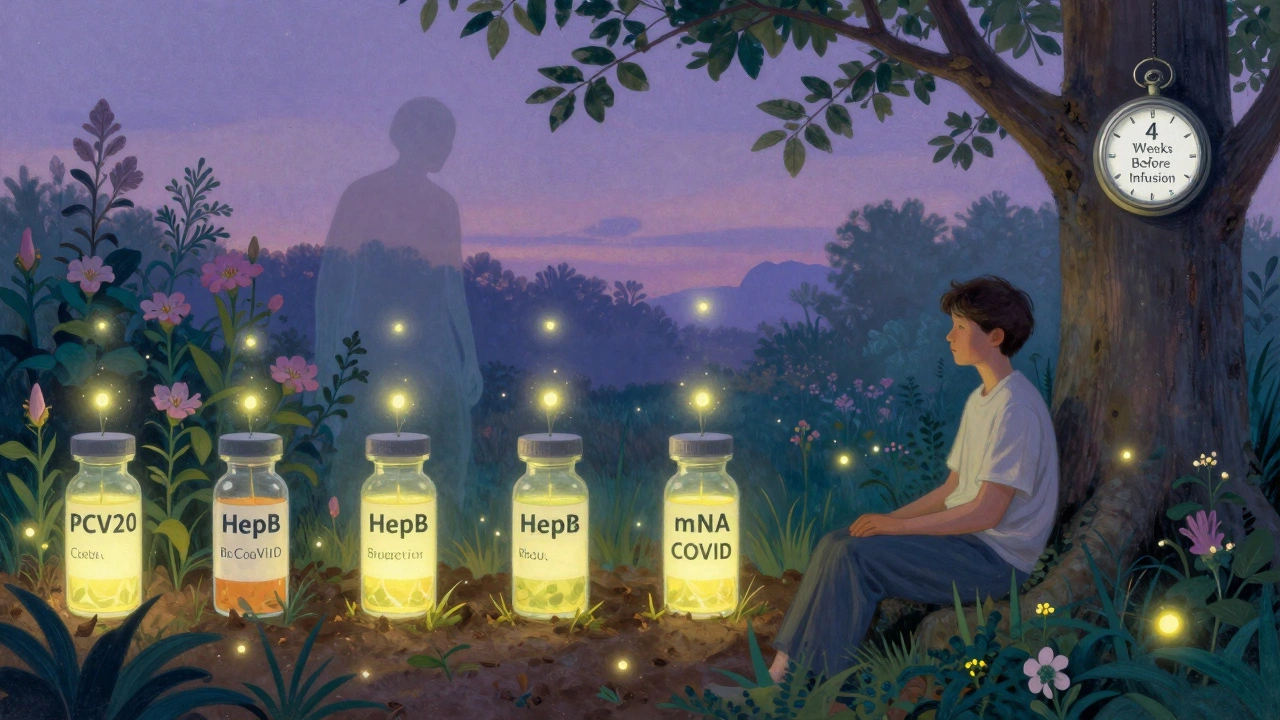
Flu, Pneumonia, Hep B - Don’t Skip the Basics
Don’t focus only on COVID. Other vaccines are just as critical.- Influenza: Get the injectable flu shot every year. No nasal spray. Ever.
- Pneumococcal: If you haven’t had PCV20 and PPSV23, you need both. They protect against pneumonia and bloodstream infections - two leading causes of death in immunocompromised patients.
- Hepatitis B: The standard 3-dose series (Engerix-B, Recombivax HB) or the faster 2-dose Heplisav-B are both safe and recommended. This is especially important if you’re on dialysis or have liver disease.
These vaccines don’t always work perfectly - but they still reduce hospitalizations and deaths. Even partial protection can mean the difference between a mild illness and a life-threatening one.
What About Your Family?
You can’t control everything. But you can control who’s around you.The IDSA 2025 guidelines strongly recommend that everyone living with or regularly near an immunocompromised person should be fully vaccinated - including flu, COVID, and MMR. This is called “cocooning.”
A 2025 study found that when household contacts were up to date on vaccines, transmission to the immunocompromised person dropped by 57%. That’s huge. Your child’s flu shot isn’t just protecting them - it’s protecting you.
And yes, even the live MMR vaccine is safe for your family members. It won’t make you sick. But you still need to avoid live vaccines yourself.
Common Mistakes and How to Avoid Them
People make mistakes - even doctors. Here are the most common ones:- Getting the nasal flu vaccine: One Reddit user shared that their oncologist scheduled them for the nasal spray while on rituximab. They only caught it because their infectious disease specialist intervened.
- Vaccinating too soon after rituximab: A kidney transplant patient delayed their booster because the pharmacy kept running out of the updated vaccine. They got infected during a winter surge.
- Assuming one shot is enough: Many patients think their last COVID shot was “good enough.” It’s not. You need extra doses.
- Not telling every provider: If you’re seeing a new doctor, urgent care, or pharmacist - say you’re immunocompromised. Don’t assume they’ll check your chart.
Keep a printed list of your meds, doses, and last infusion dates. Bring it to every appointment. Use the IDSA’s free online decision tool (launched November 2025) to generate your personal schedule based on your exact regimen.

What’s Changing in 2026?
The field is moving fast. By 2026, you might see:- Point-of-care blood tests that measure your immune cell levels - so doctors can tell exactly when you’re ready for a vaccine.
- New adjuvanted vaccines designed specifically for immunocompromised people - stronger, longer-lasting responses.
- Automatic alerts in electronic health records that flag you for vaccination based on your medication list.
Right now, Epic Systems and other major EHR platforms are already building these alerts. The CDC has added new fields to vaccine records to track immunosuppression status. This isn’t science fiction - it’s happening now.
Final Reality Check
Vaccines aren’t magic. They don’t always work perfectly in immunocompromised people. But they’re still the best tool we have. Skipping them because you’re worried about side effects or think they won’t work? That’s riskier than getting them.The goal isn’t perfection. It’s protection. Even 30% immunity is better than zero. Even one extra dose can save your life.
Work with your care team. Ask questions. Push for the right timing. Don’t let a missed appointment or a pharmacy shortage leave you unprotected. Your life depends on getting it right.
Can I get the flu shot while on steroids?
Yes, you can - but timing matters. If you’re on high-dose steroids (20 mg prednisone or more daily for 14+ days), it’s best to get the flu shot when your dose is lowered below that level. If you can’t reduce your dose, get the shot anyway. The injectable flu vaccine is inactivated and safe. The nasal spray (LAIV) is not safe and should never be given.
Is the COVID-19 booster different for immunocompromised people?
Yes. While healthy adults may only need one updated dose per year, immunocompromised individuals need two doses of the 2025-2026 vaccine as part of their primary series - plus additional doses as recommended by their doctor. This is based on evidence showing weaker immune responses in this group. Always follow your provider’s schedule, not the general public guidance.
What if I accidentally got a live vaccine?
Call your doctor immediately. If you received a live vaccine like MMR or varicella while immunocompromised, you’re at risk of developing the disease it’s meant to prevent. Your provider may need to monitor you closely, start antiviral treatment, or give immune globulin to help your body fight off the vaccine strain. Don’t wait for symptoms.
Do I need to stop my immunosuppressants before getting vaccinated?
Never stop your meds without talking to your doctor. For some, like those on methotrexate, skipping one dose around vaccination might help. But for others - like transplant patients on lifelong drugs - stopping is dangerous. Your provider will weigh the risks of infection versus vaccine response. Always follow their specific plan.
Can I get vaccinated during chemotherapy?
Yes - but not during the nadir. The safest time is during the recovery phase between cycles, when your white blood cell count is rising. For cyclophosphamide, that’s usually the week after your treatment ends. Your oncology team should coordinate this with your primary care provider. Don’t wait for your regular doctor to bring it up - take the lead.
Are there vaccines I should avoid forever?
Live vaccines - MMR, varicella, zoster (Zostavax), and LAIV - are generally avoided for life if you’re on ongoing, strong immunosuppression. However, if your condition goes into long-term remission and you stop all immunosuppressants for over a year, your doctor may consider live vaccines again. This is rare and requires careful evaluation.
What to Do Next
1. Make a list: Write down every medication you’re on, including doses and how often you take them. Include biologics, steroids, chemotherapy, and even over-the-counter supplements that affect immunity. 2. Check your vaccine record: Do you have proof of past vaccines? If not, your doctor can check blood titers for measles, hepatitis B, or varicella immunity. 3. Schedule a vaccine planning visit: Ask your rheumatologist, oncologist, or transplant specialist for a dedicated appointment - not a rushed 5-minute check-in. Bring your list. Use the IDSA decision tool to print your personalized schedule. 4. Talk to your pharmacy: Make sure they know you’re immunocompromised. Ask them to hold the updated COVID-19 vaccine for you before your next infusion. 5. Protect your circle: Make sure your family and close contacts are up to date on all vaccines - especially flu and COVID. Their shots are part of your defense.You’re not alone. Thousands of people are managing this exact situation. The tools, guidelines, and support systems are here. You just need to use them - and speak up when something doesn’t feel right.

Deborah Jacobs
December 6, 2025 AT 04:51I got the flu shot last week while on my monthly rituximab drip. My rheumatologist said to wait until the week after my infusion, and honestly? I felt better than I have in months. Not just physically - mentally too. Like, I finally stopped dreading winter.
It’s wild how something so simple can feel like a win when you’ve been stuck in survival mode for years.
Ali Bradshaw
December 6, 2025 AT 17:32Just wanted to say thanks for laying this out so clearly. I’ve been on methotrexate for 8 years and never knew timing mattered this much. My last flu shot was in October - I’m going back to my doc next week to reschedule it properly.
Small changes, huge difference.
an mo
December 6, 2025 AT 22:38Why are we still wasting time on this? The CDC and IDSA are just pushing Big Pharma’s agenda. Live vaccines are fine if you’re not a hypochondriac. My cousin got MMR on prednisone and lived to tell about it.
Stop scaring people into shots they don’t need. Your immune system isn’t broken - it’s just being overmedicated.
aditya dixit
December 8, 2025 AT 04:50There’s a quiet dignity in knowing your body’s limits - and still choosing to protect it. Vaccines aren’t about invincibility. They’re about choosing the smallest risk when the world is full of big ones.
For those of us on immunosuppressants, every shot is a quiet act of hope. Not because we believe in magic, but because we’ve learned to trust science when it’s been kind to us.
Mark Ziegenbein
December 8, 2025 AT 13:16Let me just say - this entire post reads like a manifesto written by a pharmaceutical lobbyist with a PhD in guilt-tripping. You talk about "protection" like it’s a moral obligation. But what about autonomy? What about the right to say no to a system that treats us like walking antibody factories?
And don’t get me started on the "2026 EHR alerts" - sounds like the NSA with a stethoscope. I’ve been on biologics for 12 years and I’ve never once had a doctor ask if I’ve had my "personalized schedule" printed from some damn IDSA website.
Meanwhile, my neighbor got shingles from the shingles vaccine. But sure, let’s all just line up for more.
Norene Fulwiler
December 9, 2025 AT 23:39I’m a Filipina immigrant and my mom’s on dialysis. She got the Hep B vaccine last year after I begged her to. She didn’t even know it existed - her old doctor never mentioned it.
Now she laughs when she says "I’m not just surviving, I’m protected."
This post? It’s the kind of info that saves lives in communities no one thinks to reach.
Harry Nguyen
December 11, 2025 AT 22:24Oh great another guilt-trip from the medical industrial complex. You want us to get more shots? Fine. But tell me why the same people who push this crap are the ones who refused to wear masks during COVID. Hypocrites.
And why is it always the immunocompromised who have to bend over backwards while healthy people get to skip everything? Tell me that.
Stephanie Bodde
December 13, 2025 AT 15:17Just got my 3rd COVID shot this week - skipped methotrexate for a week like my doc suggested. Felt a little tired but nothing crazy.
And yes I cried. Not because I was scared - because for the first time in years, I didn’t feel like a walking target.
💙 You’re doing better than you think.
Mellissa Landrum
December 14, 2025 AT 11:18EVERYTHING is a vaccine scam. The CDC is run by shadowy elites who want us all chipped. They put microchips in the flu shot - that’s why you get dizzy after. My cousin’s friend’s neighbor got a rash and then her phone started ringing in her dreams.
Live vaccines? They’re the REAL danger. Don’t trust the system. Go off all meds. Eat turmeric. Pray. You’ll be fine.
luke newton
December 14, 2025 AT 12:42People like you make me sick. You act like immunosuppressants are some kind of moral failure. Like if you just tried harder, you wouldn’t need them.
I have Crohn’s. I’ve been on biologics since I was 19. I didn’t choose this. But I choose to protect myself - and you don’t get to judge me for it.
Jimmy Jude
December 16, 2025 AT 12:00We are all just temporary vessels for cosmic energy. Vaccines? They’re just the latest tool of the materialist paradigm to keep us chained to the illusion of control.
But if you want to inject dead virus particles into your bloodstream to appease the algorithm of institutional medicine - go ahead. I’ll be here, meditating on the void while you wait for your next antibody titer.
Juliet Morgan
December 18, 2025 AT 08:10My sister got her second pneumococcal shot last month. She’s 62, on azathioprine after a kidney transplant. She’s never been this healthy in years.
It’s not about being perfect. It’s about being stubborn enough to show up. Even when you’re tired. Even when you’re scared. Even when no one else gets it.
William Chin
December 19, 2025 AT 15:52Dear OP, I am writing to formally request a copy of the referenced IDSA 2025 guidelines in PDF format, along with a signed attestation of their evidentiary basis, as per HIPAA and FDA Advisory Committee procedural standards. Furthermore, I would appreciate clarification on whether the term "moderately immunocompromised" is defined in accordance with the 2023 NIH Consensus Framework or the 2024 EMA Harmonization Protocol.
Additionally, could you please provide the institutional review board (IRB) approval number for the cited 2025 household transmission study? Thank you for your attention to this matter.
Ada Maklagina
December 20, 2025 AT 05:11Got the flu shot yesterday. No drama. No side effects. Just a tiny pinch and a quiet sigh of relief.
Life’s too short to overthink the simple stuff.
Katie Allan
December 20, 2025 AT 12:20My daughter got her first MMR last week. She’s not immunocompromised - but she lives with her dad who is. I didn’t even think about it until I read this.
Now I know - her shot isn’t just for her. It’s for him.
Thank you for reminding us that care isn’t just individual. It’s collective.