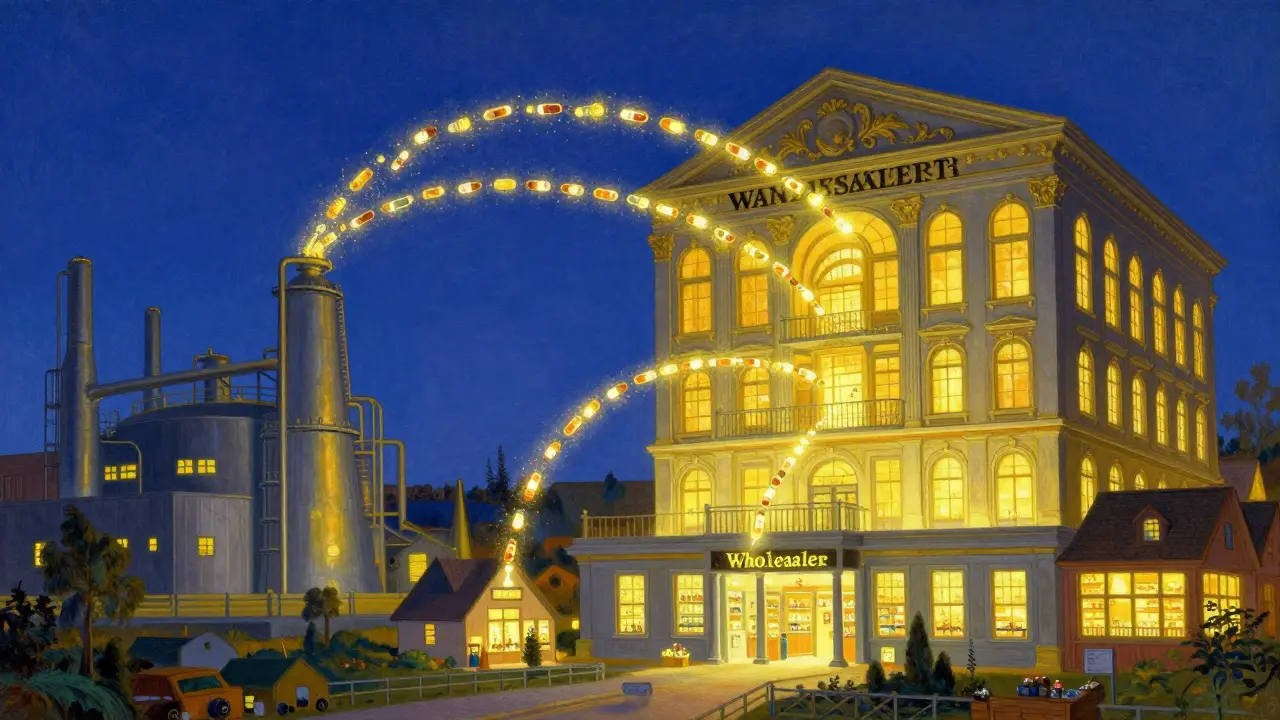
To understand this, we have to look at the three-tier system established by the Prescription Drug Marketing Act of 1987. This law formalized the path medications take: Manufacturer → Wholesaler → Pharmacy. It sounds simple, but the financial incentives at each step are completely different depending on whether the drug is a brand-name original or a generic copy.
The Profit Paradox: Why Generics are Goldmines for Wholesalers
You might assume that because generic drugs are cheaper, they are less profitable. For the manufacturer, that's mostly true. But for the wholesalers, generics are where the real money is. According to research from the USC Schaeffer Center, wholesalers can make up to eleven times more profit on generic drug expenditures compared to brand-name ones. We're talking about a jump from roughly $3 per unit for brands to $32 per unit for generics.
Why does this happen? It comes down to bargaining power. When a company makes a brand-name drug, they hold the patent and control the price. The wholesaler has to take what they are given. However, when a drug goes generic, multiple manufacturers start competing to sell that same molecule. Wholesalers can play these manufacturers against each other to secure massive price concessions. This shifts the value from the factory to the distributor.
Pharmaceutical Wholesalers are intermediaries that buy large quantities of drugs from manufacturers and sell them in smaller batches to pharmacies and hospitals. In the U.S., this market is incredibly concentrated. Three giants-AmerisourceBergen, Cardinal Health, and McKesson-control about 85% of the market. This level of dominance gives them immense leverage over the entire supply chain.
| Metric | Brand-Name Drugs | Generic Drugs |
|---|---|---|
| Manufacturer Gross Margin | High (approx. 76.3%) | Moderate (approx. 49.8%) |
| Wholesaler Profit per Unit | Low (~$3) | High (~$32) |
| Pharmacy Gross Margin | Low | High (approx. 42.7%) |
| Primary Value Driver | Patent Protection | Volume & Bargaining Power |
How Generic Pricing Actually Works
Wholesalers don't just pick a number out of a hat. They use specific pricing strategies to balance their thin net margins-sometimes as low as 0.5%-with the need to move massive volumes of product. If you're looking at how these prices are set, there are four main methods used in the industry.
- Cost-Plus Pricing: This is the straightforward approach. The wholesaler takes the total cost of production and shipping and adds a fixed percentage markup. It's safe and guarantees a margin, but it ignores whether the market actually wants the drug at that price.
- Market-Based Pricing: Here, the wholesaler looks at what competitors are charging and aligns their price. It keeps them competitive, but it can lead to "price wars" that eat into profits.
- Value-Based Pricing: This is based on the perceived value of the drug to the provider, often used for specialty generics or rare medications where there are fewer alternatives.
- Tiered Pricing: This is the classic bulk-buy model. The more a pharmacy buys, the less they pay per unit. For example, a wholesaler might charge $10 per unit for an order of 50, but drop that to $8 if the pharmacy orders over 100 units.
It's also worth noting that shipping isn't just a line item; it's a core part of the pricing strategy. If the cost of the drug is $10 but shipping is $2, the wholesaler has to bake that $12 cost into their base price just to break even before adding profit.
The Impact of Shortages and Market Volatility
The economics of generics aren't static. For a long time, the market was in a "deflationary cycle," meaning prices kept dropping as more manufacturers entered the fray. But the last few years have thrown a wrench in that. The COVID-19 pandemic caused initial inflation, followed by a brief dip, and then a surge of generic drug shortages in 2023.
When a shortage hits, the power dynamic shifts back toward the manufacturer. Suddenly, the wholesaler can't play multiple suppliers against each other because there's only one person who has the drug. This creates "pockets of inflation" where the price of a normally cheap generic suddenly spikes. This volatility is why you might see the price of your medication change unexpectedly at the pharmacy counter.

Hidden Influences on the Market
Wholesalers do more than just move boxes. They act as the central nervous system of the drug market. Because they see the data on what pharmacies are ordering and what manufacturers are producing, they can influence the market in several ways:
- Setting Generic Price Floors: By choosing which generics to promote or stock, they can effectively decide which manufacturers succeed.
- Leveraging List Prices: They can use the announced list price increases from brand-name companies to justify shifts in their own pricing.
- Specialty Distribution: As medicine moves toward "specialty drugs" (complex biologics), wholesalers are creating new, higher-margin pipelines that don't follow the same rules as simple generics.
- Managing Shortages: Because they control the inventory, their distribution priorities can either alleviate or exacerbate drug shortages in specific regions.
This creates a strange tension. Brand-name manufacturers want the drug to stay expensive and protected. Wholesalers, however, actually have a financial incentive for a drug to go generic because that's when their profit margins per unit skyrocket. This misalignment means the interests of the people making the drugs and the people moving them are rarely in sync.
Looking Ahead: Regulation and Competition
With the "Big Three" controlling 85% of the U.S. market, there's a growing conversation about whether this is too much power for too few companies. Regulatory bodies are beginning to look closer at how these intermediaries affect the final price a patient pays. The goal for many policymakers is to introduce more competition into the distribution tier, which could potentially lower costs further.
We're also seeing a shift toward more transparent pricing. The National Retail Federation has pushed for methodologies that clearly account for production, shipping, and profit, rather than the "black box" pricing that has characterized the industry for decades. As we move toward 2026 and beyond, the balance between volume-based profits and the need for reliable drug access will likely be the main battlefield of health economics.
Why are generic drugs cheaper for patients but more profitable for wholesalers?
It's all about bargaining power. Brand-name drugs are protected by patents, so wholesalers have little room to negotiate prices. With generics, multiple manufacturers compete for the same business. Wholesalers use this competition to force manufacturers to lower their prices, allowing the wholesaler to capture a larger slice of the profit margin per unit.
Who are the biggest players in pharmaceutical wholesaling?
The market is dominated by the "Big Three": AmerisourceBergen, Cardinal Health, and McKesson. Together, they control approximately 85% of the U.S. pharmaceutical wholesale market, giving them significant influence over drug pricing and distribution.
What is tiered pricing in the context of drug wholesaling?
Tiered pricing is a volume-based discount strategy. Wholesalers offer lower per-unit prices to pharmacies that buy in bulk. For example, a pharmacy might pay a higher price for 50 units but receive a 15-25% discount if they order more than 500 units.
How do drug shortages affect generic pricing?
Shortages trigger inflation. When supply drops, the wholesaler's ability to negotiate with multiple manufacturers disappears. This forces prices up, reversing the typical deflationary trend seen in the generic market.
What is the difference between cost-plus and market-based pricing?
Cost-plus pricing adds a fixed profit percentage to the cost of making and shipping the drug. Market-based pricing ignores the internal cost and instead sets the price based on what competitors are charging for the same medication.
