
The FDA doesn’t just check pills and devices for safety - it digs into how they’re made. In 2025, the agency issued 32% more warning letters for quality system failures in medical device manufacturing compared to 2024. These aren’t minor slips. They’re systemic breakdowns that put patients at risk. If your product ends up on an Import Alert, it’s blocked from entering the U.S. until you prove you’ve fixed the root cause. And the FDA is getting smarter about where to look.
Aseptic Processing: The Silent Killer in Sterile Products
One out of every two warning letters in 2025 cited problems with aseptic processing. That’s 47%. This isn’t about dirty floors. It’s about how you control contamination during the most critical moments - filling vials, sealing syringes, packaging injectables. The FDA found facilities skipping media fill studies, which simulate real production under sterile conditions. Without these, you don’t know if your cleanroom actually works.
One company, Health and Natural Beauty USA Corp., got a warning letter in July 2025 because their staff didn’t follow gowning procedures during sterile fills. Another, Creative Essences, Inc., failed to monitor air particles during production. These aren’t hypothetical risks. In 2007-2009, contaminated heparin killed 84 people. The FDA won’t wait for another tragedy. If you make sterile products, your cleanroom must be validated, monitored daily, and your people trained like surgeons.
Data Integrity: When Records Lie
Thirty-nine percent of 2025 warning letters targeted data integrity. This means someone - intentionally or not - manipulated, deleted, or falsified records. The FDA doesn’t just want signed paper forms. They demand electronic systems with audit trails that can’t be turned off.
Guangxi Yulin Pharmaceutical Group was cited for using UV-Vis and IR instruments without audit trails. That’s like having a security camera you can turn off. Another facility used laminated production logs with erasable markers - meaning batch records could be altered after the fact. The FDA’s ALCOA+ standard isn’t optional: data must be Attributable, Legible, Contemporaneous, Original, Accurate, and Complete - plus reliable and consistent.
Fixing this isn’t just buying software. It requires culture change. People must know that altering a record is firing offense. And systems must lock users out of editing past entries. The FDA expects 180-day retention of electronic records, user-specific logins, and sequential timestamps. If your LIMS or MES system doesn’t do this, you’re not compliant.
Material Control: Bad Ingredients, Bad Outcomes
One in three warning letters in 2025 involved material control failures. This means you didn’t test your raw materials properly - or you trusted a supplier who didn’t test at all.
Health and Natural Beauty USA Corp. was caught using glycerin and sorbitol without checking for diethylene glycol (DEG), a toxic contaminant linked to kidney failure. The FDA requires testing at 0.1% w/w sensitivity, per USP <1085>. That’s not a suggestion - it’s mandatory. Another company, Foshan Yiying Hygiene Products, didn’t verify whether their supplier’s testing was valid. If your supplier says their ingredient is pure, you still have to prove it.
Remediation means setting up a supplier qualification program. Every raw material must have a Certificate of Analysis (CoA), and you must retest at least some samples yourself. For high-risk materials like solvents, excipients, and active ingredients, you need a risk-based testing plan - not a checklist you copy from last year.

Process Validation: Making Sure It Works Every Time
Twenty-eight percent of warning letters in 2025 pointed to failed process validation. This is where companies assume their process works because it’s always worked. The FDA wants proof - three consecutive batches that meet all specifications, with scientific justification for every step.
One company making toothpaste never validated their mixing process. Another didn’t establish analytical methods to measure active ingredient concentration. That’s like baking bread without a thermometer - you guess when it’s done. The FDA’s 2022 Process Validation Guidance is clear: you must define your critical process parameters, demonstrate control over them, and show consistency across batches.
Validation isn’t a one-time project. It’s ongoing. If you change your equipment, your supplier, or your formula, you re-validate. If you don’t, you’re gambling with patient safety.
Quality Culture: The Root of All Failures
Behind every technical failure is a cultural one. Dr. David Lim from Compliance Architects found that 78% of facilities cited in 2025 warning letters prioritized production schedules over compliance. That’s the real problem.
At one Indian facility, workers didn’t prepare batch records for every batch. Why? Because it slowed them down. At a Chinese plant, the Quality Unit had no authority to stop production - even when they found contamination. Leadership told them to “let it go.” That’s not negligence. That’s a broken culture.
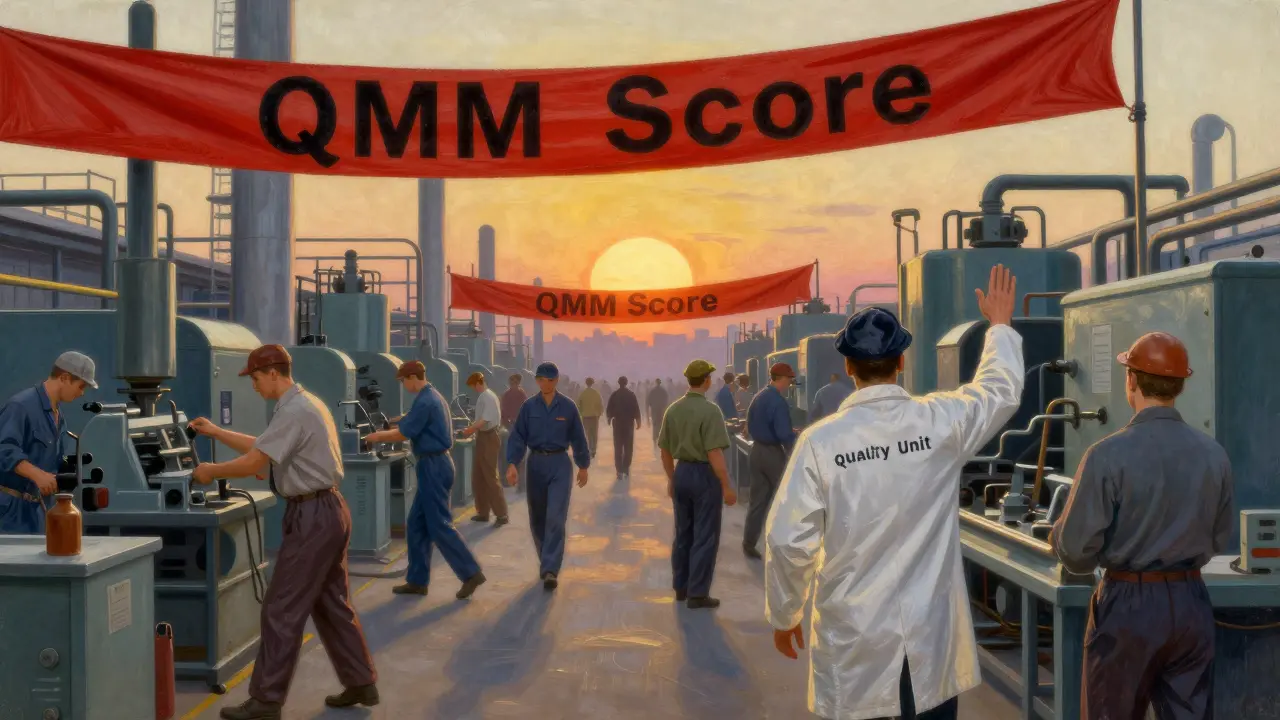
The FDA is now looking at leadership. Are managers reviewing quality metrics? Do they reward people for catching problems? Is the Quality Unit independent and empowered? The FDA’s Quality Management Maturity (QMM) program, launched in 2024, now assesses these cultural factors. And starting in Q2 2026, your QMM score may determine how often you get inspected.
Where the Problems Are - And Why
Geography matters. In 2025, 73% of warning letters targeted facilities in China, India, and Malaysia. But the issues aren’t random:
- Chinese manufacturers: 28 warning letters for failed analytical method validation. They often skip method development studies.
- Indian facilities: 24 letters for data integrity failures. Many still rely on paper logs or unsecured Excel sheets.
- Malaysian sites: 9 letters for weak Quality Units. The person in charge often reports to production, not independence.
The FDA has ramped up unannounced inspections by 40% in 2025, with 68% of those focused on Asia. They’re showing up without notice - and they’re bringing experts in microbiology, data systems, and process engineering. You can’t clean up for an inspection. You have to be clean every day.
What Fixes Actually Work
The FDA doesn’t just say “fix it.” They tell you how. In 92% of 2025 warning letters, they required hiring an independent CGMP consultant. That’s not optional. You need someone with real FDA inspection experience to audit your system - not a consultant who just passed a course.
For data integrity: install validated audit trails, disable edit/delete functions, assign unique logins, and train everyone on consequences.
For aseptic processing: redo media fills annually, monitor air particles hourly, and enforce gowning protocols with video proof.
For materials: test high-risk ingredients yourself. Don’t rely on supplier CoAs alone. Use USP methods. Document everything.
For validation: run three full batches. Measure every critical parameter. Show statistical control. Document deviations and corrections.
And for culture: make quality a KPI for managers. Reward people who report problems. Let the Quality Unit say “no” - and back them up.
What’s Coming in 2026
The FDA is going deeper. In 2026, they’ll conduct 1,200 unannounced inspections - up from 850 in 2025 - and for the first time, they’ll include domestic U.S. facilities. No more hiding behind “foreign manufacturing.”
They’re also watching digital systems. Twelve warning letters in 2025 cited poor controls over cloud-based quality software. If you use a SaaS platform for your quality management system, you need data ownership agreements, encryption, and access logs - just like your on-premise systems.
Supply chain transparency is another focus. Eight warning letters in 2025 were for inadequate oversight of contract labs. If you outsource testing, you’re still responsible for the results.
And if you’re using continuous manufacturing or AI-driven process controls? The FDA has already issued five warning letters on validation gaps. They expect you to validate algorithms, not just machines.
The message is clear: compliance isn’t a checklist. It’s a daily practice. The companies that survive are the ones who treat quality like a core value - not a cost center.
What happens if the FDA issues a warning letter?
The FDA gives you 15 days to respond with a corrective action plan. If your plan is inadequate, they can place your facility on Import Alert 66-40, blocking all products from entering the U.S. until you prove you’ve fixed the issues. This can take 6-18 months and cost millions. Some companies never recover.
Can I fix data integrity issues with software alone?
No. Software helps, but culture changes everything. If employees think altering records is normal, even the best system will be bypassed. Training, leadership accountability, and consequences for violations are required. The FDA looks for evidence of behavioral change - not just new tools.
Do I need to re-validate every process every year?
No - but you must validate when you make changes: new equipment, new suppliers, new formulas, or after a major failure. You also need ongoing monitoring to prove the process stays in control. The FDA expects continuous verification, not annual re-validation.
Why does the FDA care about quality culture?
Because technical fixes fail without cultural support. A company can install audit trails, but if managers punish people for reporting errors, the system will be ignored. The FDA found that facilities with strong quality cultures have 63% fewer repeat findings and fix problems 41% faster. Culture isn’t soft - it’s strategic.
Is the FDA targeting only foreign manufacturers?
No. While 68% of unannounced inspections in 2025 targeted foreign sites, the FDA announced in October 2025 that they will begin unannounced inspections of U.S. facilities in 2026. No one is exempt. If you make products for the U.S. market, you’re under scrutiny.

Donny Airlangga
January 8, 2026 AT 11:11This is terrifying stuff. I work in pharma compliance, and I’ve seen cleanrooms where the gowning station looked like a high school science lab. No one’s training staff like they’re performing brain surgery-and they should be. One bad batch can kill. And it’s not just about the tech-it’s about the people who think ‘close enough’ is good enough.
Kristina Felixita
January 9, 2026 AT 03:17OMG, I just read this and my stomach dropped 😭 Like… how is this still a thing in 2025?? I work in a lab and we have like 3 different audit trails for everything, and even then we’re paranoid. But some places are still using erasable markers?? That’s not negligence, that’s a horror movie script.
Lois Li
January 10, 2026 AT 05:45It’s not just about the FDA. It’s about the entire ecosystem. Suppliers cutting corners, managers under pressure to hit quotas, quality teams being sidelined. I’ve seen it. One company I worked with had their QC head report to the production manager. No wonder they missed the DEG contamination. Culture isn’t a buzzword-it’s the first line of defense.
And yes, software helps-but if your team thinks the system is just for the auditors, it’s useless. Training has to be real. Consequences have to be real. Leadership has to care.
christy lianto
January 11, 2026 AT 16:10Let me be blunt: if your facility still uses paper logs for batch records, you’re not just non-compliant-you’re a liability. The FDA isn’t asking for perfection. They’re asking for accountability. And if you can’t track who changed what, when, and why-you’re not running a pharmaceutical operation. You’re running a gamble with people’s lives.
And don’t even get me started on ‘we’ve always done it this way.’ That phrase has killed more people than any single contaminant.
swati Thounaojam
January 12, 2026 AT 16:57India has many good labs. But pressure to cut cost makes people skip steps. FDA is right to focus on data integrity. We need better training, not more punishment.
Annette Robinson
January 14, 2026 AT 11:42I’ve reviewed over 50 FDA warning letters in the last three years. The most common thread? Leadership doesn’t understand that quality isn’t a department-it’s a responsibility. If your CEO doesn’t attend quarterly quality reviews, you’re already behind. And if your QA team can’t shut down a line without approval from production? You’re not just at risk-you’re already failing.
Aubrey Mallory
January 15, 2026 AT 22:28Let’s be real-this isn’t about compliance. It’s about greed. Companies outsource to save money, then cut corners on validation, materials, and training. And when the FDA shows up, they act shocked. Shocked! Meanwhile, patients are dying because someone thought ‘saving $20k on a sensor’ was worth it.
The FDA needs to start naming names. Publicly. Let the market punish these companies. No more ‘corrective action plans.’ Just shut them down until they rebuild from scratch.
Ken Porter
January 16, 2026 AT 17:44Why are we even talking about this? If you’re making meds in China or India, you’re playing Russian roulette with American lives. The FDA should ban all imports from countries that can’t prove they’ve fixed this. No warnings. No grace period. Just block it. End of story.
Molly Silvernale
January 17, 2026 AT 15:42It’s funny-technology gives us the tools to be flawless, yet we still cling to erasable pens and paper logs like they’re relics of a better time. We’ve got AI that can predict contamination patterns, blockchain for supply chains, and real-time sensor networks… but we’re still letting someone scribble a batch number on a sticky note because ‘it’s faster.’
We’re not failing because we lack resources. We’re failing because we’ve forgotten what ‘care’ looks like. It’s not a checklist. It’s not a policy. It’s the quiet moment when someone says ‘I don’t feel right about this’-and someone else listens. That’s the real audit trail.
Joanna Brancewicz
January 17, 2026 AT 18:00Process validation isn’t a one-off. It’s a living system. If you don’t have statistical process control in place, you’re not validating-you’re guessing. And if your LIMS doesn’t have user-specific audit trails with 180-day retention, you’re not compliant-you’re negligent.