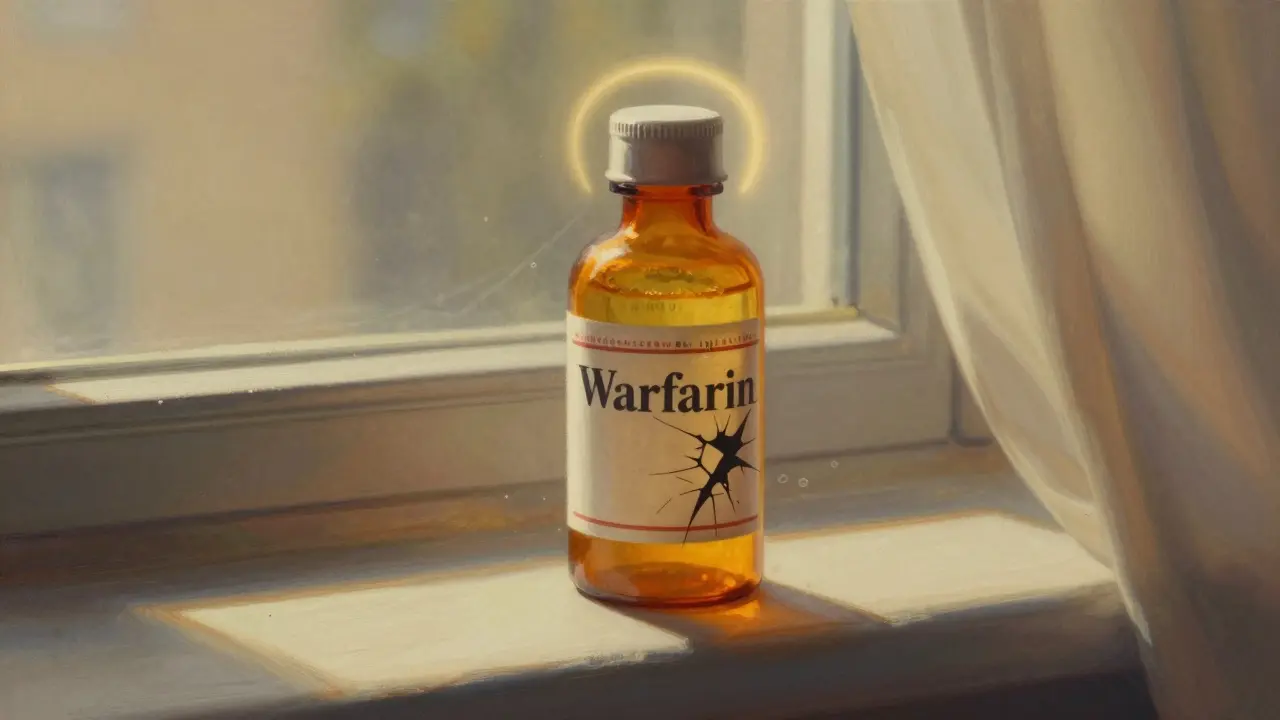
When you pick up a prescription for warfarin, lithium, or digoxin, you’re not just getting a pill-you’re getting a drug that demands extreme precision. These are narrow therapeutic index (NTI) medications, and using them after they expire isn’t just a bad idea-it can be life-threatening.
NTI drugs are defined by their razor-thin margin between helping you and harming you. The difference between the lowest dose that works and the lowest dose that causes serious harm is often less than twofold. For warfarin, a blood level just 10% too high can trigger uncontrolled bleeding. A level 10% too low might cause a stroke. There’s no room for error. And when these drugs expire, that margin gets even narrower.
What Makes a Drug Have a Narrow Therapeutic Index?
Not all medications are created equal. Most drugs have a wide safety buffer. Take ibuprofen, for example. Taking 400 mg instead of 200 mg might give you a stronger headache relief, but it’s unlikely to cause serious harm. But with NTI drugs, that’s not the case.
The U.S. Food and Drug Administration (FDA) defines NTI drugs as those where small changes in blood concentration can lead to serious, even fatal, outcomes. These include:
- Warfarin - used to prevent blood clots
- Lithium - used for bipolar disorder
- Digoxin - used for heart failure and irregular heartbeat
- Phenytoin - used for seizures
- Carbamazepine - another antiseizure drug
- Ciclosporin - used after organ transplants
- Levothyroxine - used for hypothyroidism
- Aminoglycosides - antibiotics like gentamicin
For digoxin, the therapeutic range is 0.5 to 0.9 nanograms per milliliter. Toxicity starts above 1.2 ng/mL. That’s less than a 33% increase from the top of the safe range to the danger zone. One small change in potency-whether from a different generic brand, a change in your metabolism, or yes, an expired pill-can push you into toxicity.
Why Expiration Dates Matter More for NTI Drugs
You’ve probably heard that most medications stay effective for years past their expiration date. A 1985 FDA study found that 90% of drugs retain their potency for at least five years after the printed date-if stored properly. That’s reassuring… until you realize it doesn’t apply to NTI drugs.
For a regular painkiller, losing 10% of its strength means you might need to take one more pill. For warfarin, that same 10% drop could mean your INR (a blood clotting measure) falls from 2.8 to 2.5. Sounds minor? Maybe. But for someone with a mechanical heart valve, that drop could mean your blood starts clotting. You could have a stroke.
On the flip side, if the drug degrades into a more potent form, you risk overdose. While this is rare, some drugs like tetracycline (not an NTI drug) can form toxic compounds when expired. The point is: with NTI drugs, you don’t know what’s happening in that pill. The manufacturer guarantees potency only up to the expiration date. After that? No one has studied it. And no one should risk it.

The Regulatory Reality: Tighter Standards, No Expiration Rules
The FDA doesn’t treat all drugs the same. For most generics, bioequivalence standards require the drug to deliver 80% to 125% of the brand-name drug’s effect. That’s a 45% window. For NTI drugs? That window shrinks to 90% to 111%. A mere ±11% variation is allowed. That’s how precise this has to be.
Now imagine your warfarin tablet loses 5% of its potency after expiration. That’s a 45% deviation from the allowed range. You’re outside the safety margin before you even take it. And here’s the scary part: there are no official guidelines on how to handle expired NTI drugs. No FDA advisory. No pharmacy policy. Just silence.
Pharmacists in North Carolina and other states with strict NTI policies treat these drugs like high-alert medications. They require double-checks, patient education, and strict inventory controls. But if a bottle of expired lithium sits on your shelf? There’s no protocol to say, “Don’t use this.” That’s a gap in patient safety.
Real-World Consequences: What Happens When You Take an Expired NTI Drug?
There aren’t many published case studies on expired NTI drugs because most people don’t take them past their date. But we know what happens when the concentration shifts-even slightly.
A 2014 study in the Journal of Clinical Pharmacy and Therapeutics found that NTI drugs were far more likely than others to cause hospitalizations due to adverse reactions. One patient on phenytoin for epilepsy had a seizure after switching to a generic version. The blood level dropped 15%. Another patient on lithium developed tremors, confusion, and kidney damage after a 10% change in formulation.
Think about this: lithium’s therapeutic range is 0.6 to 1.2 mmol/L. Toxicity starts at 1.5 mmol/L. That’s a 25% increase from the top of the safe zone to danger. If your pill degrades and your body absorbs 10% more lithium than expected? You could be heading into toxicity without symptoms-until your kidneys start failing.
For warfarin, a 10% dose increase can raise INR by 0.5 to 1.0. If you’re at INR 2.8 (on the high end of safe), a 10% potency increase could push you to 3.8. That’s a major bleeding risk. A 10% drop? Your INR falls to 2.3. Not dangerous? Maybe. But if you’re a 72-year-old with a mechanical aortic valve, your doctor wants INR 2.5 to 3.5. You’re now underdosed. Clots form. Stroke follows.
What Should You Do?
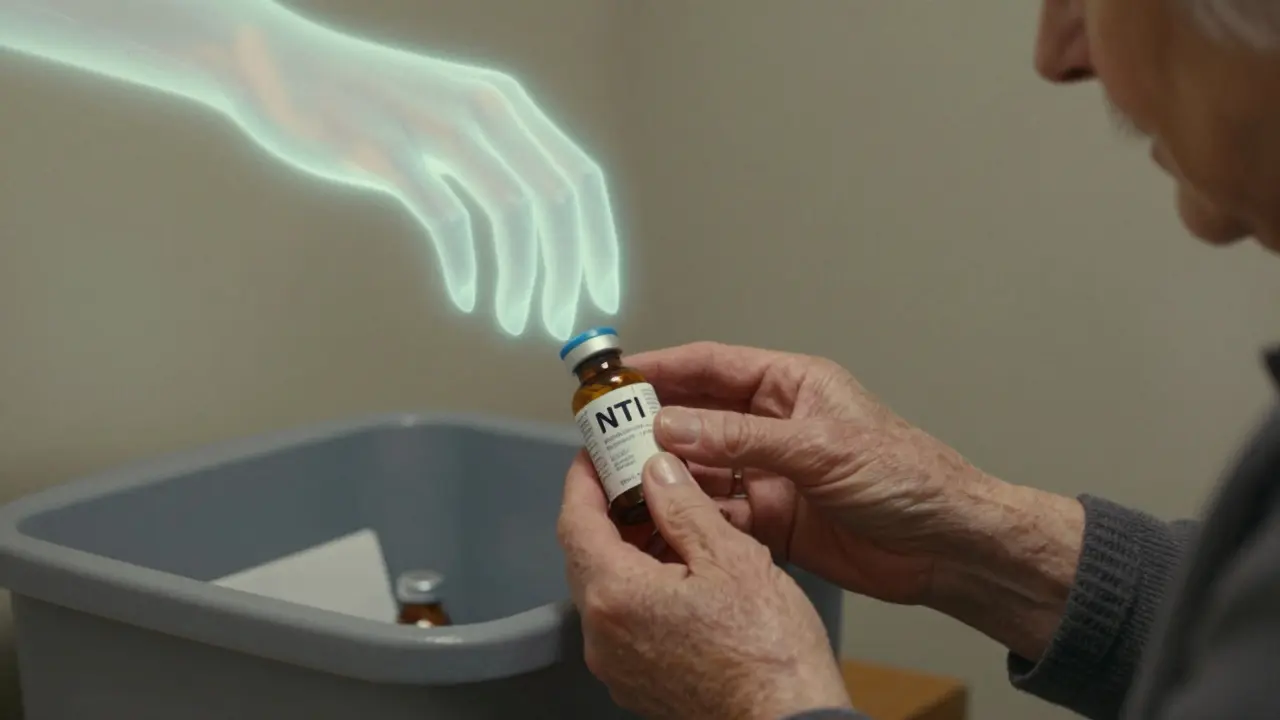
Here’s the simple truth: never use an expired NTI medication. Not even if it looks fine. Not even if it’s only two months past the date. Not even if you’ve been taking it for years.
Instead:
- Check your supply every 3 months. Set a reminder on your phone. NTI drugs need consistent, fresh supply.
- Don’t stockpile. Only get what you need for the next 30 to 60 days. Pharmacies can often dispense smaller quantities for these drugs.
- Ask your pharmacist. If you’re unsure about a bottle’s expiration, call. They can check if the batch is still considered stable (some manufacturers test beyond the printed date).
- Dispose of expired NTI drugs properly. Take them to a pharmacy take-back program. Don’t flush them. Don’t throw them in the trash.
- Never switch brands or generics without monitoring. Even if both are FDA-approved, small differences in absorption can matter. Your doctor should recheck your blood levels after any switch.
Patients on levothyroxine, for example, can experience fatigue, weight gain, or depression if their dose shifts by as little as 12.5 mcg. That’s the size of a single pill. If that pill is expired? You don’t know if it’s delivering 100%, 90%, or 80% of the intended dose.
The Bigger Picture: Why This Isn’t Just About One Pill
This isn’t a niche issue. About 1 in 10 prescriptions in the U.S. and Australia involve an NTI drug. That’s millions of people. And with aging populations, the number is rising. People are living longer with heart disease, epilepsy, and mental health conditions-all conditions treated with NTI drugs.
Yet, most patients don’t know what NTI means. Pharmacists know. Doctors know. But the public? Most think “expiration date” is just a marketing tactic. It’s not. For these drugs, it’s a safety line.
Some pharmaceutical companies are starting to respond. A 2022 survey found that 78% of major manufacturers now conduct extended stability testing on NTI drugs. That means they’re testing how these drugs hold up over time-beyond the printed date. But until that data becomes public and regulatory agencies act, we can’t rely on it.
The American Pharmacists Association has called for special labeling on NTI drugs: “Do not use after expiration. Potency changes can be life-threatening.” That’s not too much to ask.
Until then, treat every NTI drug like a loaded gun. One wrong move-and it goes off.

Sonja Stoces
February 14, 2026 AT 22:34Suzette Smith
February 15, 2026 AT 04:58Reggie McIntyre
February 16, 2026 AT 07:39Jack Havard
February 18, 2026 AT 04:26Gloria Ricky
February 19, 2026 AT 17:04Stacie Willhite
February 20, 2026 AT 09:42Jason Pascoe
February 20, 2026 AT 10:54christian jon
February 21, 2026 AT 08:29Pat Mun
February 21, 2026 AT 08:54