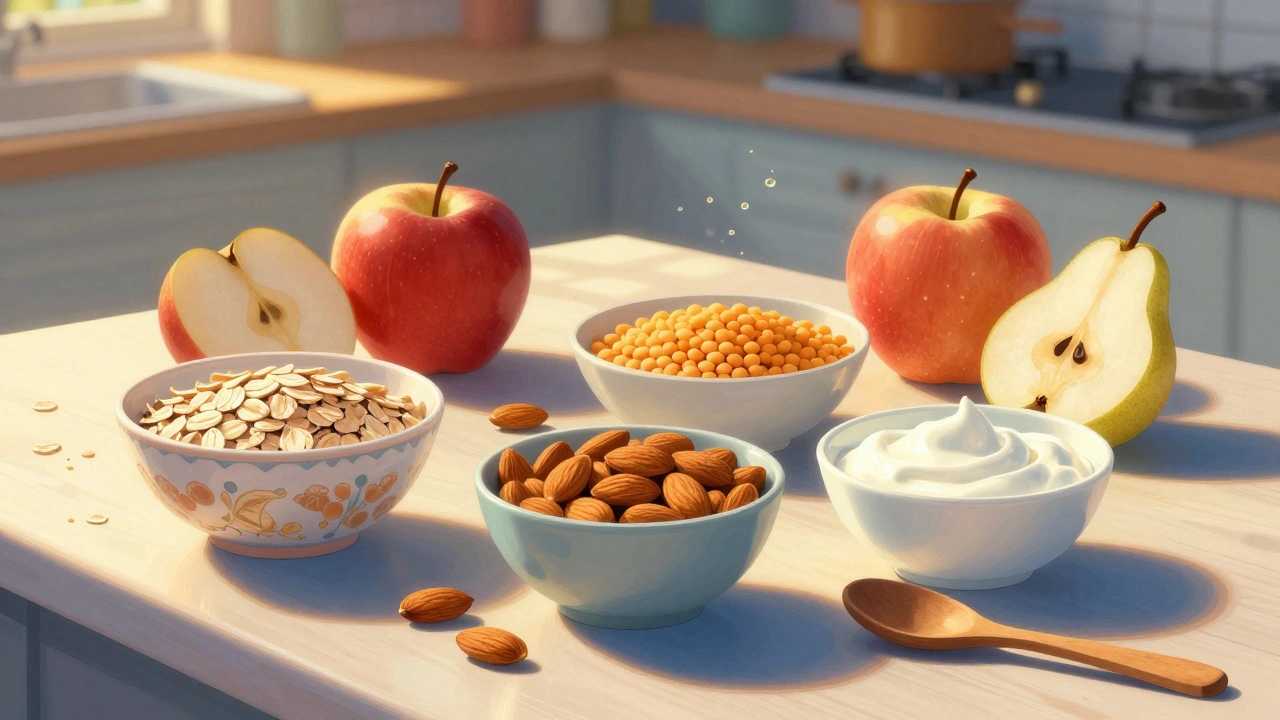
When you hear low-GI diet, you might think it’s the secret key to losing weight. But here’s the truth: it’s not about slashing calories or cutting out carbs entirely. It’s about choosing foods that don’t spike your blood sugar - and that makes a real difference in how hungry you feel, how your body stores fat, and whether you can stick to your eating plan long-term.
What Is the Glycemic Index, Really?
The glycemic index (GI) is a simple scale from 0 to 100 that tells you how fast a food turns into sugar in your blood after you eat it. Pure glucose is 100. White bread? Around 75. Oats? About 55. Lentils? Just 32. Foods with a GI of 55 or lower are considered low-GI. These are the ones that give you steady energy instead of a quick rush and crash. It’s not magic. Low-GI foods are usually high in fiber, protein, or healthy fats. They’re digested slowly. That means your body doesn’t dump a ton of insulin all at once. And when insulin stays steady, your body is less likely to store fat. Instead, it keeps burning fuel more evenly.How Low-GI Foods Affect Your Hunger and Cravings
Ever eaten a bagel for breakfast and felt starving by 10 a.m.? That’s a high-GI food doing its thing. It spikes your blood sugar fast, then crashes it hard. Your body reacts by craving more sugar to bounce back up. It’s a cycle. Low-GI foods like apples, beans, quinoa, or Greek yogurt don’t do that. They keep your blood sugar平稳 - and your hunger in check. A 2019 study in the American Journal of Clinical Nutrition showed people eating low-GI meals felt fuller longer and ate fewer calories later in the day - even without trying. This isn’t about willpower. It’s about biology. When your blood sugar doesn’t swing wildly, your brain doesn’t scream for sugar. That’s why so many people find it easier to stick to a low-GI diet than to count every calorie.Does It Help You Lose Weight? The Evidence
Here’s where things get messy. Some studies say yes. Others say no. The truth? It depends on what you’re comparing it to. When researchers gave people the same number of calories - one group eating low-GI foods, the other eating high-GI - the weight loss was basically the same. A 2022 analysis from the American Institute for Cancer Research looked at 12 controlled trials with over 1,300 people. No difference in fat loss. But here’s the twist: low-GI diets often lead to better results in the real world. Why? Because people naturally eat fewer calories on them. You’re not hungry. You’re not snacking. You’re not reaching for cookies after lunch. A 2007 study in JAMA found that people on low-GI diets lost about the same amount of weight as those on low-carb diets - but their bad cholesterol dropped more. That’s a win for heart health. And if you have prediabetes or type 2 diabetes? Low-GI diets are proven to lower your HbA1c by 0.5% on average. That’s the same drop you’d get from some diabetes medications - without the side effects.What Foods Are Actually Low-GI?
Not all low-GI foods are healthy. Chocolate cake can have a GI of 38. Ice cream? 37. But they’re still loaded with sugar and fat. So don’t fall for the label. Stick to whole, unprocessed foods:- Vegetables: Broccoli, spinach, kale (GI: 10-15)
- Fruits: Apples (36), pears (38), berries (40)
- Legumes: Lentils (32), chickpeas (28), black beans (30)
- Whole Grains: Barley (25), oats (55), quinoa (53)
- Dairy: Plain yogurt (10-15), milk (30)
- Nuts & Seeds: Almonds (0), chia seeds (1)
- White bread (75)
- White rice (73)
- Potatoes (85)
- Corn flakes (81)
- Sugary cereals and pastries

Why the GI Can Be Misleading - And What to Do About It
Here’s the big problem: your body doesn’t respond the same way as someone else’s. A 2015 study from the Weizmann Institute found that two people eating the exact same banana could have blood sugar spikes that differed by 15-20 points. Why? Gut bacteria, genetics, sleep, stress - all play a role. Also, cooking changes GI. Al dente pasta has a GI of 45. Overcooked? 65. A ripe banana is 51. A green one? 30. So don’t obsess over numbers. Focus on patterns:- Choose whole grains over refined ones
- Pair carbs with protein or fat (e.g., apple with peanut butter)
- Go for fiber-rich foods - they naturally slow sugar absorption
- Watch portion sizes - even low-GI foods can add up
Low-GI vs. Other Diets: What’s the Best Fit?
You’ve probably heard of keto, intermittent fasting, or Mediterranean diets. Where does low-GI fit in? It doesn’t have to be an either/or. The low-GI approach works best when it’s part of something bigger. - Low-GI + Mediterranean: Olive oil, fish, vegetables, legumes - naturally low-GI and heart-healthy. - Low-GI + High Protein: Adding eggs, chicken, tofu, or Greek yogurt to meals helps balance blood sugar even more. - Low-GI + Mindful Eating: Slowing down, chewing well, eating when hungry - these habits make low-GI eating even more effective. The American Diabetes Association doesn’t tell people to track GI daily. Instead, they say: focus on whole foods, limit added sugar, and eat consistent amounts of carbs at each meal. That’s low-GI eating without the stress.Real-Life Tips for Starting a Low-GI Diet
You don’t need to overhaul your whole kitchen overnight. Start small:- Swap white rice for barley or brown rice.
- Choose oatmeal over sugary cereal.
- Snack on nuts or an apple instead of crackers or chips.
- Add beans to salads or soups - they’re fiber and protein powerhouses.
- Drink water before meals. It helps control appetite and slows digestion.
What Experts Really Say
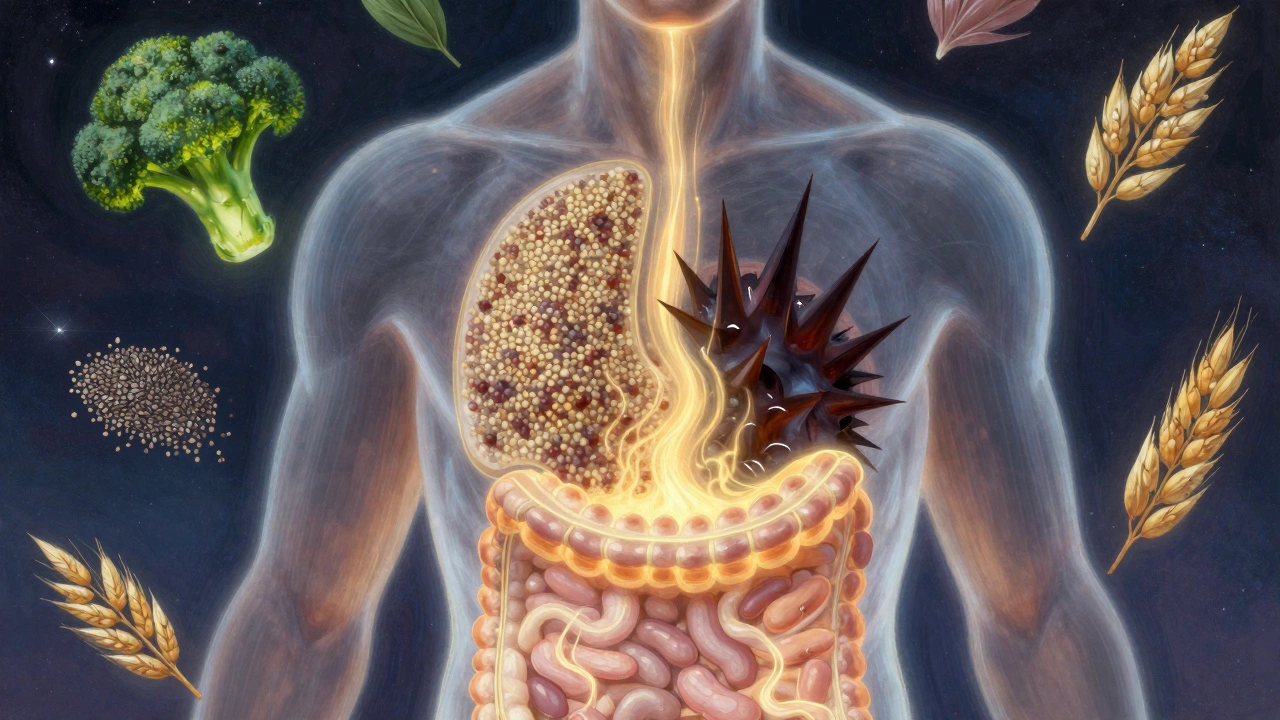
Dr. David Ludwig from Harvard believes low-GI diets help your body burn more calories by lowering insulin. He says even a 50-100 calorie daily boost can add up to 5-10 pounds lost over a year. But Karen Collins from the American Institute for Cancer Research says: when calories are equal, low-GI doesn’t mean more weight loss. She’s right - if you’re eating 2,000 calories of cake and ice cream, you’re not losing weight, no matter the GI. The European Association for the Study of Diabetes gives low-GI diets a strong recommendation for diabetes control. The Academy of Nutrition and Dietetics says it helps heart health - but not necessarily weight loss. So what’s the takeaway? Low-GI isn’t a weight loss miracle. But it’s one of the best tools you have to eat better, feel better, and stay consistent - without constant hunger or cravings.The Bigger Picture: It’s Not Just About Weight
If you’re only trying to lose a few pounds, a low-GI diet might not be the fastest route. But if you want to feel more energized, avoid sugar crashes, reduce your risk of type 2 diabetes, and keep your heart healthy - it’s one of the smartest moves you can make. The World Health Organization recommends low-GI carbohydrates as part of diabetes prevention. Studies show people who follow this pattern have a 15-20% lower chance of developing type 2 diabetes over time. And in Australia, where the GI Symbol is on over 2,500 products, people are eating better without even realizing it. The food industry is catching on - but you don’t need branded products. Just choose whole foods. That’s the real win.Final Thoughts: Is It Worth It?
Yes - if you’re tired of diets that leave you hungry, cranky, and backsliding. The low-GI diet doesn’t promise quick results. But it gives you something better: sustainability. You won’t feel like you’re on a diet. You’ll just feel like you’re eating well. And that’s the only kind of eating plan that lasts.Can I still eat fruit on a low-GI diet?
Yes - most fruits are low-GI. Apples, pears, berries, cherries, and oranges are all under 40. Even bananas are moderate (30-51 depending on ripeness). The fiber and nutrients in fruit help slow sugar absorption. Just avoid fruit juices - they spike blood sugar fast.
Is the low-GI diet good for type 2 diabetes?
Yes, it’s one of the most evidence-backed diets for managing type 2 diabetes. Studies show it lowers HbA1c by 0.5%, reduces insulin resistance, and cuts the need for medication in many cases. The European Association for the Study of Diabetes gives it a Grade A recommendation.
Do I need to buy special low-GI products?
No. The GI Symbol on packaged foods in Australia is helpful, but not necessary. You can eat low-GI without spending extra. Stick to whole foods: beans, lentils, oats, vegetables, nuts, and whole grains. These are affordable and widely available.
Why do some low-GI foods like chocolate cake still seem unhealthy?
Because GI only measures how fast carbs turn to sugar - not overall nutrition. Chocolate cake has fat and sugar that slow digestion, lowering its GI, but it’s still high in calories and low in nutrients. Don’t use GI as a free pass for junk food. Always look at the whole food - not just one number.
Can I follow a low-GI diet if I’m not trying to lose weight?
Absolutely. Many people use low-GI eating just to feel better - fewer energy crashes, better focus, stable moods. It’s also proven to lower LDL cholesterol and reduce inflammation. You don’t need to be overweight to benefit.

Guylaine Lapointe
December 8, 2025 AT 22:08Let’s be real - if you’re still confused about GI after reading this, you’re either not trying or you’re addicted to white bread. The science is clear: fiber slows sugar, insulin stays chill, and cravings fade. No magic, no detox, just basic biology. Stop blaming willpower and start choosing lentils.
Also, ‘low-GI chocolate cake’ is a scam. Don’t let marketing fool you. Whole foods only. End of story.
Sarah Gray
December 9, 2025 AT 12:33Oh please. Another ‘low-GI is the answer’ post from someone who hasn’t read the meta-analyses. When calories are matched, weight loss is identical across diets. The only thing low-GI does is make people feel morally superior while eating quinoa salads they hate.
It’s not a diet. It’s a status symbol for people who think ‘glycemic index’ sounds smarter than ‘calories in, calories out.’
Michael Robinson
December 11, 2025 AT 01:06Food is fuel. Some fuel burns slow, some burns fast. Low-GI is like using wood instead of gasoline - you don’t get a burst of fire, but you don’t run out of heat halfway through the night.
It’s not about losing weight. It’s about not feeling like crap after lunch. That’s it. Simple.
People overcomplicate everything. Just eat real food. The rest takes care of itself.
Suzanne Johnston
December 12, 2025 AT 07:48I’ve spent years trying every diet under the sun - keto, intermittent fasting, vegan, paleo - and the only one that stuck was low-GI. Not because I lost weight fast, but because I stopped hating food.
I used to binge after 2 p.m. because my blood sugar crashed. Now I snack on almonds and an apple. No guilt. No shame. Just… calm.
Yes, chocolate cake has a low GI. But so does a brick. That doesn’t mean you should eat it. Focus on the whole picture: fiber, protein, real ingredients. The GI is just a guide, not a rulebook.
And yes, your gut bacteria react differently than mine. That’s why we need to stop pretending there’s one perfect diet for everyone. But low-GI? It’s a damn good starting point for most people.
Also, I’m tired of people saying ‘it doesn’t work.’ It works if you’re not trying to eat junk and call it healthy. Stop arguing about numbers. Start noticing how you feel after you eat.
ian septian
December 14, 2025 AT 01:33Swap white rice for barley. Eat an apple with peanut butter. Drink water before meals. Do those three things and you’re already ahead of 90% of people.
Done.
Chris Marel
December 14, 2025 AT 08:51I grew up eating rice and plantains every day. My grandma never heard of GI, but she cooked everything slow - beans with onions, yams with coconut oil, fruits ripe but not overripe.
She never said ‘low-GI.’ She just knew food should make you strong, not sleepy.
I think we’ve forgotten that. We’re too busy chasing numbers instead of listening to our bodies.
Maybe the real lesson isn’t the GI scale - it’s that our ancestors knew how to eat before the food industry messed it up.
Thanks for this post. It reminded me of her.
Evelyn Pastrana
December 14, 2025 AT 09:34Oh wow, so now I’m supposed to feel guilty for eating a banana? Next you’ll tell me my oatmeal has a ‘hidden glycemic betrayal.’
Look, I eat lentils and berries and still have a slice of cake on my birthday. That’s not weakness - that’s balance. And yes, I feel better when I avoid corn flakes, but I’m not gonna turn into a human nutrition spreadsheet.
Low-GI? Sure. Perfect? Nah. Real life? Absolutely. Now pass the dark chocolate. It’s got a GI of 25. Science says it’s fine. I say it’s therapy.