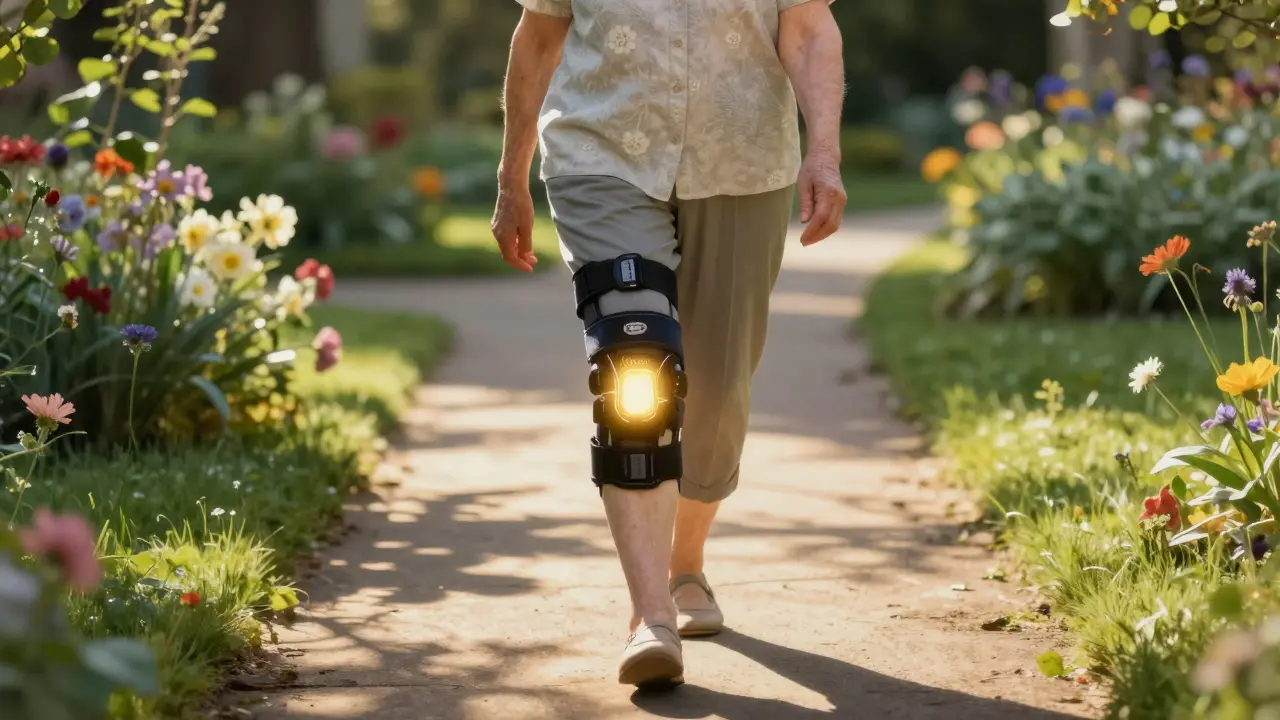
When your knee hurts every time you stand up, walk down the stairs, or even just get out of bed, it’s not just discomfort-it’s your life slowing down. Knee osteoarthritis (OA) affects over 250 million people worldwide, and for many, it’s the number one reason they stop doing the things they love. The good news? You don’t have to wait for surgery. Three proven, non-surgical approaches-knee bracing, injections, and exercise-can significantly reduce pain, improve mobility, and help you stay active longer.
How Knee Bracing Works (and Why It’s More Effective Than You Think)
Knee braces aren’t just for athletes. For people with knee osteoarthritis, especially those with pain on the inner side of the knee (medial compartment OA), a properly fitted unloader brace is a medical device designed to shift pressure away from the damaged part of the joint. It works by gently pulling the leg into alignment, reducing the force on the worn-out cartilage. Think of it like taking weight off a broken leg support beam-you’re not fixing the damage, but you’re stopping it from getting worse.
Studies show unloader braces reduce pain by 30-45% on the WOMAC scale, one of the most trusted measures of OA symptoms. That’s not just a little better-it’s the difference between needing help to walk and being able to do groceries on your own. A 2023 meta-analysis of 139 clinical trials found unloader braces ranked highest for pain relief, function, and stiffness improvement among all non-surgical options.
But here’s the catch: not all braces work. Off-the-shelf models often don’t fit right. A certified orthotist is a specialist trained to fit and adjust orthopedic devices-and they’re essential. Without proper fitting, you’ll get little relief and may even develop skin irritation or pressure sores. Most people need 2-3 weeks to adjust to wearing the brace daily. Insurance often covers part of the cost ($300-$1,200), but you’ll likely need prior authorization. Medicare covers 80% of approved braces, but you’ll pay the deductible first.
Real-world feedback? On Amazon, 82% of 5-star reviews mention "immediate pain reduction during walking." But 47% of 1-2 star reviews complain about bulkiness or skin irritation. If you’re considering a brace, ask your doctor for a referral to an orthotist. Don’t just buy one online.
The Reality of Knee Injections: Fast Relief, But Not a Long-Term Fix
Injections are the quick fix many people turn to when pain spikes. And honestly? They work-short term. But they’re not a cure. There are four main types:
- Corticosteroids are anti-inflammatory drugs injected directly into the joint. They cost $50-$150 per shot and usually bring relief for 4-12 weeks. The American Family Physician journal notes they’re effective for flare-ups, but repeated use (more than 3-4 times a year) may damage cartilage over time.
- Hyaluronic acid is a synthetic version of the joint’s natural lubricant. A full course costs $500-$1,200 and involves 3-5 weekly injections. A 2023 review found it reduced pain by 35.2mm on the VAS scale at 4 weeks-better than exercise or placebo. In 2023, the FDA approved a new version, Gel-Syn 3, that lasts up to 22 weeks.
- Platelet-rich plasma (PRP) is your own blood plasma, concentrated with healing factors. It costs $500-$2,000 and isn’t covered by most insurance. Evidence is mixed-some studies show benefit, others don’t. It’s still considered experimental by the AAOS.
- Botulinum toxin (Botox) is used off-label to relax muscles around the knee, reducing strain. It’s cheaper than PRP ($400-$800) and shows promise in small studies, but it’s not yet a standard treatment.
Here’s what patients say: Healthgrades reviews show 65% satisfaction with corticosteroids, but 32% report "rebound pain" after the relief fades. PRP users often feel the procedure itself is painful. And while injections give fast results, they don’t improve strength or movement. That’s why Dr. Scott Rodeo warns that relying on injections without exercise can lead to muscle loss and faster decline.
Bottom line: Injections are great for short-term flare-ups, especially if you’ve got a trip, event, or important activity coming up. But they shouldn’t be your main strategy. Use them as a bridge-not a solution.

Exercise: The Only Treatment That Builds Long-Term Results
If you only do one thing for your knee OA, make it exercise. Not because it’s trendy, but because it’s the only intervention that changes your body’s ability to handle the joint’s demands.
Two types stand out:
- Land-based exercise includes strengthening (like leg presses, step-ups), balance drills, and low-impact cardio (cycling, elliptical). A 12-week program with 2-3 sessions per week (45-60 minutes each) reduces pain by 22.3% on the VAS scale.
- Water-based exercise (hydrotherapy) is exercising in warm water, which reduces joint load while increasing resistance. It’s even more effective-28.7% pain reduction on VAS-and easier on stiff or very painful knees.
And it’s not just about pain. A 2023 meta-analysis of 1,287 people found consistent stretching improved total knee range of motion by 8.2 degrees. That’s not just a number-it means you can bend your knee deeper to sit in a chair, climb stairs without grabbing the railing, or tie your shoes without struggling.
Long-term data is even more convincing. After 12 months, people who stuck with exercise saw a 32.5% improvement in function-far outpacing injections (18.7%). And unlike injections, exercise has zero risk of infection or cartilage damage. The biggest challenge? Sticking with it. Studies show 25-35% drop out within a year. That’s why supervised sessions for the first 4-6 weeks make all the difference. A physical therapist can teach you the right form, adjust intensity, and keep you accountable.
Patients on PatientsLikeMe report that exercise gives them "improved strength in other joints" and "more energy overall." That’s the hidden bonus-you’re not just fixing your knee. You’re improving your whole body.
Combining the Three: The Smartest Strategy
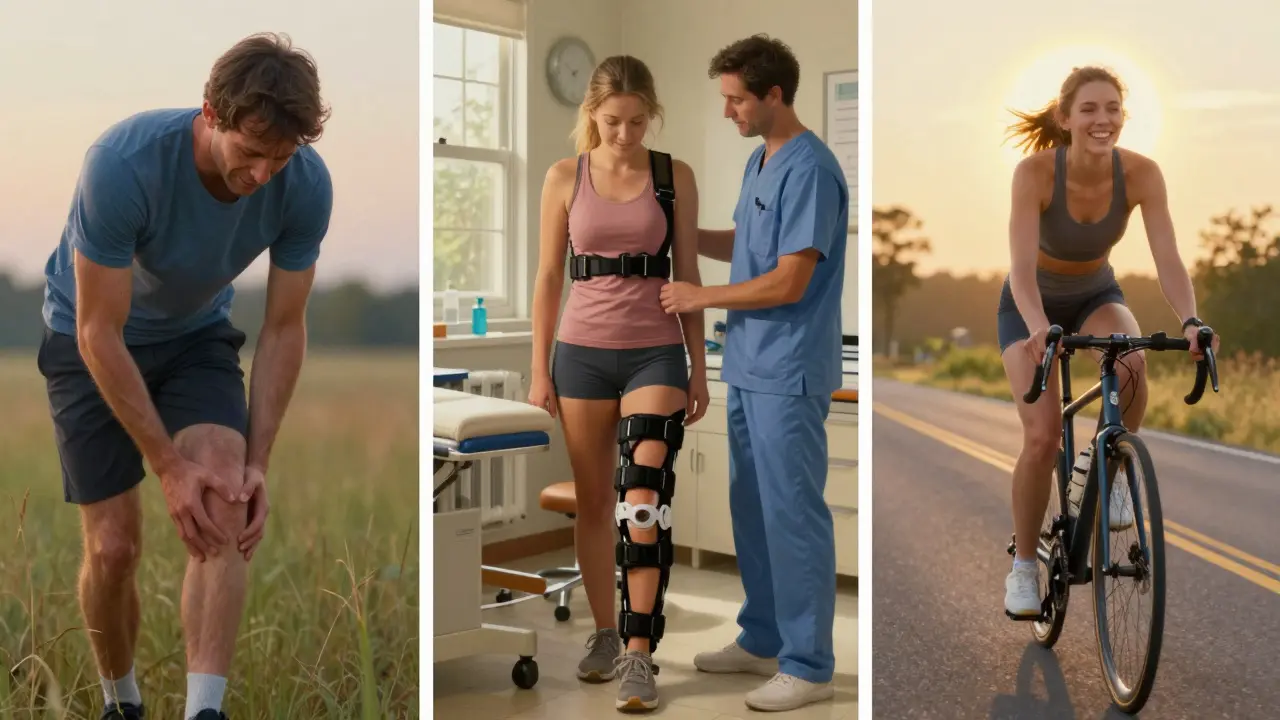
Here’s what the experts agree on: no single treatment is enough. Dr. Tuhina Neogi, co-author of major OA guidelines, says the best approach is "exercise plus bracing plus periodic injections for flare-ups."
Think of it like this:
- Start with exercise to build strength and mobility. This is your foundation.
- Add a unloader brace if you have medial OA and pain during daily activities. It gives you immediate support while you build strength.
- Use injections sparingly-only when pain flares up despite the other two. Think of them as a reset button, not a permanent fix.
This combination isn’t just smart-it’s backed by data. The PLOS ONE network meta-analysis ranked this trio as the most effective overall. Bracing handles immediate mechanical stress. Exercise rebuilds your body’s natural support system. Injections give you breathing room during tough patches.
And the cost? Comprehensive non-surgical management costs $12,500-$18,700 per quality-adjusted life year gained. A total knee replacement? $35,600. The math is clear: non-surgical options are cheaper, safer, and more sustainable.
What to Avoid and What to Do Instead
Many people make the same mistakes:
- Skipping movement because it hurts. Pain doesn’t mean damage-it often means weakness. Movement is medicine.
- Relying only on injections. They mask pain, but don’t fix the underlying problem. You’ll end up needing them more often.
- Buying a brace online without fitting. A poorly fitted brace can make things worse.
- Waiting too long to act. The earlier you start, the more you can slow progression.
Instead:
- Get evaluated by a physical therapist or orthotist. They’ll tell you if you’re a candidate for bracing.
- Start with water-based exercise if your knee is very stiff or painful. The buoyancy is forgiving.
- Track your pain on a scale of 1-10 each week. You’ll see patterns and know when to adjust.
- Ask about insurance coverage. Medicare and many private plans cover braces and physical therapy-just not always automatically.
What’s New in 2026
The field is evolving fast. In 2022, Össur launched the Unloader One Pulse is a smart knee brace with built-in motion sensors that gives real-time feedback on your gait. It connects to an app to show you if you’re shifting weight correctly. By 2026, these devices are becoming more common in rehab clinics.
Also, the AAOS is updating its guidelines in mid-2024 to better reflect how combining these three methods works best. And research is moving toward personalization-using biomechanical scans and genetic markers to match each person with the right mix of brace, injection, and exercise.
One thing won’t change: movement remains the most powerful tool. No brace, no injection, can replace the strength, flexibility, and resilience you build through consistent, smart movement.
Can knee braces cure osteoarthritis?
No. Knee braces don’t repair cartilage or reverse osteoarthritis. They reduce pain by shifting pressure away from the damaged area. Think of them as a support system, not a cure. They work best when combined with exercise to strengthen the muscles around the joint.
How often can I get knee injections?
For corticosteroids, most doctors limit injections to 3-4 times per year to avoid cartilage damage. Hyaluronic acid is usually given as a series of 3-5 weekly injections, once per year. PRP and botulinum toxin have no official limits, but most providers recommend waiting at least 6 months between treatments due to cost and uncertain long-term benefits.
Is water exercise better than land exercise for knee OA?
For people with moderate to severe pain, yes. Water exercise reduces joint load by up to 80%, making movement easier and less painful. Studies show it leads to 28.7% pain reduction on the VAS scale compared to 22.3% for land-based exercise. Both are effective, but water exercise is gentler and often better for starting out or during flare-ups.
Do I need a prescription for a knee brace?
Not always, but you’ll need one for insurance coverage. Medicare and most private insurers require a doctor’s order and fitting by a certified orthotist. Over-the-counter braces may help a little, but they don’t provide the targeted pressure relief that unloader braces do. If you’re serious about pain relief, get fitted properly.
Can exercise make knee OA worse?
Only if done incorrectly. High-impact activities like running, jumping, or deep squats can increase pain. But low-impact, controlled movement-like cycling, swimming, or seated leg lifts-improves joint health. Working with a physical therapist for the first few weeks ensures you’re using the right form and intensity. Pain during exercise should be mild and temporary. Sharp or lasting pain means you need to adjust.
If you’re living with knee OA pain, you’re not alone-and you don’t have to accept it as inevitable. Bracing, injections, and exercise aren’t just options. Together, they form a powerful, evidence-backed plan to keep you moving, independent, and in control of your life.

Johny Prayogi
March 21, 2026 AT 10:45Natali Shevchenko
March 23, 2026 AT 05:42Nicole James
March 23, 2026 AT 22:27Nishan Basnet
March 24, 2026 AT 02:53shannon kozee
March 25, 2026 AT 03:42trudale hampton
March 25, 2026 AT 14:11Shaun Wakashige
March 25, 2026 AT 14:12Paul Cuccurullo
March 27, 2026 AT 12:12Solomon Kindie
March 29, 2026 AT 08:13Bryan Woody
March 30, 2026 AT 09:23Chris Dwyer
March 31, 2026 AT 17:35Timothy Olcott
March 31, 2026 AT 21:04Desiree LaPointe
April 1, 2026 AT 21:12Jackie Tucker
April 3, 2026 AT 05:17Thomas Jensen
April 5, 2026 AT 04:45