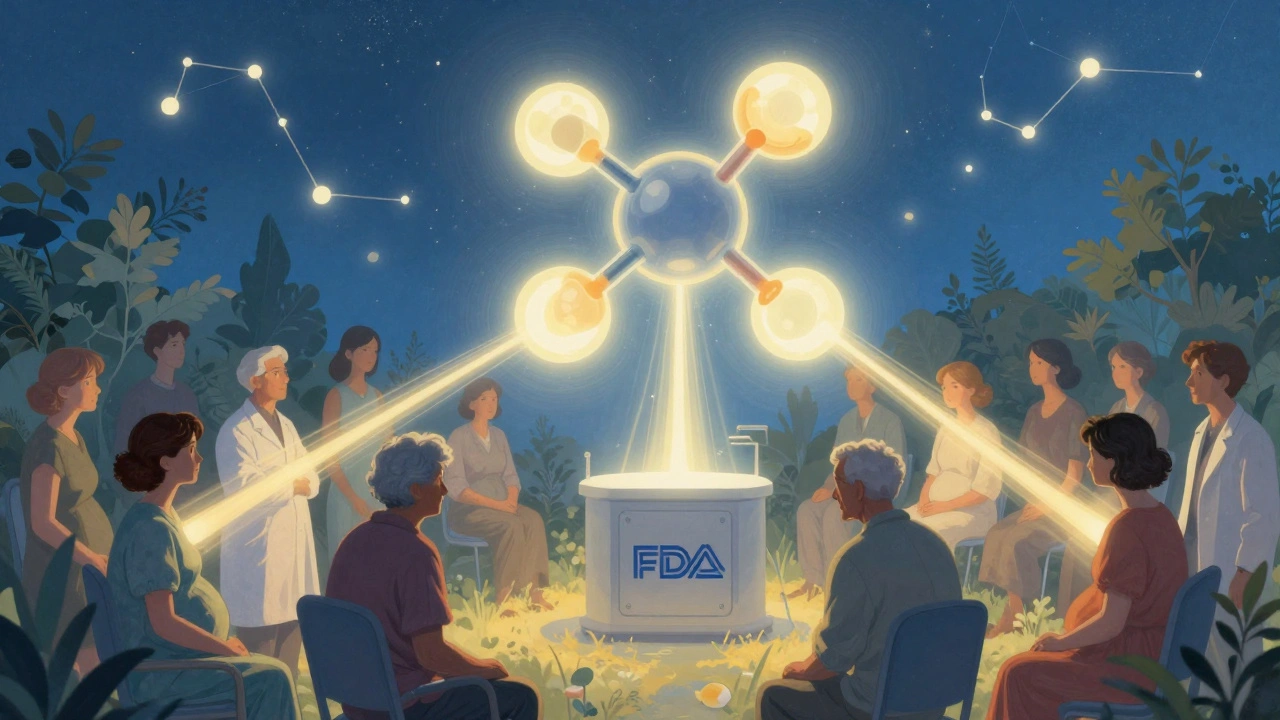
When a new drug hits the market, the work isn’t done. In fact, the real test of safety begins only after thousands of people start taking it daily - not in controlled clinical trials with a few thousand volunteers, but in the messy, varied reality of real life. Older adults, pregnant women, people with multiple chronic conditions, and those on multiple medications all use these drugs. That’s where post-marketing surveillance comes in. Tracking these studies isn’t optional. It’s a legal, ethical, and life-saving requirement.
Why Post-Marketing Surveillance Matters
Pre-approval clinical trials are designed to prove a drug works and isn’t immediately dangerous. But they’re limited. Most involve fewer than 5,000 people, often excluding seniors, children, or those with complex health issues. That means rare side effects - like liver damage that shows up only after six months, or a heart rhythm problem triggered by a specific genetic variant - can slip through. The FDA’s own data shows that 28% of serious adverse reactions found after approval wouldn’t have been caught in trials, mostly because older patients weren’t included. And in the U.S., people over 65 make up 43% of drug users but only 15% of trial participants. That’s why agencies like the FDA, EMA, and Health Canada require drug makers to keep watching. It’s not about distrust - it’s about realism. Drugs are used in ways trials never predicted. A painkiller might be taken with alcohol. An antidepressant might be prescribed off-label for migraines. A cancer drug might be used in patients with kidney failure. These are the scenarios where safety signals emerge.The Three Phases of Tracking Post-Marketing Studies
Tracking isn’t just collecting reports. It’s a structured, multi-phase process that begins before the drug even launches.- Planning: Right after approval, companies must submit a Safety Surveillance Plan and a Risk Minimization Plan. This isn’t paperwork - it’s a roadmap. It defines how they’ll collect data, who will monitor it, what side effects they’re watching for, and how they’ll communicate risks to doctors and patients. For example, a drug with a known risk of severe skin reactions might require special patient guides and mandatory training for prescribers.
- Execution: This is where the actual data flows in. There are three main ways: spontaneous reports (like doctors or patients calling in side effects), database studies (analyzing insurance claims or electronic health records), and formal post-marketing clinical studies (new trials with thousands of patients). The FDA’s FAERS system alone receives over 2 million new reports every year.
- Reevaluation: Every 4 to 10 years, companies must re-submit quality, efficacy, and safety data. If new risks emerge, the FDA can demand label changes, require a Risk Evaluation and Mitigation Strategy (REMS), or even pull the drug. Between 2018 and 2022, 87% of safety actions involved label updates - adding warnings about interactions, contraindications, or dosage limits.
Tools of the Trade: FAERS, Sentinel, and Beyond
The FDA doesn’t rely on guesswork. It uses two major systems to track safety.FAERS (FDA Adverse Event Reporting System) is the backbone. It’s a database with over 30 million reports from doctors, patients, and manufacturers. Anyone can submit - a nurse noticing a rash, a pharmacist spotting a pattern, a patient’s family member reporting confusion after a new prescription. FAERS doesn’t prove causation, but it flags patterns. In 2022, 63% of safety actions started with a spontaneous report.
Sentinel is the next level. Instead of waiting for reports, Sentinel actively mines data from over 300 million Americans - insurance claims, hospital records, lab results. It looks for unusual spikes in hospitalizations or lab abnormalities linked to a drug. In 2023, Sentinel expanded to include linked EHR and claims data from 24 million people, giving researchers access to clinical details like blood pressure readings and lab values that were previously missing.
Internationally, the UK’s Yellow Card system processed over 76,000 reports in 2022. Canada’s Vigilance Program got nearly 29,000. These systems feed into global networks, helping detect signals that might be too rare to notice in one country.

How Signals Turn Into Action
Finding a signal is just the start. The real challenge is deciding what to do.The FDA uses a five-phase process:
- Identify: An unusual pattern shows up - say, a 40% spike in pancreatitis cases linked to a new diabetes drug.
- Triage: Is this a minor issue or a public health threat? Teams prioritize based on how many people are affected and how severe the outcome is.
- Evaluate: They cross-check FAERS, Sentinel, published studies, and even social media discussions. They ask: Is this real? Could it be a coincidence? Are there confounding factors?
- Act: If confirmed, they take action. Most often, it’s a label update. Sometimes, it’s a “Dear Health Care Professional” letter. Rarely - less than 1% of cases - it’s a market withdrawal.
- Communicate: The FDA issues Drug Safety Communications, posts updates on its website, and publishes findings in journals. Transparency isn’t optional. It’s the foundation of trust.
Between 2020 and 2022, the FDA issued 147 such communications, affecting 112 different drugs. One drug had its warning about liver damage strengthened after 17 cases were found in Sentinel. Another had its dosage reduced after reports of dizziness in elderly patients.
The Big Problems: Delays, Data Gaps, and False Alarms
It sounds simple. But in practice, it’s messy.Studies mandated by the FDA often run years behind schedule. Between 2015 and 2022, the median time to complete a post-marketing study was 5.3 years - more than double the 3-year deadline. Why? Recruiting patients is hard. Getting data from different hospitals is harder. Many companies lack the infrastructure to manage multiple global studies at once.
Then there’s the data problem. Sentinel uses insurance claims, which tell you what was billed - not what actually happened. Did the patient have diabetes? Or was it just suspected? Did they take the drug as prescribed? These gaps make it hard to confirm if a side effect is real.
And false alarms? They’re common. In 2018, 34% of signals turned out to be noise. By 2023, thanks to better statistical models and machine learning, that dropped to 19%. Still, it means teams spend months chasing ghosts.
Even newer tools like AI and Large Language Models (LLMs) aren’t perfect. A 2023 pilot with Lifebit AI showed LLMs could find 42% more signals in unstructured EHR notes - but they also generated 23% more false positives. The tech helps, but it doesn’t replace human judgment.
Best Practices for Companies and Regulators
If you’re responsible for tracking these studies, here’s what works:- Centralize your data. Don’t let reports sit in different departments. Use a single pharmacovigilance system with automated alerts for protocol deviations.
- Staff properly. Experts recommend one dedicated pharmacovigilance specialist for every $500 million in annual drug revenue. Understaffed teams miss signals.
- Track your timing. Use the Post-Marketing Study Timeliness Index (PMSTI) - the percentage of studies completed on time. If it’s below 80%, you’ve got a systemic problem.
- Collaborate. Share data with regulators and other companies. The FDA’s Distributed Data Network has cut study start times from 14 months to under 9 months since 2018.

What’s Next? AI, Genomics, and Global Networks
The future of drug safety is smarter, faster, and more connected.The FDA’s Sentinel Common Data Model Plus (SCDM+) will integrate genomic data with clinical records for 50 million patients by 2026. That means we’ll soon know if a side effect hits only people with a specific gene variant - making warnings far more precise.
The European Union is launching an AI-powered system for EudraVigilance in 2025. It will automatically link reports across 30 countries, spotting trends no single nation could see alone.
And the WHO is building a global pharmacovigilance network, aiming to include 100 countries by 2027. Imagine detecting a dangerous interaction in Brazil, then seeing the same pattern in India and Germany - all within weeks.
This isn’t science fiction. It’s the next step. And it’s necessary. As more drugs target rare genetic conditions and personalized therapies, we need systems that can detect risks before they hurt people.
What You Can Do
If you’re a patient, report side effects - even if you’re not sure. A single report might be the first clue in a pattern.If you’re a healthcare provider, don’t assume a side effect is “just one case.” Document everything. Use standardized forms. Submit reports to your national system.
If you’re in the industry, invest in data infrastructure. Don’t treat post-marketing studies as an afterthought. They’re not a cost center. They’re your early warning system.
Drug safety isn’t a one-time check. It’s a continuous conversation between patients, doctors, regulators, and manufacturers. The more we listen, the safer our medicines become.
What is the difference between pre-marketing and post-marketing drug safety monitoring?
Pre-marketing safety monitoring happens in clinical trials before a drug is approved - usually with a few thousand healthy or carefully selected patients under controlled conditions. Post-marketing surveillance happens after the drug is available to the public, tracking safety in real-world use across millions of diverse patients, including those with other diseases, older adults, and people taking multiple medications. Pre-marketing studies prove a drug works; post-marketing studies find the risks that weren’t visible before.
How does the FDA detect safety signals from post-marketing data?
The FDA uses two main systems: FAERS, which collects spontaneous reports from doctors and patients, and Sentinel, which analyzes real-world data from insurance claims and electronic health records. Algorithms look for unusual spikes in side effects linked to a drug. For example, if 100 more people than expected develop liver injury within six months of taking a new drug, that’s flagged as a potential signal. Teams then investigate using multiple data sources to confirm if the link is real.
Why do post-marketing studies often run late?
Post-marketing studies often run behind schedule because recruiting patients is difficult, especially for rare conditions. Getting access to consistent, high-quality data across hospitals and insurers is slow and bureaucratic. Many companies lack dedicated infrastructure, and regulatory requirements vary by country. Between 2015 and 2022, the average study took 5.3 years to complete - more than double the mandated 3-year deadline.
What happens when a safety issue is confirmed?
Most often, the drug’s label is updated with stronger warnings about side effects, contraindications, or dosage limits. In 87% of safety actions between 2018 and 2022, this was the outcome. Sometimes, the FDA issues a “Dear Health Care Professional” letter or requires a Risk Evaluation and Mitigation Strategy (REMS), like mandatory training for prescribers. Market withdrawal is rare - less than 1% - and only happens when the risks clearly outweigh the benefits.
Can patients report side effects themselves?
Yes. Patients can and should report side effects directly to their national pharmacovigilance system. In the U.S., that’s the FDA’s MedWatch program. In the UK, it’s the Yellow Card scheme. Even if you’re unsure whether the drug caused the problem, reporting helps. A single report might seem small, but when hundreds of people report the same issue, it becomes a signal that regulators can’t ignore.
How are new technologies like AI changing post-marketing surveillance?
AI and machine learning are helping analyze unstructured data like doctor’s notes and patient forums, which traditional systems miss. In 2023, FDA pilots showed AI improved signal detection accuracy by 42% when reading EHR notes. But AI also generates more false alarms - 23% higher than traditional methods - so human experts still review every signal. The goal isn’t to replace people, but to help them find needles in haystacks faster.

Pavan Kankala
December 4, 2025 AT 16:01They say they’re tracking safety-but let’s be real, this whole system is just a PR stunt to keep drug companies from getting sued. You think the FDA actually cares about some grandma in Ohio who got liver damage? Nah. They’re too busy approving the next billion-dollar miracle drug that’ll be pulled in three years anyway. And don’t get me started on AI ‘detecting signals’-that’s just corporate buzzword bingo. They’re not saving lives, they’re just making the paperwork look good.
Jessica Baydowicz
December 6, 2025 AT 11:45YESSSS!! This is the kind of deep, real talk we need!! 🙌 I’m a nurse, and I’ve seen patients come in with side effects no one predicted-like that one guy who got dizzy after his new blood pressure med and thought he was having a stroke. He reported it, and guess what? It turned out to be a pattern! So yeah, report everything-even if you’re not sure. It’s not just paperwork, it’s literally saving lives. Keep speaking up, folks!
Shofner Lehto
December 7, 2025 AT 03:44There’s a structural flaw here that no one talks about: the data is fragmented. Insurance claims don’t tell you if a patient took the drug correctly. EHRs are inconsistent across hospitals. And spontaneous reports? Half the time, they’re incomplete or misattributed. Until we standardize data collection at the point of care-like mandatory structured fields in e-prescribing-we’re just guessing. This isn’t a tech problem. It’s a systems problem.
Karl Barrett
December 7, 2025 AT 04:44Let’s contextualize this within the epistemology of pharmacovigilance: pre-marketing trials are reductionist, controlled, and statistically underpowered for heterogeneity. Post-marketing surveillance, by contrast, is an emergent, complex adaptive system-where confounding variables, polypharmacy, and social determinants of health become the primary data vectors. The FDA’s SCDM+ initiative represents a paradigm shift toward precision pharmacovigilance, integrating genomic, proteomic, and real-world behavioral data into probabilistic risk modeling. This isn’t just surveillance-it’s predictive analytics at scale.
Rachel Bonaparte
December 8, 2025 AT 19:17Here’s the truth they won’t tell you: Big Pharma funds half the post-marketing studies. The FDA approves them, the companies run them, and guess who gets to interpret the data? The same people who made the drug. That’s not oversight-that’s a conflict of interest dressed up in a lab coat. And don’t even get me started on Sentinel-those ‘300 million Americans’? Their data is scraped from insurers who’ve got a vested interest in minimizing adverse events. This whole system is rigged. The only reason they haven’t pulled the plug on dangerous drugs yet is because they’re still making too much money.
Michael Feldstein
December 10, 2025 AT 16:21Great breakdown. I’d add one thing: patient reporting is the most underutilized tool we have. Most people think side effects are ‘just part of taking meds’-but if you notice something weird, like a rash after three weeks or sudden memory lapses, write it down and report it. Even if it’s ‘just one case,’ it’s data. And data is power. I’ve seen patients change drug labels just by being persistent. You don’t need to be a doctor. You just need to care enough to speak up.
Alex Piddington
December 12, 2025 AT 00:05While the systems described are technically robust, their implementation remains inconsistent. The recommendation to assign one pharmacovigilance specialist per $500 million in revenue is not a best practice-it is a bare minimum. Many global companies operate with less. Without adequate staffing, even the most sophisticated AI tools become irrelevant. The infrastructure exists. The will does not.
Libby Rees
December 13, 2025 AT 14:28Report side effects. It’s simple. You don’t need a degree. You don’t need to understand statistics. Just write down what happened, when, and what you were taking. Send it in. Someone somewhere is watching. And maybe, just maybe, your report helps someone else avoid the same thing.