
Getting your medication list right isn’t just about writing down what you take. It’s about safety alerts - the small but critical notes that stop someone from dying because a dose was misread, a drug was mixed up, or a warning was ignored. In hospitals and pharmacies across Australia and beyond, this isn’t optional. It’s a lifeline. And if you’re responsible for managing medications - whether you’re a pharmacist, nurse, doctor, or even a patient managing your own care - knowing how to document these alerts properly can mean the difference between a close call and a tragedy.
What Makes a Medication a High-Alert Medication?
Not all drugs are created equal when it comes to risk. High-alert medications are defined by the Institute for Safe Medication Practices (ISMP) as drugs that carry a higher chance of causing serious harm if used incorrectly. These aren’t rare or experimental drugs. They’re common ones you’ve likely heard of: insulin, opioids like morphine, anticoagulants like warfarin, and neuromuscular blockers used during surgery. One wrong dose of insulin can send a patient into a coma. A single misread label on a neuromuscular blocker can stop someone’s breathing. The Joint Commission, which sets standards for hospitals in the U.S. and influences global practice, requires every facility to maintain its own list of high-alert medications based on the ISMP master list. That list currently includes 19 categories. In Australia, while there’s no federal mandate, most major hospitals follow these guidelines closely because the risk is too high to ignore.Why Documentation Isn’t Just Paperwork
You might think, “Why not just rely on electronic alerts?” The problem is, alerts get ignored. Studies show that in systems without strong documentation protocols, up to 49% of safety alerts are bypassed. Why? Because too many alerts mean nothing stands out. Alert fatigue is real - and deadly. Documentation changes that. It turns a pop-up warning into a system. When you document a safety alert, you’re not just writing a note. You’re creating a chain of accountability. For example, if a nurse administers a neuromuscular blocker, the documentation must include:- Confirmation the patient is being ventilated
- Verification that the correct drug and dose were checked by two staff members
- Recording that the auxiliary label - which reads “WARNING: CAUSES RESPIRATORY ARREST - PATIENT MUST BE VENTILATED” - was physically attached to the vial
How to Build a Safety Alert System That Works
You don’t need fancy software to start. But you do need structure. Here’s how to build a working system, step by step.- Identify your facility’s high-alert medications. Start with the ISMP list. Then, adjust it based on what you actually use. A small clinic might not use neuromuscular blockers. A cancer center will need extra focus on methotrexate and chemotherapy agents.
- Assign a safety officer. Nearly 87% of high-performing hospitals have one dedicated person managing medication safety. This person tracks alerts, reviews bypasses, and ensures documentation isn’t just checked off - it’s understood.
- Use physical and digital labels together. For high-risk drugs, put a bright red sticker on every container with the exact warning text. At the same time, configure your electronic health record to block orders unless the correct indication is selected. For example, oral methotrexate must be prescribed for cancer or autoimmune conditions - not for daily pain. The system should default to weekly dosing, not daily.
- Require double-checks. For insulin, heparin, and opioids, two trained staff must independently verify the drug, dose, route, and patient before administration. Document each check with initials and timestamps.
- Track compliance. Aim for at least 95% barcode scanning compliance. If someone bypasses an alert, document why. Was it a system glitch? A misunderstanding? A time crunch? Monthly reviews of these bypasses are non-negotiable.

What to Document - The Minimal Viable List
You don’t need to write essays. But you must capture the essentials. For every high-alert medication, your documentation should include:- Drug name and concentration
- Indication (why it’s being given)
- Dose and frequency
- Verification steps completed (e.g., “Double-checked by RN and Pharmacist”)
- Any bypassed alerts and the reason
- Confirmation of patient education (e.g., “Patient taught signs of low blood sugar for insulin”)
Common Pitfalls and How to Avoid Them
Even the best systems fail if they’re poorly designed. Here’s what goes wrong - and how to fix it.- Too many alerts - If your system throws up 15 alerts per order, people stop reading. Cut alerts to only the most critical. Focus on the 19 ISMP categories. Don’t add every possible interaction.
- Alerts that don’t stop the process - If an alert can be clicked away without action, it’s useless. Hard-stop protocols are required for drugs like methotrexate. No override unless a senior clinician signs off with a reason.
- No follow-up - Documenting a bypass is useless if you don’t ask, “Why did this happen?” and “How do we stop it next time?” Monthly safety meetings are the heartbeat of any good system.
- Ignoring external alerts - The FDA releases about 120 drug safety notices a year. If your system doesn’t have a process to integrate these into your internal documentation, you’re flying blind. Designate someone to check MedWatch weekly and update your list.
Real Stories From the Front Lines
At the University of Michigan Health System, pharmacist Jennifer Martinez implemented the ISMP documentation framework. Within 18 months, high-alert medication errors dropped by 63%. But it cost them half a full-time staff member just to manage the documentation. “It’s not glamorous,” she said. “But we’ve saved lives.” On the flip side, a rural hospital in New South Wales posted on a pharmacy forum: “We’re supposed to document every bypassed alert. But with three pharmacists covering 24/7, we’re running on fumes. The paperwork feels like a box-ticking exercise.” That’s the tension. Documentation isn’t easy. But the cost of not doing it? A patient dying because no one noticed the wrong drug was in the syringe. That’s not a cost you can afford.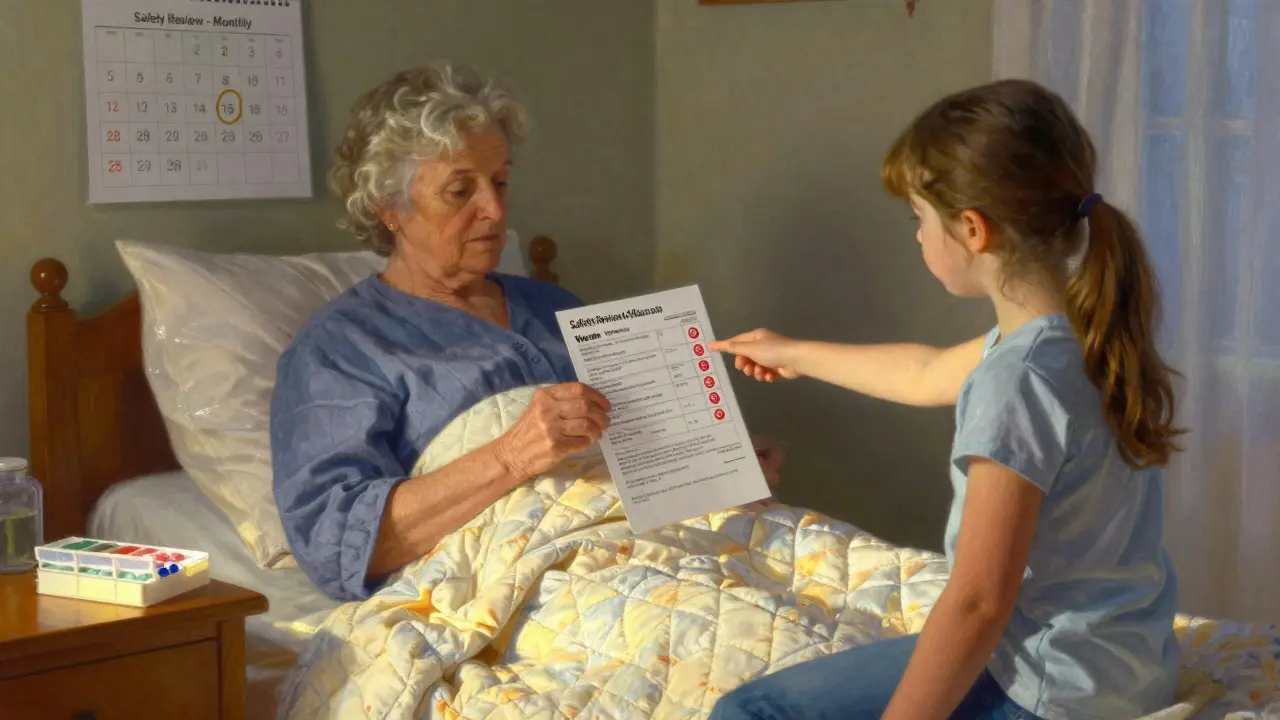
The Future: Automation and AI
The good news? Tools are getting smarter. The FDA’s Sentinel Initiative now sends automated safety alerts directly into hospital systems, cutting manual entry by 80%. Epic Systems is launching an AI module in mid-2025 that learns from your facility’s error patterns and prioritizes alerts - flagging only the ones most likely to cause harm. But here’s the catch: early AI systems missed 18% of critical alerts, according to a 2024 JAMA study. So automation doesn’t replace documentation - it enhances it. The goal isn’t to remove human oversight. It’s to reduce the noise so the right alerts get seen.What You Need to Do Now
If you’re in a hospital, clinic, or pharmacy:- Review your current high-alert list. Does it match ISMP’s 2024-2025 version?
- Check if your EHR has hard-stop protocols for insulin, methotrexate, and opioids.
- Look at your last 30 bypassed alerts. Did you analyze why they happened?
- Is there a designated person responsible for tracking safety documentation?
- Ask your pharmacist: “Are there any safety alerts on my medications?”
- Check if your insulin or blood thinner has a warning label on the bottle.
- Keep your own list - with doses, reasons, and any alerts - and bring it to every appointment.
Final Thought
Documentation isn’t about filling out forms. It’s about building a culture where safety is visible, tracked, and non-negotiable. The most effective systems don’t rely on technology alone. They rely on people who know the stakes - and take the time to make sure nothing slips through.One day, someone might open your patient’s chart and see a simple note: “Double-checked. Ventilation confirmed. Label attached.” And that one line - properly documented - will be the reason they’re still alive.
What are high-alert medications, and why do they need special documentation?
High-alert medications are drugs that can cause serious harm - including death - if used incorrectly. Examples include insulin, opioids, anticoagulants, and neuromuscular blockers. Special documentation is needed because standard safety checks aren’t enough. These drugs require layered protections: physical warning labels, electronic hard-stops, double-checks, and clear records of each step. Without documentation, errors go unnoticed until it’s too late.
Can I just rely on electronic alerts in my EHR system?
No. Electronic alerts alone are not enough. Studies show that up to 49% of alerts are bypassed, especially when there are too many or they’re easy to ignore. Documentation turns alerts into action. It requires staff to confirm they’ve seen the alert, taken the necessary step (like verifying ventilation), and recorded it. Without that step, the alert is just noise.
What should I document for a neuromuscular blocker like succinylcholine?
For neuromuscular blockers, documentation must include: (1) The auxiliary warning label reading “WARNING: CAUSES RESPIRATORY ARREST - PATIENT MUST BE VENTILATED” is visibly attached to the vial; (2) The patient is confirmed to be on mechanical ventilation before administration; (3) Two qualified staff members independently verified the drug, dose, and patient; and (4) The time of administration and names of the verifying staff are recorded. Failure to document any of these steps increases the risk of fatal respiratory arrest.
How often should safety alert documentation be reviewed?
Safety alert documentation should be reviewed monthly by a multidisciplinary team - including pharmacists, nurses, and physicians. Every bypassed alert must be analyzed for root cause. If more than 5% of alerts are bypassed, the system needs immediate review. Quarterly, the full medication safety committee should assess error trends, update the high-alert list, and ensure compliance with current ISMP guidelines.
Is there a legal requirement to document safety alerts?
In the U.S., the Joint Commission requires accredited hospitals to document risk mitigation strategies for high-alert medications as part of National Patient Safety Goal NPSG.01.01.01, effective January 1, 2024. Non-compliance can lead to accreditation issues. In Australia, while not federally mandated, major hospitals follow ISMP guidelines to meet international standards and avoid liability. Medicare and Medicaid in the U.S. now tie reimbursement to safety documentation, with penalties starting in 2025.
What if my facility doesn’t have the staff to manage documentation?
Start small. Pick one high-alert medication - like insulin or warfarin - and build a simple documentation process around it. Use free tools from ISMP and AHRQ. Assign one person to track compliance, even if it’s just 2 hours a week. Focus on quality over quantity. A single well-documented safety step is better than 10 poorly tracked ones. Over time, as you prove the value, you can expand the system. The goal isn’t perfection - it’s prevention.
Can patients help with safety alert documentation?
Yes. Patients should be given a written list of their high-alert medications with clear warnings (e.g., “This can cause low blood sugar - check your levels daily”). They should be taught to recognize warning signs and ask questions like, “Is this the right dose?” or “Why is this drug being given?” Studies show that patients who are informed and involved reduce medication errors by up to 30%. Their awareness is a critical safety layer.

ellen adamina
January 16, 2026 AT 04:36Documentation isn't paperwork-it's the last line of defense.
Gloria Montero Puertas
January 18, 2026 AT 03:39Dan Mack
January 18, 2026 AT 12:28Nicholas Urmaza
January 19, 2026 AT 22:07You're not filling out forms-you're signing a promise to keep someone alive
Ayush Pareek
January 20, 2026 AT 05:51Tom Doan
January 22, 2026 AT 00:35Arjun Seth
January 23, 2026 AT 10:19Amy Vickberg
January 25, 2026 AT 00:29Nishant Garg
January 26, 2026 AT 09:11Nilesh Khedekar
January 27, 2026 AT 15:38Haley Graves
January 29, 2026 AT 07:02Annie Choi
January 30, 2026 AT 02:53Jaspreet Kaur Chana
January 30, 2026 AT 15:55Sarah Mailloux
January 31, 2026 AT 21:42