
When it comes to protecting your heart, what you eat matters more than you think. It’s not about quick fixes or cutting out entire food groups. It’s about patterns-daily habits that quietly lower your blood pressure, clean out your arteries, and reduce inflammation over time. Three diets stand out in the science: Mediterranean, DASH, and plant-forward eating. Each has been tested in real people, tracked for years, and proven to cut heart disease risk. And they’re not just for people with high blood pressure or cholesterol-they work for anyone who wants to stay healthy long-term.
What Makes a Diet Heart-Healthy?
Not all healthy diets are created equal. A heart-healthy eating pattern doesn’t just mean eating less fat or avoiding sugar. It’s about specific combinations of foods that work together to improve your numbers: lower LDL (bad) cholesterol, reduce blood pressure, and calm inflammation in your blood vessels. The American Heart Association calls these Tier 1 diets because they’re backed by the strongest evidence. They don’t rely on supplements or extreme restrictions. Instead, they focus on whole, minimally processed foods that naturally support your heart’s function.
Here’s what consistently shows up in these diets: lots of vegetables, fruits, whole grains, beans, nuts, and seeds. Healthy fats from olive oil, avocado, or fish. Lean protein sources like poultry, fish, and legumes. And very little processed food, added sugar, or sodium. The goal isn’t perfection-it’s progress. Even small shifts, like swapping white bread for whole grain or choosing grilled fish over fried chicken, add up over time.
The Mediterranean Diet: Flavor, Fat, and Longevity
The Mediterranean diet isn’t a strict plan-it’s a way of eating that comes from countries like Greece, Italy, and Spain. It’s not about counting calories or avoiding carbs. It’s about what you eat most often: vegetables, fruits, whole grains, legumes, nuts, and olive oil. Fish shows up at least twice a week. Cheese and yogurt are part of daily meals. Red meat? Maybe once or twice a month. And if you drink alcohol, a glass of red wine with dinner is part of the tradition.
What makes this diet powerful? Its fats. Extra-virgin olive oil is the star. It’s rich in monounsaturated fats and antioxidants that help reduce inflammation and protect your arteries. Studies show people who follow this pattern have up to 30% lower risk of major heart events like heart attacks and strokes. One 10-year study of over 2,000 adults found that those with high adherence to the Mediterranean diet had significantly fewer cases of fatal and non-fatal heart disease.
It’s also one of the most sustainable. People don’t feel deprived. They eat flavorful meals-think roasted vegetables with garlic and herbs, lentil soups, grilled sardines, and fruit for dessert. A 2023 survey of users found 4.3 out of 5 satisfaction ratings, with many saying it felt like a lifestyle, not a diet. The flexibility makes it easy to stick with. You don’t need to eliminate dairy or meat-you just eat them in smaller amounts and better forms.
The DASH Diet: The Science-Backed Blood Pressure Fix
If your biggest concern is high blood pressure, the DASH diet was made for you. Developed in the 1990s by researchers at Harvard and funded by the National Institutes of Health, DASH stands for Dietary Approaches to Stop Hypertension. The name says it all: it was designed to lower blood pressure without drugs.
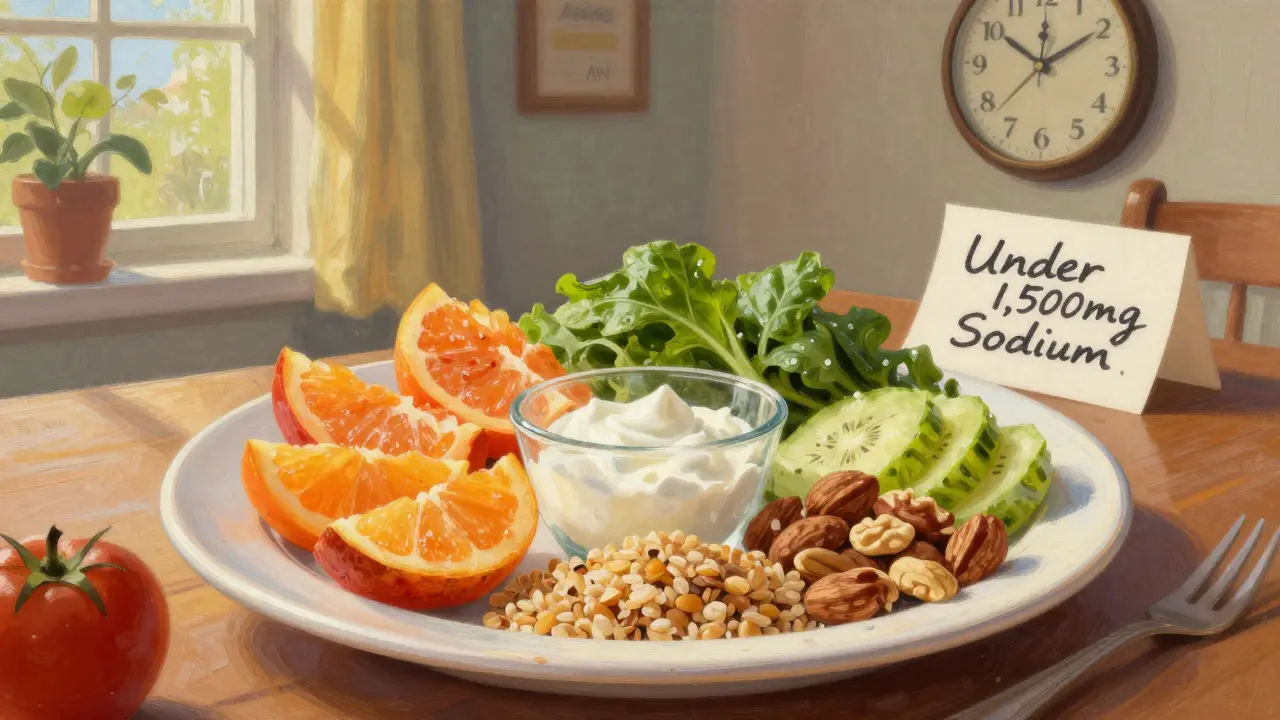
The original DASH trial showed systolic blood pressure dropped by 5.5 to 11.4 mm Hg in just eight weeks. For someone with hypertension, that’s like taking a low-dose medication. The secret? High intake of potassium, calcium, magnesium, and fiber-all found in fruits, vegetables, whole grains, and low-fat dairy. And strict sodium limits: 1,500 to 2,300 mg per day. That’s less than half of what the average American eats daily.
Here’s what a typical DASH day looks like: 6-8 servings of grains (mostly whole), 4-5 servings of vegetables, 4-5 servings of fruit, 2-3 servings of low-fat dairy, 6 or fewer servings of lean meat or fish, and 4-5 servings of nuts, seeds, or legumes per week. Fats are limited to 2-3 servings, mostly from healthy oils. Sweets? No more than 5 servings a week.
It’s precise. And that’s why it’s so effective-but also why it’s harder to stick with. Many people struggle with the sodium limit. In a 2022 NIH study, only 27% of participants hit the 1,500 mg target without help from a dietitian. But there’s a workaround: the OmniHeart study showed that swapping some carbs for healthy fats (like olive oil, avocado, or nuts) made the diet even more effective and easier to follow. Blood pressure dropped even more, and LDL cholesterol fell further. This variation is now widely recommended.
Plant-Forward Eating: Flexibility Meets Power
Plant-forward eating isn’t veganism. It’s not even vegetarianism. It’s simply putting plants at the center of your plate-without banning animal products. Think of it as a spectrum: one day you eat a big salad with grilled chicken, the next you have a lentil stew with a side of yogurt. The goal is to make plants the main event, not just a side.
Why does this work for your heart? Plants are packed with fiber, antioxidants, and phytonutrients that reduce inflammation and improve cholesterol. A 2024 study from the PURE trial found that people who got most of their protein from plants had 23% lower risk of dying from heart disease. Even small changes help: replacing one serving of red meat with beans per week lowers LDL cholesterol by about 5%.
What makes this approach appealing is its adaptability. You don’t need to give up steak forever. You just eat it less often. A 2024 Nielsen survey found that 42% of Americans now eat mostly plant-based meals at least three days a week. That’s not a fad-it’s a shift in how people think about food. And it’s easier to maintain than strict diets. The Veganuary 2024 survey showed 67% of people sticking with at least some plant-forward habits six months later, even if they weren’t fully vegan.
How Do They Compare?
So which one’s best? It depends on your goals.
| Feature | Mediterranean | DASH | Plant-Forward |
|---|---|---|---|
| Primary Focus | Healthy fats, whole foods, flavor | Lowering blood pressure | Plant-based foods as the main component |
| Sodium Limit | Not strictly limited | 1,500-2,300 mg/day | Typically low (no strict target) |
| Fat Intake | 35-40% of calories (mostly olive oil) | 27% of calories (limited saturated fat) | Varies (often higher in unsaturated fats) |
| Animal Products | Moderate fish, poultry, dairy; rare red meat | Lean meat, poultry, fish, low-fat dairy | Flexible-can be minimal or occasional |
| Best For | Long-term sustainability, overall heart health | Fast blood pressure reduction | Flexibility, inflammation reduction |
| Adherence Rate (6 months) | 75%+ | 52-68% | 67% |
For overall heart disease prevention, the Mediterranean diet leads. It’s linked to fewer deaths from heart disease. For fast, measurable drops in blood pressure, DASH wins. For flexibility and long-term habit change, plant-forward eating is the easiest to live with. And here’s the kicker: combining them works even better. Researchers call it the “Medi-DASH” approach. A 12-week trial showed it lowered blood pressure more than either diet alone and cut LDL cholesterol by nearly 19 mg/dL. That’s a bigger drop than many medications.

Real-Life Challenges and How to Overcome Them
Knowing what to eat is one thing. Doing it daily is another. All three diets face real-world hurdles.
For Mediterranean: Finding quality olive oil can be tricky. Look for extra-virgin, cold-pressed, and stored in dark glass. Many people also struggle to eat enough vegetables. Start by adding one extra serving a day-like spinach in your eggs or carrots with hummus.
For DASH: Sodium is the biggest barrier. Processed foods, canned soups, and restaurant meals are loaded with salt. Cook more at home. Use herbs, lemon, garlic, and spices instead of salt. The National Heart, Lung, and Blood Institute offers free 14-day meal plans to help you get started.
For plant-forward: Social situations can derail progress. Dinner with friends? Bring a plant-based dish to share. It opens the conversation and gives others something tasty to try. And don’t worry about being perfect. A 2023 Cleveland Clinic survey found that 68% of people who stuck with any of these diets reported better energy levels within weeks. That’s a powerful motivator.
Getting Started: Simple First Steps
You don’t need to overhaul your whole diet overnight. Start here:
- Swap one processed snack for a piece of fruit or a handful of unsalted nuts.
- Replace red meat with beans, lentils, or fish at least twice a week.
- Use olive oil instead of butter for cooking.
- Drink water instead of sugary drinks.
- Read labels. Avoid foods with more than 200 mg of sodium per serving.
The American Heart Association’s ‘No-Fad Diet’ toolkit gives personalized meal plans for all three patterns. It’s free, practical, and tested by real people. In user surveys, 82% said it helped them stick with their plan.
Why This Matters Now
Heart disease is still the leading cause of death worldwide. But the good news? Up to 80% of cases are preventable through diet and lifestyle. These three diets aren’t magic. They’re just smart, science-backed ways to eat. And they’re not going away. In fact, more doctors are recommending them than ever. A 2023 survey found 89% of cardiologists now suggest one of these three as a first step for patients with high blood pressure, cholesterol, or diabetes.
Insurance companies are catching on too. In the U.S., 67 of the top 100 insurers now cover nutrition counseling for these diets. That’s a sign they’re not just trendy-they’re effective.
And while these diets can cost about $1.50 more per day than the average American diet, studies show they save thousands in medical costs over time. Fewer hospital visits. Less medication. Lower risk of stroke or heart attack. That’s the real return on investment.
Can I combine the Mediterranean and DASH diets?
Yes, and many experts recommend it. Combining the two into what’s called the "Medi-DASH" diet gives you the best of both: the heart-protective fats and flavors of the Mediterranean diet, plus the sodium control and precise nutrient targets of DASH. A 12-week study showed this combo lowered blood pressure more than either diet alone and cut LDL cholesterol by nearly 19 mg/dL-better than many medications.
Is the Mediterranean diet safe if I don’t drink alcohol?
Absolutely. The small amount of red wine in the traditional Mediterranean diet is optional and not required for heart benefits. Many people skip it entirely, especially if they have health conditions, are pregnant, or prefer not to drink. The real power comes from the vegetables, olive oil, whole grains, nuts, and fish. You’ll still get all the heart-protective effects without alcohol.
Does plant-forward eating mean I have to go vegan?
No. Plant-forward means making plants the main part of your meals-not the only part. You can still eat eggs, yogurt, chicken, or fish. The goal is to fill half your plate with vegetables, fruits, beans, or whole grains, and let animal products play a supporting role. Many people find this easier to stick with than going fully plant-based.
How long does it take to see results from these diets?
You can start seeing changes in as little as 2-4 weeks. Blood pressure often drops within a month on DASH. Cholesterol levels may improve in 6-8 weeks. Many people report more energy, better digestion, and less bloating within days. The real benefits-like lower risk of heart attack or stroke-build over years. But the early wins keep you motivated.
Are these diets expensive to follow?
They can cost about $1.50 more per day than a typical American diet, mostly because of fresh produce, whole grains, and quality oils. But you can keep costs down by buying seasonal vegetables, choosing dried beans over canned, using frozen fruits and veggies, and cooking in bulk. And while the upfront cost is higher, studies show these diets reduce long-term medical expenses by lowering medication needs and preventing hospital visits.

Scott Easterling
March 8, 2026 AT 08:08Mantooth Lehto
March 8, 2026 AT 08:58Melba Miller
March 9, 2026 AT 07:13Katy Shamitz
March 10, 2026 AT 03:17Mary Beth Brook
March 11, 2026 AT 19:12Neeti Rustagi
March 13, 2026 AT 07:11Dan Mayer
March 13, 2026 AT 17:54Janelle Pearl
March 13, 2026 AT 22:56Ray Foret Jr.
March 14, 2026 AT 08:33Samantha Fierro
March 14, 2026 AT 22:38Robert Bliss
March 15, 2026 AT 01:10