
When you pick up a pill from the pharmacy, you might think it’s just one thing: the medicine. But every tablet, capsule, or liquid you take is made of at least two very different kinds of ingredients. One gets all the attention-the active ingredient. The other? It’s quietly doing its job behind the scenes: the inactive ingredient. And while one makes you feel better, the other might be the reason you feel worse.
What exactly is an active ingredient?
The active ingredient is the part of the drug that actually does the work. It’s the reason you took the pill in the first place. In Tylenol, that’s acetaminophen. In Advil, it’s ibuprofen. In Lipitor, it’s atorvastatin. These chemicals interact directly with your body’s systems-blocking pain signals, lowering cholesterol, fighting infection.
The FDA requires every active ingredient to go through years of testing before it’s approved. Clinical trials prove it works, and safety studies show it won’t kill you at the right dose. That’s why only about 1 in 10 drug candidates ever make it to market. The bar is high because the active ingredient is the reason the medicine exists.
What are inactive ingredients, really?
Inactive ingredients-also called excipients-are everything else in the pill. They don’t treat your condition. But they’re not useless. In fact, you can’t have a pill without them.
Think of them like the scaffolding and packaging for a building. Lactose or microcrystalline cellulose gives bulk to a tablet so it’s big enough to handle. Gelatin or starch holds it together. Magnesium stearate keeps it from sticking to the machines during manufacturing. Hydroxypropyl methylcellulose coats the pill so it slides down your throat. Flavorings and dyes make it look and taste better. Preservatives stop mold from growing in the bottle.
Without these, most medicines would be impossible to make. Imagine trying to swallow a tiny speck of pure acetaminophen-no bulk, no coating, no flavor. It’d be chalky, bitter, and hard to dose accurately. Inactive ingredients make medications practical, stable, and safe to use.
Why the label says ‘inactive’ might be misleading
The word ‘inactive’ is a misnomer. Just because something doesn’t treat your disease doesn’t mean it’s harmless-or inert.
A groundbreaking 2021 study from the University of California, San Francisco, and Novartis tested nearly 640 commonly used excipients against over 3,000 human proteins. They found that 14% of these ‘inactive’ ingredients had biological activity. That means they interacted with your body’s cells in ways scientists didn’t expect.
Some dyes, like D&C Red 7 calcium lake, and preservatives like propyl gallate, bound strongly to proteins involved in inflammation, metabolism, and even brain function. These weren’t just floating around-they were triggering reactions. One compound showed activity at levels lower than what’s found in a single pill.
This isn’t theory. It’s data. And it’s changing how drugmakers think. The FDA launched the Excipient Safety Initiative in 2022, investing $4.2 million to study these hidden effects. Sixty-eight of the top 100 pharmaceutical companies now run computational screens on excipients before using them-something unheard of a decade ago.
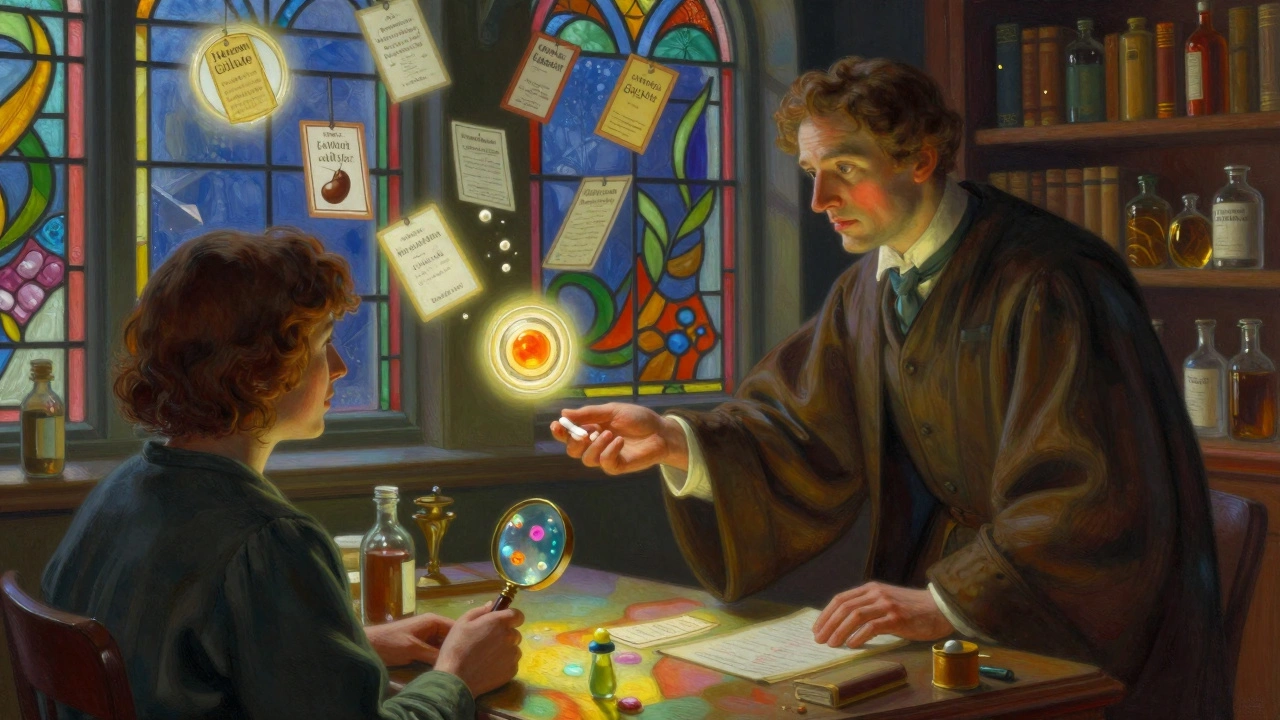
When inactive ingredients cause real problems
For most people, excipients are harmless. But for some, they’re a hidden trigger.
Lactose, a common filler, causes stomach pain, bloating, and diarrhea in about 65% of the global population due to lactose intolerance. If you’re one of them, even a single 500mg acetaminophen tablet with lactose can ruin your day.
Gluten, found in wheat starch used as a binder, affects 1 in 100 people with celiac disease. Even trace amounts can damage the gut lining. Sulfites, used as preservatives in some injectables, can trigger asthma attacks in 5-8% of asthmatics.
And it’s not just allergies. Some people react to dyes, artificial flavors, or even the alcohol used in liquid medicines. The FDA’s adverse event database shows that about 0.5% of all reported drug reactions are tied to inactive ingredients-not the active one.
That’s why pharmacists in Australia and the U.S. now see nearly 1 in 5 medication switches driven by excipient issues-not effectiveness. A patient with celiac disease might be switched from one brand of metformin to another simply because the first used wheat starch and the second didn’t.
How to find out what’s really in your medicine
By law, over-the-counter drugs must list both active and inactive ingredients on the packaging. Prescription drugs list them in the package insert. But most people never read it.
If you have allergies, intolerances, or sensitivities, you need to check. The FDA’s Inactive Ingredient Database is publicly available and updated quarterly. It tells you exactly which excipients are allowed in oral tablets, liquids, injections, and more-and how much is safe per dose.
For example: lactose is okay up to 50mg per dose in tablets, but benzyl alcohol (a preservative) is limited to just 1mg per dose in IV solutions. Too much, and it can cause serious reactions.
Pharmacists can help. Ask them: “Is there a version of this drug without lactose, gluten, or dye?” Many brands offer alternatives. Generic versions often use different fillers than brand-name ones. A simple switch can make a huge difference.

Why this matters more than you think
Here’s something most people don’t realize: inactive ingredients can change how well a drug works.
Take fenofibrate, a cholesterol drug. A newer version used a special surfactant to make the particles smaller. That single change increased absorption by 35%. The active ingredient was the same. But the inactive ingredients made it work better.
That’s why drugmakers now treat excipients like part of the medicine-not just filler. In 73% of new FDA-approved drugs between 2018 and 2022, at least one excipient was new or used in a novel way. These aren’t random choices. They’re engineered for performance.
And with personalized medicine on the rise, excipient profiles may soon be part of your health record. If you’re sensitive to certain dyes or preservatives, your doctor could one day prescribe not just “atorvastatin,” but “atorvastatin without FD&C Red 40 or propylparaben.”
What you should do now
Don’t ignore the ingredient list. It’s not just marketing fluff.
- If you have food intolerances (lactose, gluten, soy), ask your pharmacist: “Does this pill contain any of these?”
- If you’ve had unexplained reactions to a drug-rash, stomach upset, headaches-ask if an inactive ingredient could be the cause.
- Compare generic and brand-name versions. They often use different excipients.
- When switching medications, check the ingredient list-even if the active ingredient is the same.
Medicine isn’t just about the chemical that fixes you. It’s about the whole package. And that package? It’s made of more than you think.

Helen Maples
December 6, 2025 AT 20:45Ashley Farmer
December 7, 2025 AT 19:56Olivia Hand
December 8, 2025 AT 19:28Desmond Khoo
December 9, 2025 AT 15:37Kyle Oksten
December 10, 2025 AT 14:12Sadie Nastor
December 12, 2025 AT 11:02Nicholas Heer
December 13, 2025 AT 13:54Sangram Lavte
December 15, 2025 AT 13:09Stacy here
December 15, 2025 AT 22:10