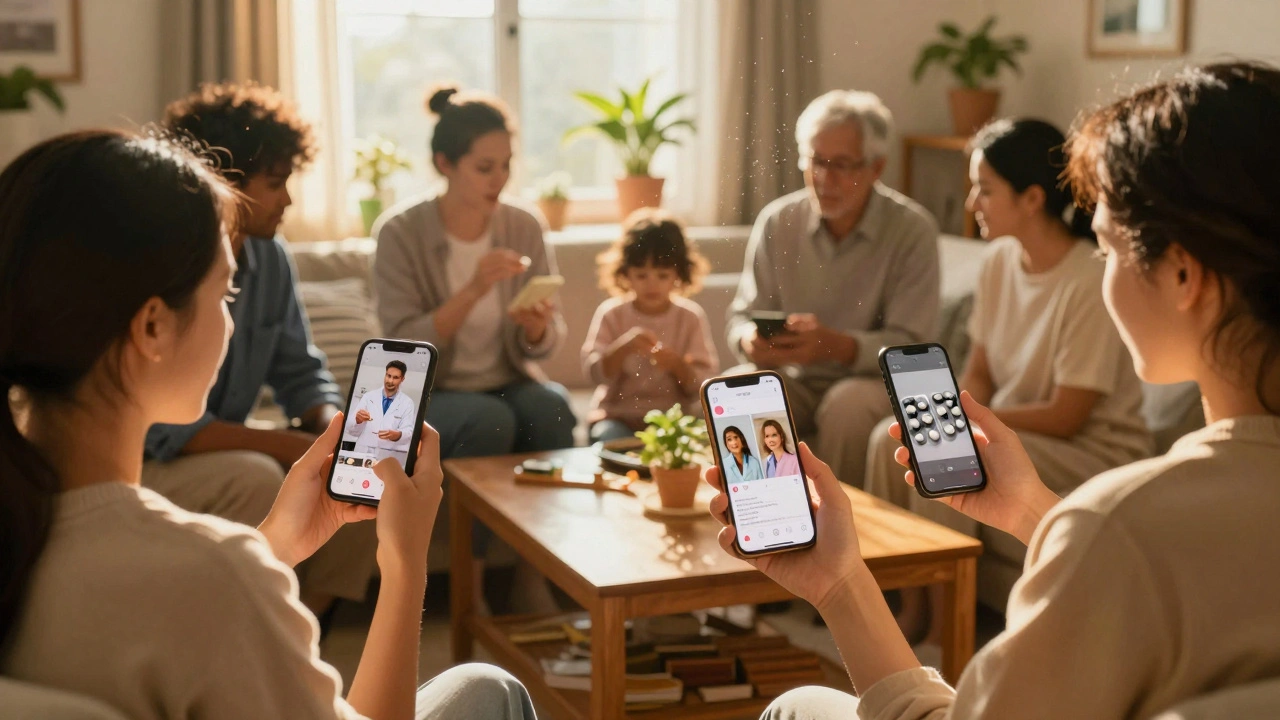
When people get a new prescription, they don’t just read the label and take it. They go online. They scroll through Instagram reels showing how to swallow pills without choking. They watch YouTube videos from real patients explaining side effects. They join Facebook groups where someone just like them shares how they managed nausea for three weeks. This isn’t just convenience-it’s now the first step in understanding medicine for millions.
Why Patients Turn to Social Media for Health Info
More than 68% of adults in Australia use social media to look up health information before talking to their doctor, according to a 2025 survey by the Australian Health Policy Institute. It’s not because they distrust professionals-it’s because they want to understand what’s happening to their body before walking into a consultation. A patient newly diagnosed with high blood pressure might search for "what does lisinopril feel like?" and find a TikTok video from a 52-year-old teacher who’s been on it for two years. That’s more relatable than a 12-page pamphlet.
Generic medications, which make up 82% of all prescriptions filled in Australia, are especially misunderstood. People assume they’re "weaker" or "less safe" just because they’re cheaper. Social media is filling that knowledge gap. On Reddit’s r/medication, users compare experiences with generic metformin versus brand-name Glucophage. On Instagram, pharmacists post side-by-side videos showing how generic amoxicillin looks in the bottle versus the branded version-same white capsule, same dosage, same active ingredient.
Which Platforms Work Best for Patient Education
Not all platforms are built the same for health education. Each one serves a different need.
- Instagram is where visual learners go. Short Reels show how to use inhalers, how to store insulin, or how to split pills safely. A post from a Sydney pharmacist showing the exact steps to take levothyroxine on an empty stomach got 47,000 views in three days.
- YouTube is the go-to for in-depth explanations. Channels like "MediKnow" and "The Generic Rx Guide" have built audiences by walking viewers through how generics are approved by the TGA, what bioequivalence really means, and why some people feel different on a new brand.
- Facebook Groups are where real stories live. Groups like "Generic Medication Support Australia" have over 120,000 members. People share not just tips, but emotional experiences-like how switching to generic sertraline made them feel "numb," only to find out it was a temporary adjustment period.
- TikTok is the fastest-growing platform for health education. A 60-second clip explaining why generic ibuprofen works just as well as Advil can get 1.2 million views. The algorithm rewards clear, simple, honest content-and patients notice when it’s not corporate.
LinkedIn and Twitter? Less useful for patients. Doctors and pharmacists use them to share research, but most people don’t go there to learn about their meds.
How Health Organizations Are Using Social Media
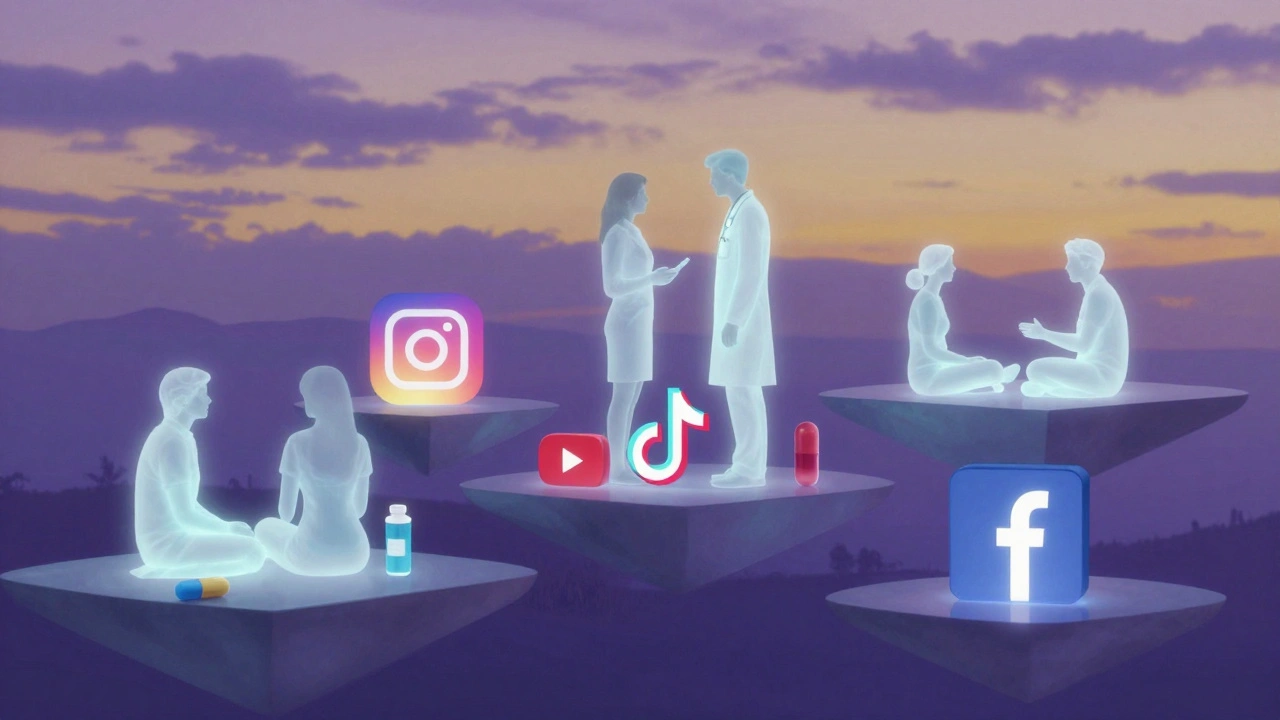
Pharmacies, hospitals, and public health agencies are catching on. The Royal Australian College of General Practitioners now runs weekly Instagram Lives answering questions about common generics. The TGA (Therapeutic Goods Administration) has a TikTok account with 210,000 followers, posting 15-second videos debunking myths like "generic drugs are made in unregulated factories."
Pharmaceutical companies are also stepping in-not to sell, but to educate. Novartis Australia launched a series called "The Generic Truth," featuring real patients and pharmacists explaining how generics go through the same testing as branded drugs. The campaign saw a 31% increase in positive sentiment around generics in just four months.
But it’s not just about posting videos. The most successful programs involve patients as creators. The NSW Health Department partnered with a group of chronic illness advocates to run a "Patient Voice Project," where people recorded short clips explaining how they manage their meds. The result? Engagement tripled, and trust in the information rose by 48% compared to staff-produced content.
What Goes Wrong-And How to Fix It
Not every post helps. Some spread misinformation. A viral TikTok claiming "generic antibiotics don’t kill bacteria" got 890,000 views before it was flagged. Another Instagram post showed someone crushing pills and mixing them into juice-dangerous advice that could ruin drug absorption.
Here’s what works to stop bad info:
- Verified badges for healthcare professionals posting on social media
- Clear disclaimers: "This is not medical advice-talk to your pharmacist"
- Community moderators who are trained pharmacists or nurses
- Quick response teams that correct false claims within 24 hours
One hospital in Adelaide started a "Fact Check Friday" series on Facebook, where they answer one common myth each week. In six months, they reduced misinformation comments by 76%.
What Patients Should Look For
If you’re using social media to learn about your meds, here’s how to tell good info from bad:
- Check the source. Is it a hospital, university, or government health agency? Or is it a person with no medical credentials?
- Look for references. Good posts cite the TGA, the Therapeutic Goods Administration, or peer-reviewed studies.
- Watch for fear-mongering. If a video says "this drug will destroy your liver," but doesn’t explain the actual risk level, it’s likely exaggerating.
- Compare multiple sources. If three different pharmacists on Instagram say the same thing, it’s probably reliable.
- Ask your pharmacist. Bring your social media finds to your next appointment. They’re trained to help you sort fact from fiction.
The Future of Social Media in Patient Education
By 2027, AI will help personalize health info on social media. Imagine scrolling Instagram and seeing a Reel that says: "Hey, you’re on lisinopril. Here’s what to watch for based on your age and other meds." That’s already being tested in pilot programs by the University of Sydney and Medibank.
More platforms will add "Health Mode"-a setting that filters out unverified medical claims and surfaces trusted sources first. TikTok has already started testing this with educational content.
But the biggest shift won’t be technological. It’ll be cultural. Patients are no longer passive recipients of information. They’re co-educators. They’re the ones sharing what really works, what doesn’t, and what the leaflet didn’t tell them.
Healthcare isn’t just happening in clinics anymore. It’s happening in DMs, in comment sections, in Reels that get shared between mothers, between friends, between people who just want to know they’re not alone.
And that’s why social media isn’t a distraction from patient education-it’s becoming its most powerful tool.
Can I trust health advice I see on Instagram or TikTok?
Some of it is trustworthy, but not all. Look for posts from verified health professionals, hospitals, or government agencies like the TGA. Avoid accounts that make bold claims without sources or that push fear-based messaging. Always double-check with your pharmacist or doctor before changing how you take your medicine.
Are generic drugs really the same as brand-name ones?
Yes. In Australia, the TGA requires generics to have the same active ingredient, strength, dosage form, and route of administration as the brand-name drug. They must also prove they’re bioequivalent-meaning they work the same way in your body. The only differences are in inactive ingredients like fillers or colors, which rarely affect how the drug works.
Why do some people say they feel different on a generic version?
Sometimes, it’s psychological-people expect a change because the pill looks different. Other times, it’s because the inactive ingredients affect how fast the drug is absorbed, especially with medications that have a narrow therapeutic window, like thyroid pills or seizure drugs. If you notice a change, talk to your pharmacist. They can help determine if it’s the medication or something else.
How can I find reliable patient education on social media?
Follow accounts run by hospitals (like St Vincent’s Hospital Sydney), professional bodies (like the Australian Pharmacists Association), or government health sites. Look for content that cites official sources, uses clear language, and avoids sensational headlines. Join moderated groups where pharmacists or nurses answer questions.
Should I stop taking my medication if I see a scary post online?
No. Never stop or change your dose based on social media alone. Stopping certain medications suddenly can be dangerous. Instead, save the post and bring it to your doctor or pharmacist. They can help you understand if the concern is real, rare, or just misinformation.

Ella van Rij
December 1, 2025 AT 20:55Oh wow, another article about how TikTok is saving healthcare. Next they’ll say Instagram Reels replaced medical school. 🙄 I mean, sure, if you want your hypertension managed by a 19-year-old with 3 followers and a filter that makes their skin look like porcelain… go for it. At least the pamphlets didn’t tell you to crush pills into smoothies.
Paul Keller
December 2, 2025 AT 19:47The paradigm shift in patient education is not merely technological, but epistemological. The traditional hierarchy of medical authority has been destabilized by decentralized, peer-generated knowledge ecosystems. While concerns regarding misinformation are valid, the democratization of health literacy-when paired with critical media literacy-is not a threat, but an evolution. The fact that 68% of Australians seek information prior to consultation indicates a proactive, empowered populace, not a misguided one. The real failure lies in institutions that refuse to adapt their communication strategies to the digital vernacular of their constituents.
Shannara Jenkins
December 2, 2025 AT 21:50This is so important. I remember when my mom switched to generic levothyroxine and panicked because the pill looked different. We found a whole FB group full of people who’d been through it-some felt weird at first, others didn’t. One woman even posted a video of her morning routine with the meds. It helped so much. We called her pharmacist together and she said, ‘Totally normal.’ No drama, just real people helping real people. That’s the magic.
Elizabeth Grace
December 3, 2025 AT 18:09Ugh I just saw a TikTok where some girl said her generic Zoloft made her feel like a zombie and she quit cold turkey. Like… honey? You’re gonna have withdrawal seizures. I cried watching it. Why do people think they’re doctors? I’ve been on SSRIs for 8 years and I still ask my pharmacist before I change anything. Please just… don’t trust strangers on the internet with your brain.
Steve Enck
December 4, 2025 AT 09:28One must interrogate the ontological status of ‘trust’ in digital health spaces. The algorithmic curation of emotional narratives-often amplified by confirmation bias-creates epistemic bubbles wherein anecdotal evidence supersedes pharmacological evidence. The TGA’s bioequivalence standards are not merely regulatory; they are epistemic anchors. Yet, the viralization of fear-based testimonials undermines the very foundation of evidence-based medicine. We are not merely witnessing a communication shift-we are witnessing the collapse of epistemic authority into affective performance.
Jack Dao
December 6, 2025 AT 05:34LOL so now we’re celebrating social media as the new MD? 😂 Next thing you know, people will be doing their own MRIs on their phones. ‘Hey doc, I watched a 30-sec Reel and now I know why my blood pressure’s up-my aura’s blocked.’ 🤡
dave nevogt
December 6, 2025 AT 12:33There’s something quietly beautiful about how people, isolated by chronic illness, find each other in comment sections and DMs. It’s not about replacing doctors-it’s about replacing loneliness. The woman who posted about feeling ‘numb’ on generic sertraline? She didn’t cure anyone. But she made someone else feel less afraid to say, ‘Me too.’ And sometimes, that’s the first step toward real healing.
Jay Everett
December 7, 2025 AT 08:32Y’all are underestimating how wild this is. We’ve gone from ‘ask your doctor’ to ‘ask your cousin’s neighbor’s yoga instructor who watched a YouTube video’-but guess what? It’s WORKING. People are finally talking about side effects, adherence, cost, and how the damn pill tastes. Pharma companies are scared because patients are no longer silent. And honestly? Good. 🙌 Let’s get those pharmacists on TikTok, let’s fund those patient-led channels, and let’s stop pretending we’re still in 2005. This isn’t chaos-it’s community.
मनोज कुमार
December 9, 2025 AT 01:16Generic drugs bioequivalent TGA approved. Social media misinformation. Problem. Solution: regulate platforms. No more unverified health claims. Done. Why overcomplicate? People dumb. Need rules.
Joel Deang
December 10, 2025 AT 20:00bro i saw a guy on tiktok showin how to store insulin in his fridge with a magnet on the door… and i was like… damn that’s actually kinda smart?? i always just toss it in the back and forget about it. now i got a little label on mine too. small wins, ya know? 🤝
Roger Leiton
December 11, 2025 AT 13:08Can we talk about how amazing it is that a 15-second TikTok from a pharmacist can reach more people than a 12-page pamphlet printed in 2003? 🤯 I used to think social media was just cats and dances. Now I’ve learned how to take my blood pressure meds correctly from a 22-year-old nursing student in Perth. That’s not a glitch-that’s progress. We need more of this. Like, a LOT more.
Laura Baur
December 11, 2025 AT 16:39Let’s be clear: the normalization of layperson medical advice on social media is not empowerment-it is the erosion of professional accountability. When a woman claims her generic metformin ‘made her lose 30 pounds’ and it’s not even a weight-loss drug, and 500 people replicate it without understanding pharmacokinetics, that is not education. That is negligence disguised as community. The fact that we celebrate this as ‘patient voice’ rather than condemning it as dangerous pseudoscience reveals a deeper cultural decay. Where is the institutional responsibility? Where is the enforcement? This isn’t democracy-it’s anarchy with hashtags.