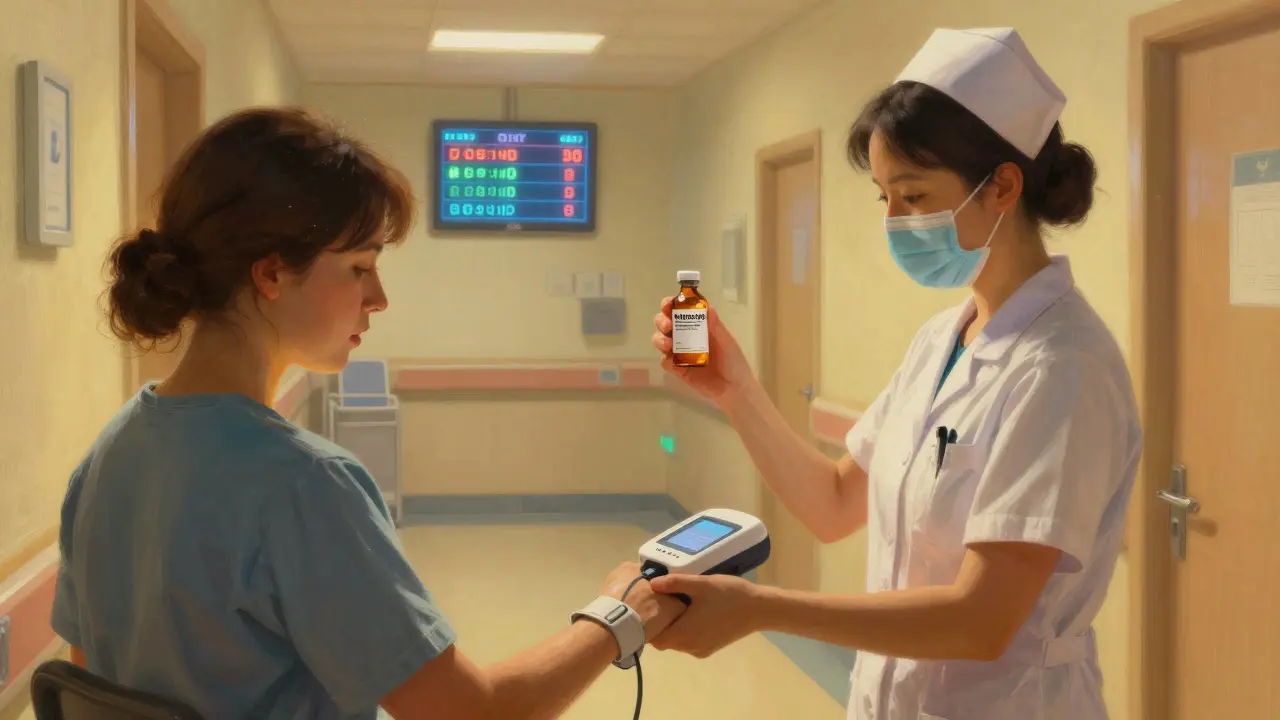
Every year, hundreds of thousands of patients in U.S. hospitals suffer harm because of medication errors-many of them preventable. These aren’t just rare mistakes. They happen because systems are broken, not because people are careless. A patient gets the wrong dose of methotrexate because the electronic system didn’t block a daily order. A nurse administers insulin without double-checking the label. A senior citizen leaves the clinic with conflicting instructions on their pain meds. These aren’t hypotheticals. They’re daily realities in hospitals and clinics across the country.
What Medication Safety Really Means
Medication safety isn’t just about not giving the wrong pill. It’s a system of checks, tools, and culture designed to stop errors before they reach the patient. The American Society of Health-System Pharmacists defines it as preventing any event that could lead to inappropriate use or harm while the medication is under the control of a healthcare provider. That includes prescribing, transcribing, dispensing, administering, and monitoring. The goal isn’t perfection-it’s making it nearly impossible for errors to slip through.The Big Picture: Why This Matters
In 1999, the Institute of Medicine shocked the medical world with its report To Err is Human. It found that between 44,000 and 98,000 Americans die each year in hospitals due to preventable errors. Medication errors alone were responsible for about 7,000 of those deaths. A 1995 study by Dr. David Bates showed that every hospital patient experiences at least one medication error per day. That’s not a typo. One per day. And the financial toll? Over $21 billion annually in extra costs for hospitals. These aren’t just numbers. They’re people. A mother with rheumatoid arthritis who gets daily methotrexate instead of weekly. A cancer patient given vinca alkaloids into their spinal fluid instead of their vein. A diabetic given ten times the insulin dose because the vial wasn’t labeled clearly. These errors don’t just hurt patients-they break trust in the system.ISMP’s Targeted Best Practices: The Gold Standard
The Institute for Safe Medication Practices (ISMP) released its Targeted Medication Safety Best Practices for Hospitals in 2014, updated in 2020-2021. It’s not a suggestion list. It’s a set of 19 mandatory actions based on real error reports from thousands of frontline providers. These aren’t theoretical-they’re proven. Take methotrexate. This drug treats cancer, autoimmune diseases, and ectopic pregnancies. But it’s deadly if given daily instead of weekly. ISMP’s Best Practice #2 requires hospitals to:- Set electronic prescribing systems to default to weekly dosing
- Block daily orders unless the prescriber confirms an oncology diagnosis
- Require both written and verbal discharge instructions for every patient
- Train staff to verify the dose with the patient’s printed medication list
High-Alert Medications: The Real Danger Zone
Not all drugs are created equal. Some are so dangerous that even small mistakes can kill. ISMP and ASHP define these as high-alert medications. They include:- Insulin
- Opioids (like morphine and fentanyl)
- Anticoagulants (like heparin and warfarin)
- Neuromuscular blocking agents (like succinylcholine)
- Intravenous potassium chloride
- Oxytocin (especially in labor and delivery)
- Independent double-checks by two licensed staff before administration
- Standardized concentrations (no more 100-unit/mL insulin vials-only 10-unit/mL)
- Automated dose range checks in the EHR
- Barcode scanning at the bedside to match patient, drug, dose, route, and time
Technology Isn’t Enough-But It’s Necessary
Barcode medication administration (BCMA) systems are now standard in most large hospitals. They scan the patient’s wristband and the drug’s barcode before giving any medication. This alone cuts errors by 40-60%. But here’s the catch: only 54% of small hospitals (under 100 beds) use them. Many can’t afford the tech or the training. Electronic health records (EHRs) are supposed to help. But 63% of hospitals report problems creating hard stops for high-risk drugs because their EHR vendor won’t customize the system. So staff work around it-pharmacists manually review every high-alert order, nurses write extra checklists, doctors call in verbal orders. It’s not sustainable. And let’s not forget: technology can create new errors. If the barcode doesn’t scan, staff might override the system. If the EHR auto-fills the wrong dose, they might not notice. The system must be designed to catch mistakes-not just record them.Human Factors: The Missing Link
No system works without people. And people get tired, distracted, rushed. A nurse on a 12-hour shift with 12 patients is more likely to skip a double-check. A pharmacy tech under pressure to fill 50 orders an hour might misread a handwritten script. That’s why culture matters. Hospitals with strong safety cultures don’t punish mistakes-they investigate them. They encourage staff to report near-misses without fear. They hold monthly safety huddles. They give pharmacists a seat at the table when new protocols are designed. One nurse manager in a rural hospital told the American Nurses Association: “The requirement for both written and verbal methotrexate instructions created huge delays during staffing shortages.” She wasn’t resisting safety-she was overwhelmed. The solution wasn’t to drop the rule. It was to redesign the workflow: use pre-printed discharge sheets, train nursing assistants to hand them out, and have the pharmacist verify them in 60 seconds instead of 15 minutes.What About Clinics and Outpatient Settings?
Most medication safety rules were built for hospitals. But errors are rising in clinics. Between 2018 and 2022, ISMP saw a 47% increase in outpatient medication errors. Why? Less oversight. No barcode scanners. No pharmacists on-site. Patients get prescriptions from multiple doctors. They mix old and new meds. They don’t understand instructions. The good news? ISMP plans to expand its Best Practices to outpatient settings in 2024-2025. In the meantime, clinics can start simple:- Use standardized prescription forms
- Require pharmacists to call patients with high-risk meds (like warfarin or opioids)
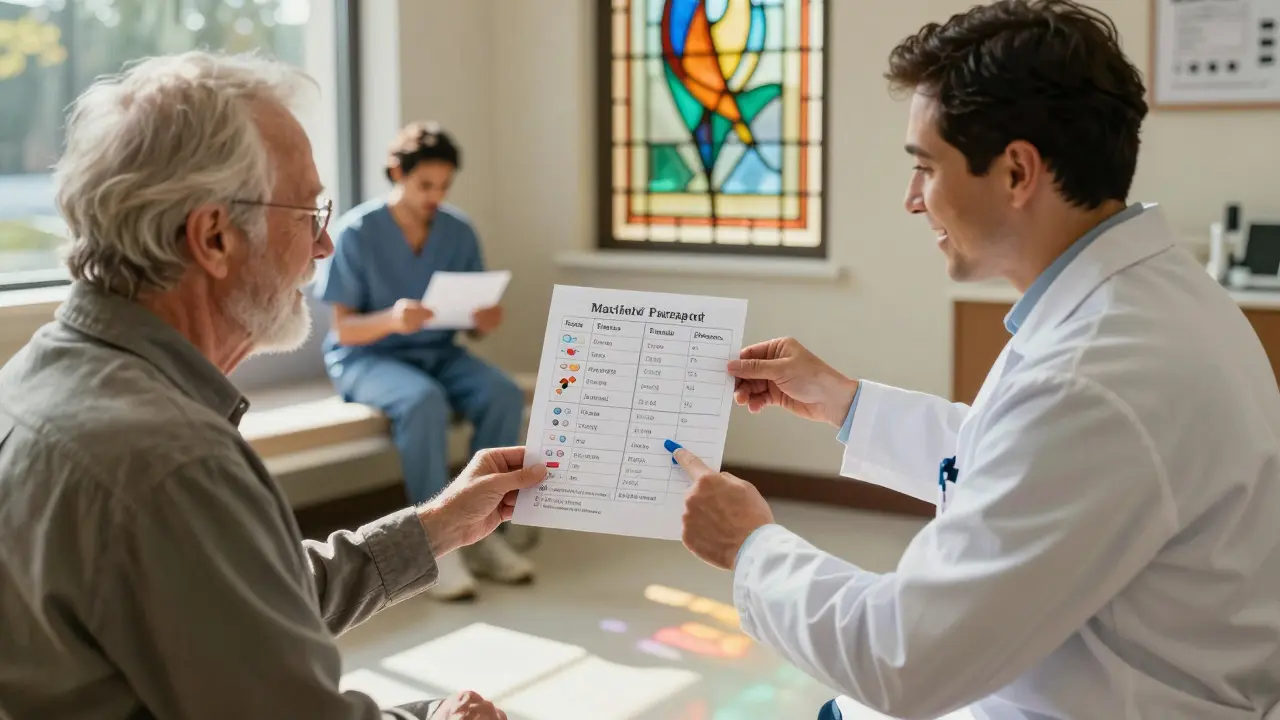
- Give patients a written list of all their meds-no exceptions
- Train staff to ask: “Do you know why you’re taking this?”
The Gap Between Policy and Practice
There’s a big difference between having rules and following them. A 2022 ECRI Institute study found:- 78% of academic medical centers fully implemented ISMP’s Targeted Best Practices
- Only 42% of community hospitals did
What’s Next? AI, Patient Feedback, and the Future
The future of medication safety isn’t just better systems-it’s smarter ones. Gartner predicts that by 2025, 75% of U.S. hospitals will use AI to detect medication errors in real time. Imagine an alert popping up when a doctor orders two drugs that interact dangerously-or when a patient’s kidney function drops and the dose isn’t adjusted. Pilot programs at Mayo Clinic and Johns Hopkins are already using patient feedback. They ask patients: “Did you understand your discharge meds?” “Did anyone check your wristband?” “Did you notice anything odd?” When patients speak up, errors drop by 32%. The FDA is also stepping in. New labeling rules for high-concentration electrolytes go into effect by the end of 2024. These will make vials look different-brighter colors, larger fonts-so they’re harder to confuse.What You Can Do-Even If You’re Not a Doctor
You don’t have to be in a hospital to help prevent medication errors.- Keep a written list of every medication you take-including doses, times, and why you take them
- Ask your doctor or pharmacist: “Is this the same as what I was taking before?”
- Never assume a new pill is just a refill. Check the color, shape, and name.
- Speak up if something feels wrong. “I’ve never taken this before. Can you explain why?”
- Ask for printed discharge instructions-don’t rely on memory.
What is the most common cause of medication errors in hospitals?
The most common cause isn’t one thing-it’s a chain of failures. A handwritten order gets misread. A nurse doesn’t double-check the drug label. The barcode scanner fails. The EHR doesn’t flag a dangerous interaction. And no one speaks up. Most errors happen because multiple safety layers are missing or ignored, not because one person made a single mistake.
Are electronic health records making medication safety better or worse?
They’re doing both. EHRs reduce errors from illegible handwriting and help flag drug interactions. But they also create new risks: auto-filled doses, confusing interfaces, and alert fatigue. When a system pings 20 warnings for every order, staff start ignoring them. The key is designing systems that warn only when necessary-and make it easy to override safely when needed.
What’s the difference between ISMP and Joint Commission safety standards?
The Joint Commission sets broad goals like “do medication reconciliation” without saying how. ISMP gives exact, actionable steps: “Use a standardized form to compare home meds to admission meds,” “Require pharmacist verification for all high-alert drugs,” “Implement hard stops for daily methotrexate.” ISMP is more detailed and evidence-based. Joint Commission is easier to follow but less effective without local adaptation.
Why is methotrexate so dangerous if given daily?
Methotrexate is a powerful drug used weekly for autoimmune diseases and daily for cancer. If a patient on weekly dosing accidentally gets it daily, their bone marrow shuts down. They can develop severe infections, internal bleeding, or die. One daily dose can be fatal. That’s why ISMP requires electronic systems to block daily orders unless a cancer diagnosis is confirmed-and why every patient must get clear written and verbal instructions.
Can patients really help prevent medication errors?
Absolutely. Studies show that when patients are asked if they understand their meds or if anything looks wrong, errors are caught 32% more often. Patients know their own bodies. If you’ve never taken a blue pill before and now you’re being given one, say something. Bring a list of your meds to every appointment. Ask your pharmacist to explain each one. Your voice is part of the safety net.

waneta rozwan
January 16, 2026 AT 16:51Okay but let’s be real-half the hospitals in this country are running on duct tape and hope. I’ve seen nurses laugh while scanning barcodes because the system keeps glitching. And don’t even get me started on the EHR that auto-fills ‘100 units’ of insulin because someone typed ‘10’ once and now it’s stuck. This isn’t safety-it’s a game of Russian roulette with syringes.
Nicholas Gabriel
January 17, 2026 AT 23:39Let me tell you something: medication safety isn’t about technology-it’s about trust. Trust that the pharmacist checked the dose. Trust that the nurse didn’t skip the double-check. Trust that the doctor didn’t just copy-paste an order from last week. And yet, we’ve built systems that assume incompetence, not care. We punish the nurse for overriding a false alert-but we never fix the alert that’s wrong 90% of the time. We need to stop treating staff like criminals and start treating them like partners.
Cheryl Griffith
January 18, 2026 AT 01:48I work in a small clinic, and we don’t have barcode scanners or AI alerts. But we do have one rule: if a patient looks confused, we stop. We don’t rush. We don’t assume they know what warfarin does. We sit down. We draw pictures. We ask, ‘What’s your biggest fear about this medicine?’ And you know what? That one question has stopped three near-misses this year alone. Sometimes, the cheapest tech is a human voice.
Rob Deneke
January 18, 2026 AT 19:23brooke wright
January 20, 2026 AT 13:26Nick Cole
January 21, 2026 AT 22:40You think this is bad? Try working in a rural ER where the pharmacy is 45 minutes away and the only person who can verify a high-alert med is the overworked PA who just finished three code blues. ISMP’s guidelines? Great on paper. Useless when you’re the only licensed provider on shift. Stop idealizing best practices and fund real solutions. Or stop pretending we’re serious about patient safety.
swarnima singh
January 22, 2026 AT 09:08Isabella Reid
January 23, 2026 AT 21:50I love how this post doesn’t just throw blame around. It shows the real tension: tech helps but isn’t perfect. Humans are tired but essential. Systems matter but need culture to breathe. I’ve seen this in two different hospitals-one where staff were terrified to speak up, and one where they had monthly safety shout-outs and pizza parties. Guess which one had fewer errors? It’s not about the tech. It’s about whether people feel safe enough to be human.
Jody Fahrenkrug
January 25, 2026 AT 20:21Kasey Summerer
January 26, 2026 AT 08:28So let me get this straight... we spend billions on EHRs that make errors worse, ban glacial acetic acid like it’s a villain in a Marvel movie, but still let nurses give insulin without double-checking because ‘we’re short staffed again.’ 😅 We’re not fixing healthcare. We’re just adding more emojis to the dumpster fire.