
To understand why some meds are riskier than others, we first have to look at what an expiration date actually is. Since 1979, the FDA is the U.S. agency that mandates pharmaceutical manufacturers print a date representing the final day they guarantee a drug's full potency and safety. This isn't a random guess; it's based on rigorous stability testing. While a famous study found that about 90% of drugs remain safe 15 years later if stored perfectly, that "90%" doesn't include the critical medications that can fail you when you need them most.
The "Never Use" List: Critical Medications
Some medications are chemically unstable or essential for survival. When these degrade, the result isn't just a slower recovery-it's a medical crisis. Here are the primary culprits you must toss the moment they expire.
- Insulin: Insulin is a hormone used to control blood glucose levels in people with diabetes. It is incredibly sensitive to temperature. Once it expires, it loses its ability to lower blood sugar. Research shows that protein aggregates can form, reducing its bioavailability by up to 35%. If you use expired insulin, you risk severe hyperglycemia because the drug simply isn't working.
- Epinephrine Auto-Injectors: Whether it's an EpiPen or a generic version, epinephrine is used to stop anaphylactic shock. These lose about 15% of their potency every year after expiration. In a life-or-death allergic reaction, a 15-30% drop in strength can be the difference between breathing and respiratory failure.
- Nitroglycerin: Used for chest pain (angina), this medication is notoriously unstable. It can lose 40-60% of its strength within just six months after expiration. Since this is a rescue med for heart distress, using a weak dose is a massive risk.
- Liquid Antibiotics: Think of amoxicillin suspensions. Not only does the medicine break down, but the liquid environment can grow bacteria. Using these can lead to incomplete infection resolution and may even contribute to antibiotic resistance.
- Rescue Inhalers: Albuterol sulfate used for asthma attacks degrades over time. Studies show effectiveness can drop by 25-30% after six months, potentially leaving someone struggling for air during an acute attack.
| Medication | Primary Risk | Impact of Expiration | Criticality |
|---|---|---|---|
| Insulin | Loss of Efficacy | Up to 35% less bioavailability | Extreme |
| Epinephrine | Reduced Potency | ~15% loss per year | Life-Threatening |
| Nitroglycerin | Chemical Instability | 40-60% loss in 6 months | Extreme |
| Liquid Antibiotics | Contamination/Failure | Bacterial growth & lower potency | High |
| Albuterol Inhalers | Reduced Bronchodilation | 25-30% less effective | High |
When "Expired" Actually Means "Toxic"
Most of the time, drugs just get weaker. But in a few rare cases, they actually become poisonous. The most prominent example is Tetracycline, a class of antibiotics. When these degrade, they turn into compounds that can cause renal tubular damage (kidney damage). This is why pharmacists are so adamant about the dates on these specific bottles; it's not about whether the drug will work, but whether it will hurt your kidneys.
Similarly, eye drops and ear drops are dangerous past their prime. The preservative systems in these liquids fail over time. Once the preservatives stop working, the bottles can become breeding grounds for bacteria like Pseudomonas. Using expired eye drops can lead to corneal ulcers-essentially holes in your eye-which can cause permanent vision loss.
The Hidden Danger of "Invisible" Degradation
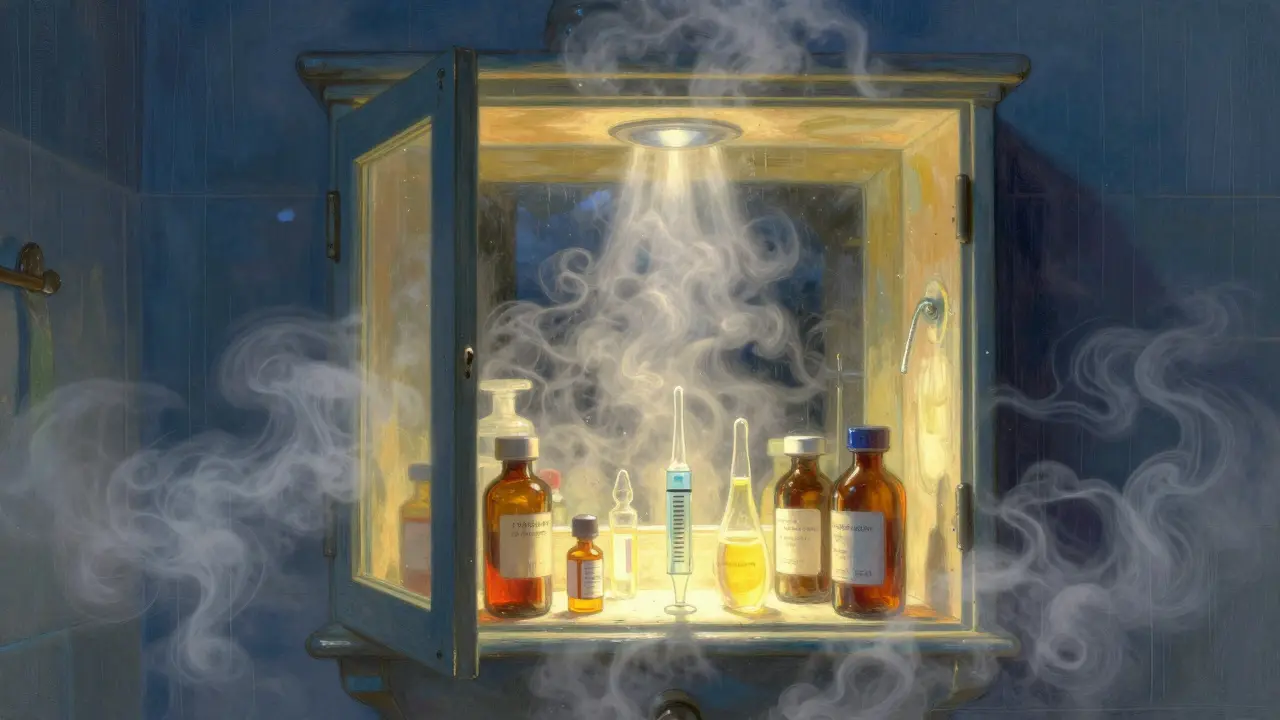
A common mistake people make is the "look and smell" test. You might think, "It's still white and doesn't smell weird, so it's fine." This is a dangerous assumption. Chemical degradation happens at a molecular level. A tablet of levothyroxine (used for thyroid issues) will look exactly the same after expiration, but a 10% drop in potency can trigger significant thyroid dysfunction in nearly 70% of patients who need precise dosing.
Your storage habits also change the math. Many of us keep our meds in the bathroom because it's convenient. However, the humidity and heat from the shower act like a catalyst for decay. Research shows medications stored in bathroom cabinets degrade 2.3 times faster than those kept in a cool, dry bedroom dresser. If you've stored your meds in a humid bathroom, they might actually be "expired" even if the date on the bottle says they have another month.
How to Manage Your Medicine Cabinet
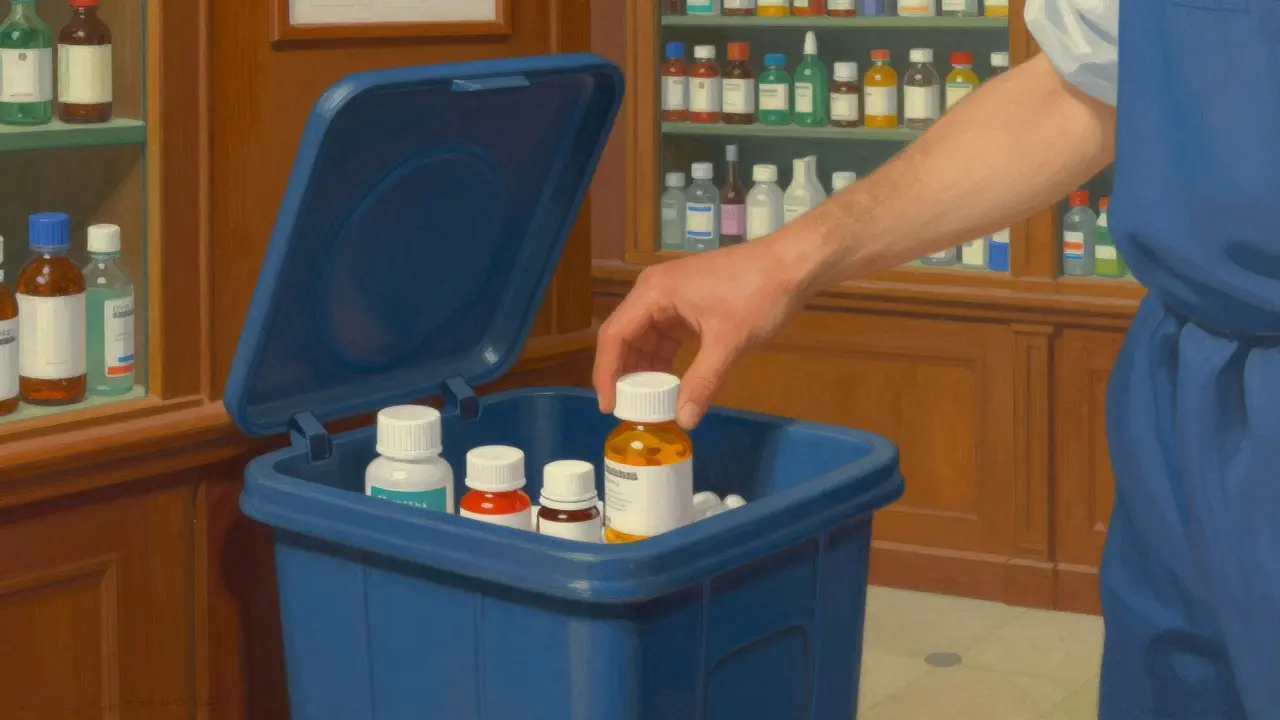
To avoid the stress of wondering if a drug is safe, you need a system. Start by auditing your cabinet every six months. If you find something expired, don't just throw it in the trash or flush it down the toilet. Flushing meds sends pharmaceutical compounds into the water supply-in fact, studies have found drugs in 80% of U.S. waterways.
The best move is to use a drug take-back program. Most pharmacies have a designated bin for this. If you have controlled substances, check the DEA guidelines, as some of those specifically require flushing for safety reasons to prevent theft or accidental ingestion by children.
For the high-risk meds mentioned earlier, follow these rules of thumb:
- Insulin: Replace within 28 days of opening, even if the expiration date is far off.
- Nitroglycerin: Replace every 3-6 months after opening the bottle.
- Epinephrine: Replace exactly on the expiration date. No exceptions.
Will I get sick if I take an expired aspirin or Tylenol?
Generally, common over-the-counter pain relievers don't become toxic; they just lose potency. However, they will be less effective at treating your pain. If you're treating a serious condition, you shouldn't risk using a sub-potent dose.
Can I use an expired EpiPen in a total emergency if I have nothing else?
While it is better than nothing in a life-or-death situation, remember that it may be significantly less effective. You should still seek emergency medical care immediately, as the expired medication may not provide enough epinephrine to stop the reaction.
Why do liquid medications expire faster than pills?
Liquids are more prone to bacterial growth and chemical breakdown. Water-based solutions are less stable than solid compressed tablets, and once the preservatives break down, the liquid can become contaminated.
Does the storage temperature really matter that much?
Yes, immensely. Heat and humidity accelerate the chemical reactions that break down active ingredients. This is why the "bathroom cabinet" is actually one of the worst places to store medication.
What should I do if I accidentally took an expired medication?
For most meds, you'll likely be fine, though the dose may not work. However, if you took expired tetracycline or eye drops, or if you relied on expired insulin/nitroglycerin for a critical symptom, call your doctor or a poison control center immediately.
